
How to Identify Roof Hail Damage: A Homeowner Inspection Guide
How to spot dark bruised spots, granule displacement in gutters, and soft-metal impact marks — and why hail damage is often hidden from the ground.
Key Editorial Takeaways
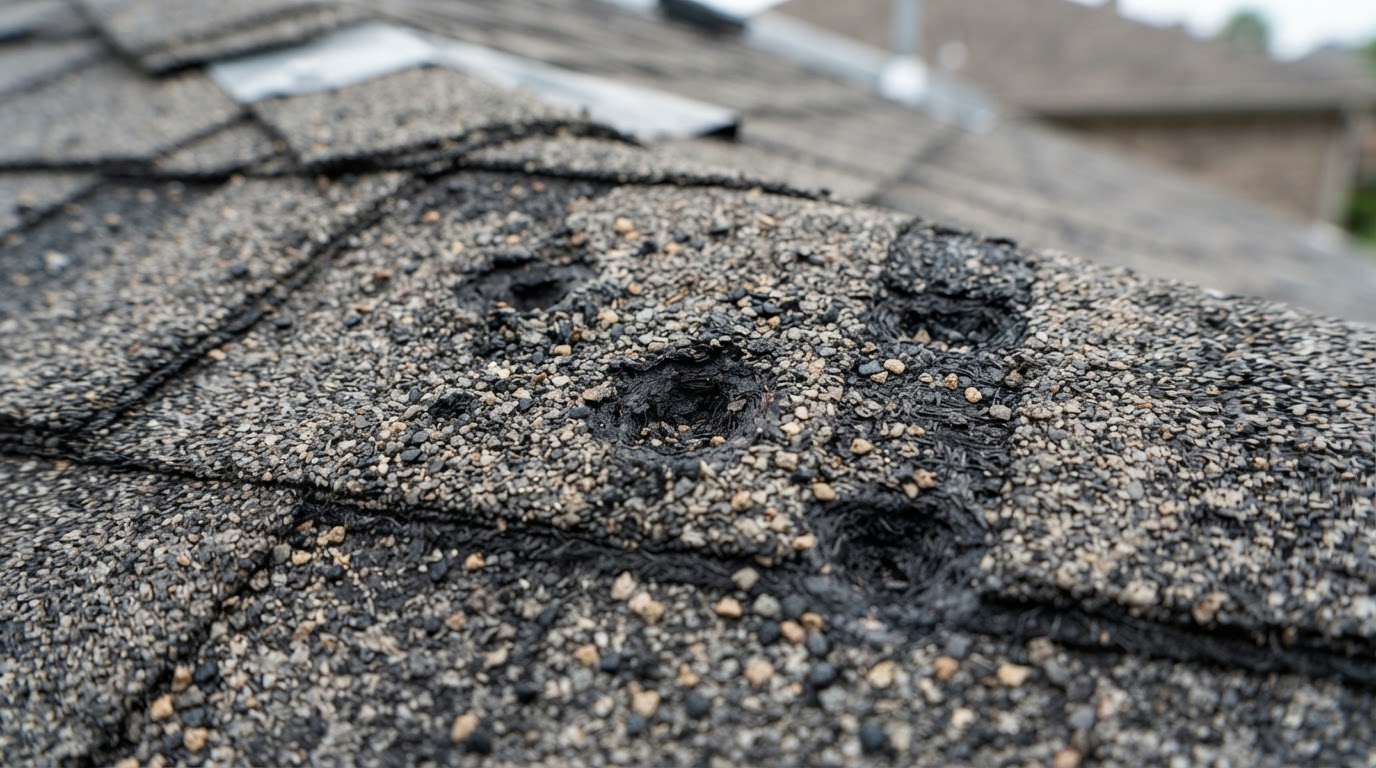
- ✓Hail damage appears as dark, circular bruises where granules have been dislodged, exposing the black asphalt mat.
- ✓Collateral evidence on gutters, vent caps, and siding provides initial ground-level proof of hail impact size.
- ✓Functional damage compromises waterproofing or mat integrity and is covered under standard storm insurance policies.
- ✓Excessive granule accumulation at downspout outlets is a primary indicator of severe shingle impact.
- ✓Homeowners should document ground-level collateral evidence before scheduling a professional on-roof inspection.
This article is part of our comprehensive guide: Identifying Hidden Hail and Wind Damage on Southeastern Roofs
Answer First: What Does Roof Hail Damage Actually Look Like?
Roof hail damage on asphalt shingles typically manifests as dark, round, indentations where ceramic granules have been dislodged, exposing the dark black asphalt mat beneath. Unlike manufacturing defects or normal age wear, hail impacts are randomly distributed across directional roof slopes that faced the storm's wind direction.
The Asphalt Roofing Manufacturers Association (ARMA) and National Roofing Contractors Association (NRCA) technical guidelines explain that functional hail damage occurs when the impact fractures the inner fiberglass mat or dislodges protective granules, accelerating UV degradation and premature roof failure.
This guide details ground-level indicators, on-roof inspection techniques, soft-metal collateral evidence, and the documentation required for storm insurance claims. For a complete regional overview, see our Southeast storm and hail damage guide.
Ground-Level Indicators: Spotting Hail Damage Without Getting on the Roof
Homeowners should never climb onto a steep or slick roof after a storm. Significant evidence of hail impact can be identified safely from the ground:
1. Dents on Soft Metals and Gutters Soft metals like aluminum gutters, downspouts, roof vent caps, mailbox lids, and outdoor AC condenser fins absorb impact easily. Dents on these surfaces provide clear collateral evidence of hail size and density.
2. Excessive Granule Accumulation in Downspouts While asphalt shingles lose minor amounts of granules naturally over time, a sudden accumulation of heavy granule sludge or piles at downspout outlets after a storm indicates significant shingle impact.
3. Window Screen Tears and Siding Dents Hail large enough to damage asphalt shingles (typically 1 inch in diameter or larger) will often leave dent marks on vinyl or aluminum siding, tear window screens, or crack plastic light fixtures.
What Hail Damage Looks Like on Asphalt Shingles
When professional inspectors or insurance adjusters examine a roof, they evaluate test areas (typically 10ft x 10ft squares on each roof slope) for specific impact characteristics:
| Feature | Hail Impact Damage | Normal Wear & Age Deterioration |
|---|---|---|
| Pattern | Randomly distributed across storm-facing slopes | Uniform across all slopes and shingle edges |
| Texture | Soft or spongy to the touch (mat fracture) | Hard and rigid surface |
| Granule Loss | Fresh, dark, exposed asphalt mat at impact point | Gradual uniform thinning across shingle body |
| Edge Condition | Sharp, circular impact boundaries | Flaking, curling, or clawing edges |
Functional Damage vs. Cosmetic Damage
Insurance coverage often hinges on the distinction between functional and cosmetic damage:
- Functional Damage:** The hail impact breaks the fiberglass mat, fractures the water-barrier layer, or causes granule displacement significant enough to shorten the roof's operational lifespan. Functional damage is covered by standard homeowners insurance policies.
- Cosmetic Damage:** Minor surface scuffs or cosmetic dents on metal fixtures that do not compromise the waterproofing integrity of the building envelope. Some policies contain cosmetic damage exclusions for metal roofs.
Step-by-Step Inspection Checklist for Homeowners
- Check Property Perimeter: Inspect mailbox, car surfaces, patio furniture, and window trims for hail dents.
- Inspect Downspouts: Look for heavy piles of mineral granules washed out during the storm.
- Examine Gutters and Vent Caps: Use a flashlight to check aluminum gutters and vent tops for round impact dings.
- Photograph All Evidence: Document damaged property items alongside a measuring tape or coin for scale.
- Request a Professional Roof Inspection: Contact a licensed local contractor or your insurance carrier to schedule an on-roof evaluation.
For step-by-step instructions on navigating the insurance claims process after identifying damage, read our roof insurance claim guide.
Frequently Asked Questions
How big does hail have to be to damage an asphalt shingle roof?
Typically, hail 1 inch in diameter (quarter-sized) or larger is required to cause functional damage to standard 3-tab or architectural asphalt shingles. However, smaller hail driven by high winds (50+ mph) can also cause severe granule displacement and mat bruising.
Can hail damage cause an immediate roof leak?
Rarely unless the hail is extremely large (2+ inches) or punctures the decking. Most hail damage causes silent long-term degradation: exposed asphalt UV degradation leads to cracking, seal failure, and leaks months or years down the line if left unaddressed.
Cited Research Sources & References
- Asphalt Roofing Manufacturers Association — Technical BulletinsView Source
- National Roofing Contractors Association — Hail Damage GuidelinesView Source