
Wind Damage vs. Hail Damage: How They Affect Your Roof Differently
How to distinguish lifted seal strips and creased shingles from circular hail impact bruises — and why insurers evaluate them under different criteria.
Key Editorial Takeaways
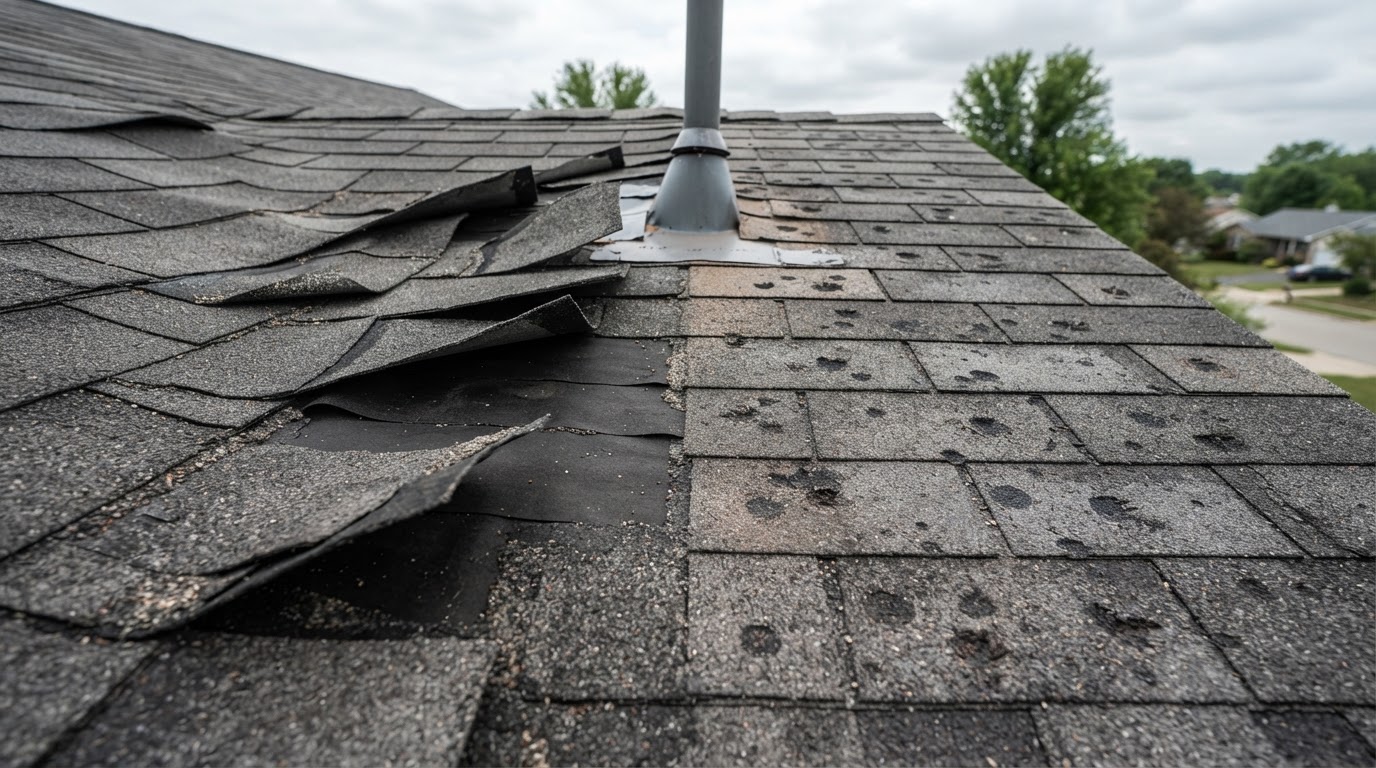
- ✓Wind creates uplift forces that break sealant strips and crease shingles; hail creates impact forces that fracture mats and dislodge granules.
- ✓Wind damage focuses on roof edges, rake corners, and ridges; hail damage scatters randomly across storm-facing slopes.
- ✓Broken shingle seal strips ('lifted-then-resealed' damage) allow wind-driven rain leaks even if shingles look flat from the ground.
- ✓Collateral evidence like dented gutters (hail) or blown soffits (wind) helps establish the primary cause of damage.
- ✓Both wind and hail damage are evaluated using specialized criteria during insurance adjuster inspections.
This article is part of our comprehensive guide: Identifying Hidden Hail and Wind Damage on Southeastern Roofs
Answer First: What Is the Difference Between Wind and Hail Damage?
While wind and hail frequently occur during the same severe weather front, they damage asphalt shingle roofs in fundamentally different ways:
- Wind Damage is a directional uplift force**. High winds break the thermal adhesive sealant strip bonding shingle layers together, lifting, creasing, folding, or completely tearing shingles off the roof deck.
- Hail Damage is an impact force**. Falling hail strikes shingle surfaces vertically or at an angle, fracturing the internal fiberglass mat and dislodging protective ceramic granules to leave dark, circular bruises.
Insurance adjusters inspect roofs for distinct evidence of each peril. Understanding the difference is crucial when filing a storm claim or appealing a claim denial.
For a complete overview of storm damage across the Southeast, see our storm and hail damage guide.
Detailed Comparison: Wind vs. Hail Damage
| Damage Characteristic | Wind Damage | Hail Damage |
|---|---|---|
| Primary Mechanism | Uplift pressure & aerodynamics | High-velocity kinetic impact |
| Visible Pattern | Creased horizontal lines, lifted edges, missing shingles | Randomly scattered round bruises or dints |
| Shingle Structural Effect | Broken thermal seal strip; creased fiberglass backing | Fractured fiberglass mat; granule displacement |
| Most Affected Areas | Roof eaves, ridges, rake edges, and corners | Slopes directly facing storm direction |
| Collateral Evidence | Blown-off fascia, damaged soffits, downed tree limbs | Dented gutters, window screens, siding, vent caps |
| Leak Risk Timeline | Immediate if shingles are torn or missing | Delayed (accelerated UV breakdown of exposed asphalt) |
The "Lifted-Then-Resealed" Wind Damage Trap
One of the most dangerous forms of wind damage is broken-seal damage.
When winds reach 50 to 60+ mph, wind pressure gets under the shingle edge and breaks the factory adhesive seal strip. After the storm passes, the shingle settles back down and may appear completely flat and undamaged to a homeowner looking from the ground.
However, because the thermal seal strip is broken, the shingle can no longer shed wind-driven rain. During the next thunderstorm, water gets driven underneath the unsealed shingle, rotting the plywood deck underneath.
How Inspectors Test for Broken Seals: Adjusters use a gentle hand-lift test along shingle tabs. If a shingle lifts effortlessly with zero resistance, the sealant bond is broken.
How Insurance Carriers Handle Wind vs. Hail Claims
Most modern homeowners insurance policies treat wind and hail under a combined Wind/Hail Deductible. However, claims documentation requirements differ:
- Wind Claims: Require proof that wind speeds in your immediate neighborhood exceeded structural resistance thresholds (typically 50+ mph), alongside photo proof of creased or missing shingles.
- Hail Claims: Require proof of hail diameter in your ZIP code via NOAA Doppler radar records, supported by collateral impact dings on gutters and 10+ hail hits within a 10ft x 10ft roof test square.
To learn how percentage wind/hail deductibles affect your out-of-pocket costs, read our roof insurance deductible guide.
Frequently Asked Questions
Can wind and hail damage happen at the same time?
Yes. Severe thunderstorms often bring wind-driven hail. In these cases, wind lifts the shingle tab while hail strikes the exposed underside or seal line, compounding the structural damage.
How do I know if my wind-damaged roof is covered by insurance?
Most standard homeowners insurance policies cover windstorm damage. If wind creased shingles, broke seal strips, or tore shingles away, your insurer should cover repairs or replacement minus your deductible.
Cited Research Sources & References
- National Oceanic and Atmospheric Administration (NOAA) — Severe Weather DataView Source
- Asphalt Roofing Manufacturers Association — Storm Damage BulletinsView Source