
Where Do Roofs Leak? Common Roof Leak Sources Explained
A homeowner guide to the most frequent roof leak locations — pipe boots, flashing, valleys, skylights, and ice dams — and how to identify where water is actually entering.
Key Editorial Takeaways
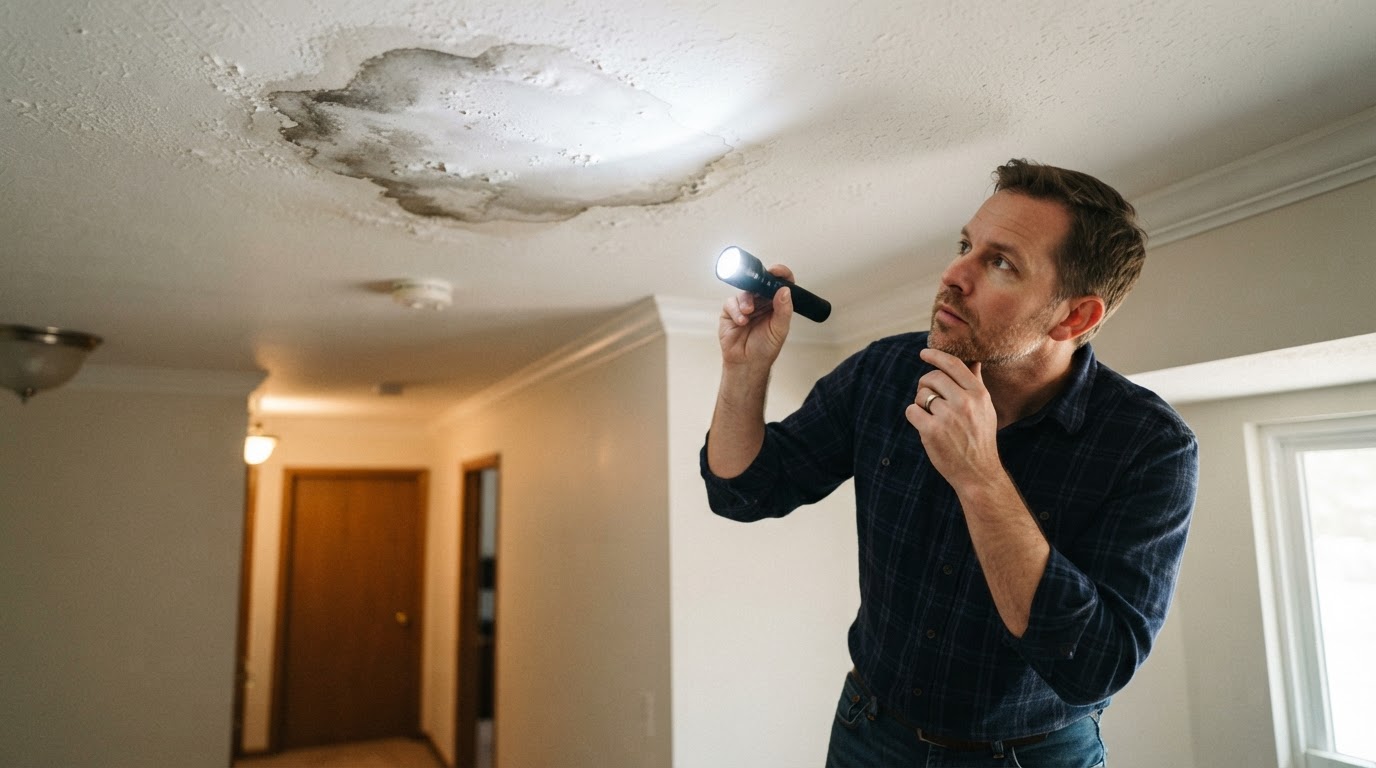
- ✓Most roof leaks do not originate where the water appears on the ceiling — water travels along rafters and sheathing before dripping, so the entry point may be several feet from the visible stain.
- ✓Pipe boot failures are the most common leak source — neoprene rubber boots crack from UV exposure every 7–10 years and are a relatively inexpensive repair.
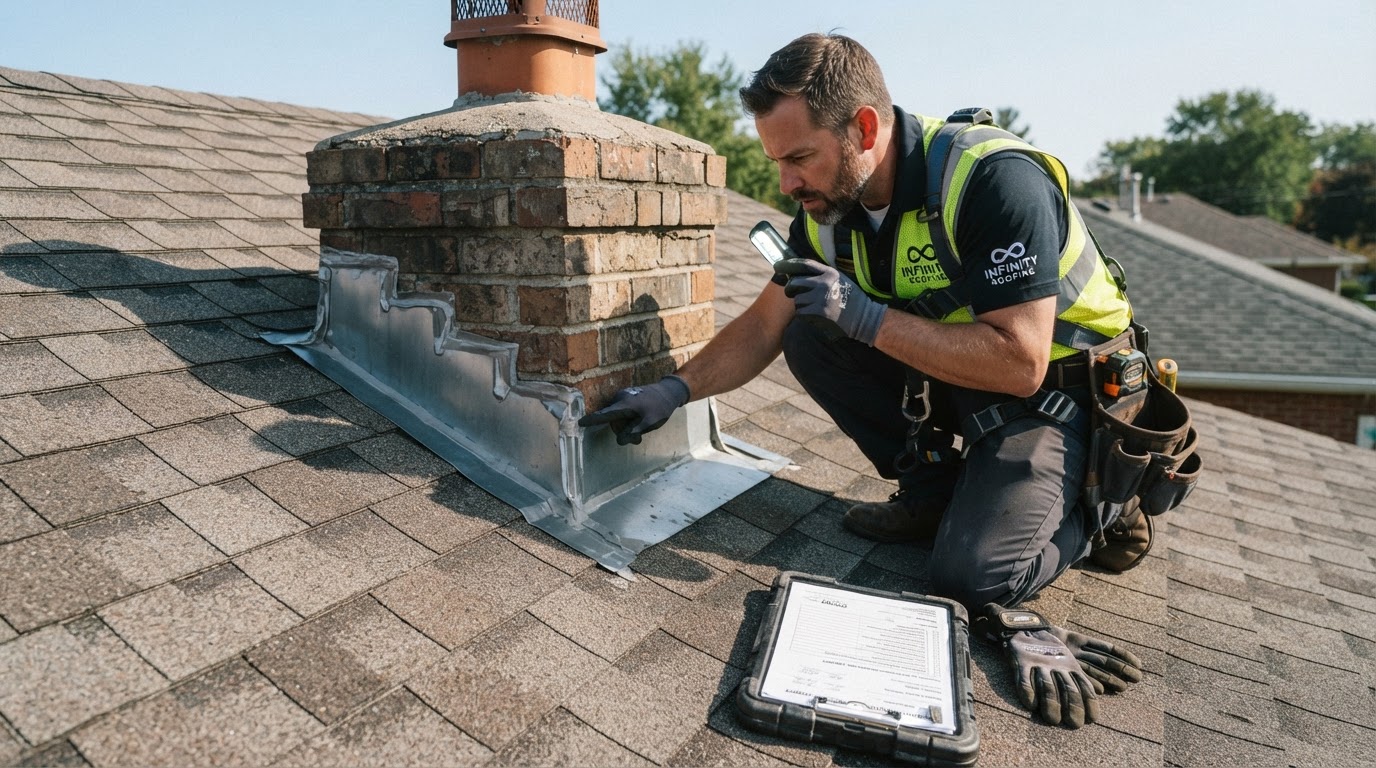
- ✓Chimney flashing failures involve step flashing, counterflashing, and mortar joint sealant — more complex to diagnose and repair than pipe boots.
- ✓Roof valleys concentrate water flow and leak when debris accumulates or flashing is improperly installed — keeping valleys clear is a key fall maintenance task.
- ✓What appears to be a leak may actually be condensation from poor attic ventilation — appearing in winter without rain, with frost on attic nails.
- ✓Tracing a leak requires noting when it appears, checking the attic during active rain, and looking for daylight through the deck — call a professional for roof-access diagnosis or storm-related claims.
This article is part of our comprehensive guide: Roof Repair vs. Replacement: How to Decide What Your Home Needs
Answer First: Where Do Most Roof Leaks Originate?
Most residential roof leaks do not originate where the water appears on the ceiling. Water travels along rafters, decking, and gravity paths before it finds an opening into the living space — so a stain on the bedroom ceiling may originate from a flashing failure ten feet away on the roof. The National Roofing Contractors Association (NRCA) emphasizes that accurate leak diagnosis requires tracing the water path to its actual entry point, not simply patching where the stain appears.
The most common roof leak sources, in approximate order of frequency, are:
- Pipe boot failures (plumbing vent flashings)
- Chimney and sidewall flashing failures
- Roof valley leaks
- Skylight leaks
- Damaged or missing shingles
- Ice dams at eaves
- Condensation from poor ventilation
This guide explains each source, how to identify it, and when professional diagnosis is warranted. For help deciding whether a leak warrants repair or full replacement, see our roof repair vs. replacement guide.
Why Leaks Appear Far From Their Source
Understanding water behavior is the first step in leak diagnosis. Water that penetrates the roof surface does not fall straight down — it runs along the underside of sheathing, follows rafters, and pools at the lowest point before dripping. This means:
- A ceiling stain near an interior wall may originate from a flashing leak at an exterior wall
- A stain in the center of a room may originate from a roof penetration (pipe vent or skylight) several feet away
- Multiple stains may all trace back to a single entry point
The NRCA recommends checking the attic during active rain (if safe) to trace water paths with a flashlight, as this reveals the actual entry point more reliably than inspecting the ceiling stain alone.
1. Pipe Boot Failures (Most Common)
Plumbing vent pipes penetrate the roof to vent sewer gases above the roofline. Each penetration is sealed with a pipe boot — a rubber or neoprene flashing that wraps the pipe and seals against the shingles.
Why they fail
The neoprene rubber in pipe boots degrades from UV exposure, typically cracking and splitting every 7 to 10 years. Once the rubber cracks, water runs down the pipe, under the shingles, and into the attic — often appearing as a stain near a bathroom or kitchen wall.
How to identify
- A stain that appears near a plumbing wall (where pipes run vertically)
- Water appearing during rain but not necessarily during heavy wind
- A visible crack in the rubber boot when inspected from the roof
The fix
Pipe boot replacement is a standard, relatively inexpensive repair — typically a few hundred dollars. The old boot is removed, a new neoprene or lead boot is installed, and the surrounding shingles are resealed. This is one of the most cost-effective roof repairs a homeowner can make.
2. Chimney and Sidewall Flashing Failures
Chimneys are a major leak source because they create a large intersection between the roof and a vertical masonry surface. Proper chimney flashing involves multiple components:
- Step flashing:** L-shaped metal pieces woven into each shingle course up the sides of the chimney
- Counterflashing:** Metal embedded into the mortar joints of the chimney, overlapping the step flashing
- Cricket (saddle):** A small roof structure on the uphill side of wide chimneys to divert water around them
Why they fail
- The mortar joint sealant between counterflashing and masonry deteriorates over time
- Step flashing may have been improperly installed or reused during a past replacement
- Crickets may be missing on wide chimneys, allowing water to pool against the uphill side
How to identify
- Water stains near a chimney, often on the ceiling or wall adjacent to it
- Water appearing during wind-driven rain (which forces water into flashing gaps)
The fix
Chimney flashing repair ranges from resealing mortar joints to complete step and counterflashing replacement. This is more involved than a pipe boot fix and typically requires a roofing professional.
3. Roof Valley Leaks
Valleys are the internal intersections where two roof planes meet, creating a channel that carries a high volume of water. Because valleys concentrate water flow, they are a common leak source when improperly installed or when debris accumulates.
Why they fail
- Debris accumulation:** Leaves and granules collect in valleys, slowing water flow and causing it to back up under shingles
- Improper installation:** Valleys require either woven shingle technique or metal valley flashing with ice and water shield beneath — shortcuts here cause leaks
- Worn shingles in the valley:** The high water volume wears valley shingles faster than field shingles
How to identify
- Water stains near an interior valley (where two roof slopes meet)
- Visible debris accumulation in the valley from the ground
The fix
Valley repair may involve clearing debris, replacing worn valley shingles, or installing metal valley flashing with ice and water shield. In fall, keeping valleys clear of leaves is a key maintenance task — see our roof inspection and maintenance guide.
4. Skylight Leaks
Skylights create a large roof penetration and are a frequent leak source. Leaks typically originate from:
- Failed flashing:** The skylight's curb flashing deteriorates or was improperly installed
- Failed sealant:** The sealant between the skylight frame and the glass degrades
- Condensation:** In some cases, what appears to be a leak is actually condensation from warm moist air hitting the cold skylight — a ventilation issue, not a roof issue
How to identify
- Water appearing around the skylight frame or on the drywall below it
- Distinguishing between rain-driven leaks (flashing) and condensation (appears in cold weather without rain)
The fix
Skylight leak repair ranges from resealing the frame to complete flashing replacement. If the skylight itself is old, replacement may be more cost-effective than repeated repairs.
5. Damaged or Missing Shingles
Missing, cracked, or wind-lifted shingles create direct water entry paths. This is the most visible leak source — homeowners can often see missing shingles from the ground.
Why they happen
- Wind uplift:** High wind breaks the thermal seal strip and lifts or removes shingles
- Hail damage:** Hail cracks or bruises shingles, creating entry points
- Age:** Old shingles become brittle and crack or lose granules
How to identify
- Visible missing shingles from the ground
- Granule accumulation in gutters (sign of advanced wear)
- Water stains appearing after a specific storm event
For the science of how wind and hail damage shingles, see our storm and hail damage guide.
6. Ice Dams at Eaves
Ice dams form when heat escaping from the attic melts snow on the upper roof, which then refreezes at the colder eaves. The ice buildup traps water behind it, forcing water under shingles and into the structure.
Why they happen
- Inadequate attic insulation:** Allows heat to escape into the attic, warming the roof deck
- Inadequate ventilation:** Trapped warm air melts snow unevenly
- In warmer climates like Tennessee and Alabama:** Ice dams are less common but can occur during cold snaps following snow or freezing rain
The fix
Ice dam prevention requires addressing the root cause — improving attic insulation and ventilation — rather than just removing the ice. Building code (IRC R905.1.2) requires ice barriers in regions subject to ice damming, extending at least 24 inches inside the exterior wall line.
7. Condensation From Poor Ventilation
Sometimes what appears to be a roof leak is actually condensation — warm, moist air from the living space condensing on cold attic surfaces. This is a ventilation problem, not a roof penetration problem.
How to identify
- Moisture appearing in winter without rain
- Frost or water droplets on attic nails and sheathing
- Mold or rot on rafters without an obvious roof penetration leak
The fix
Improving attic ventilation (balanced soffit-to-ridge) and sealing air leaks from the living space into the attic addresses condensation. This is distinct from roof repair and may require an insulation or ventilation specialist.
How to Trace a Leak: A Homeowner's Approach
If you discover a water stain, follow this sequence before calling a professional:
- Note when it appears: During rain? During wind-driven rain? In winter without rain? This narrows the source.
- Check the attic during active rain (if safe): Use a flashlight to trace water paths along rafters and sheathing to the entry point.
- Look for daylight: In a dark attic, visible daylight through the roof deck indicates a gap.
- Check penetrations: Inspect around pipe vents, chimneys, and skylights for water trails.
- Document with photos: For insurance or contractor reference.
When to call a professional
- The leak cannot be safely traced from the attic
- The leak requires roof access to diagnose
- The leak appears after a storm that may warrant an insurance claim
- Multiple leaks suggest a systemic issue rather than an isolated one
For storm-related leaks that may involve insurance, see our roof insurance claim guide.
A Note on Sources
This guide draws on National Roofing Contractors Association (NRCA) consumer guidance on leak diagnosis and roof system components, Asphalt Roofing Manufacturers Association material documentation, and International Residential Code requirements for ice barriers and ventilation. Specific leak diagnosis requires on-site inspection — a licensed roofing contractor should confirm the actual source before repairs are made.
Frequently Asked Questions
Why is my roof leaking but I can't see any missing shingles?
Most roof leaks originate at penetrations and flashing points — pipe boots, chimney flashing, skylights, and valleys — not from missing shingles. These leaks are often invisible from the ground. The water stain on your ceiling may also be far from the actual entry point, as water travels along rafters before dripping. An attic inspection during active rain is the best way to trace the source.
How long do pipe boots last before they leak?
Neoprene rubber pipe boots typically last 7 to 10 years before UV exposure causes them to crack and split. Once cracked, water runs down the plumbing vent pipe and into the attic. Pipe boot replacement is one of the most common and cost-effective roof repairs, typically costing a few hundred dollars.
Can I trace a roof leak myself?
You can take initial steps: note when the leak appears (during rain, wind-driven rain, or winter without rain), check the attic during active rain with a flashlight to trace water paths, look for daylight through the roof deck, and inspect around pipe vents and chimneys. However, if the leak requires roof access to diagnose or appears after a storm that may warrant an insurance claim, a professional inspection is recommended.
Is water in my attic a leak or condensation?
If moisture appears in winter without rain, with frost or water droplets on attic nails and sheathing, it may be condensation rather than a roof leak. Condensation occurs when warm moist air from the living space hits cold attic surfaces. The fix is improving attic ventilation and sealing air leaks from below — distinct from roof repair. If moisture appears during rain, it is more likely a penetration leak.
Cited Research Sources & References
- National Roofing Contractors Association (NRCA) — Consumer ResourcesView Source
- Asphalt Roofing Manufacturers Association (ARMA)View Source
- International Code Council (ICC) — 2021 IRC Chapter 9: Roof AssembliesView Source