Roof Inspection & Maintenance Guide for Homeowners
When to inspect, what to look for, and how seasonal maintenance extends roof lifespan — based on NRCA and ARMA guidance.
Key Editorial Takeaways
- ✓The NRCA recommends inspecting your roof at least twice per year — spring and fall — and after any severe storm.
- ✓Excessive granules in gutters signal advanced shingle wear; granules protect asphalt from UV damage.
- ✓Pipe boots and flashing are common, often-overlooked leak sources — neoprene boots fail every 7 to 10 years.
- ✓Interior signs (daylight in the attic, stained ceilings, compressed insulation) often appear before exterior damage is obvious.
- ✓Avoid hosing down the roof, walking on it unnecessarily, or covering damage with coatings before diagnosis.
This article is part of our comprehensive guide: Roof Repair vs. Replacement: How to Decide What Your Home Needs
Why Roof Maintenance Gets Ignored Until It's Too Late
A roof is easy to forget because it is out of sight. Most homeowners only think about their roof when water appears on a ceiling — by which point a small, inexpensive problem has often become a large one.
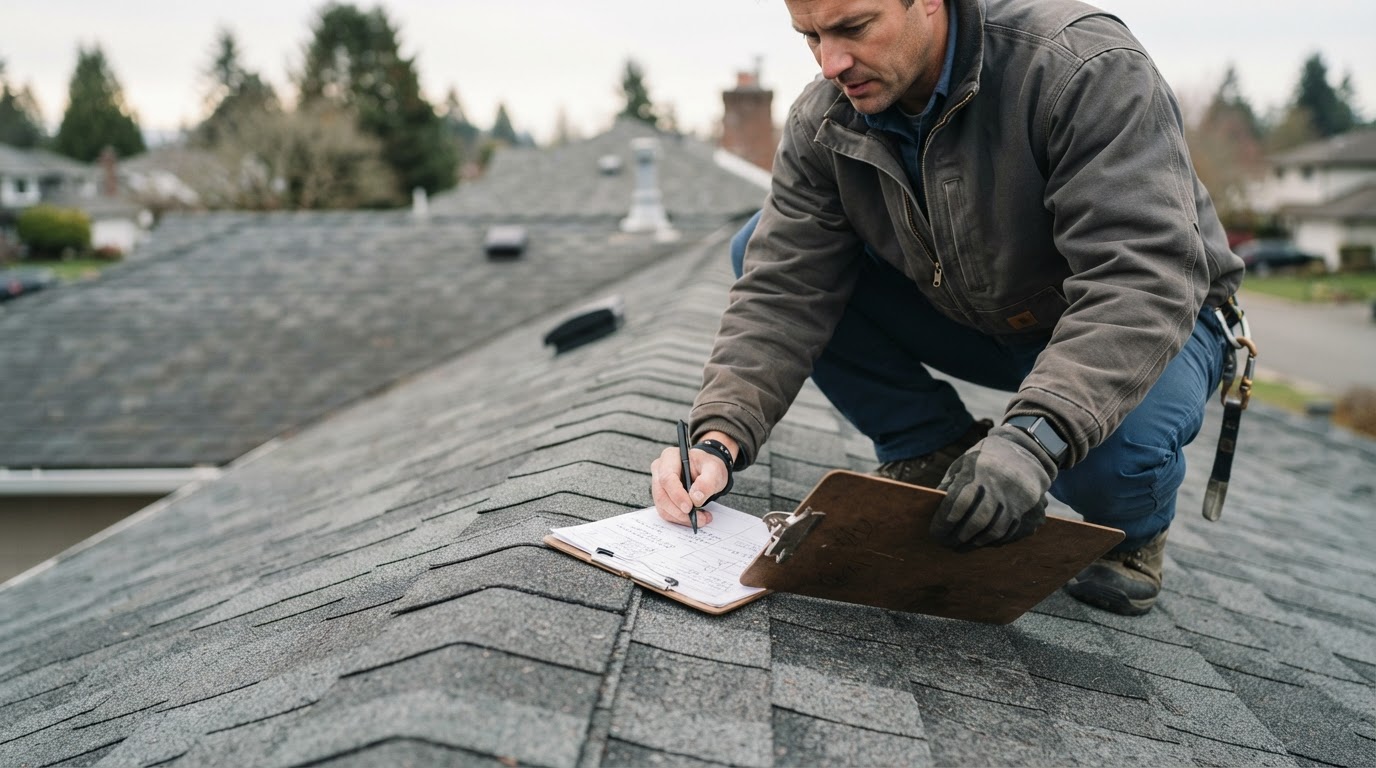
The National Roofing Contractors Association (NRCA) advises that all roofs require periodic inspection and maintenance to achieve maximum roof life, and recommends scheduling roof inspections at least twice per year — in the spring and fall — and after any severe storm.
This guide translates that guidance into a practical homeowner checklist. For help deciding whether an inspection has turned up a repair or a full replacement, see our roof repair vs. replacement guide.
When to Inspect Your Roof
The NRCA recommends a biannual inspection schedule:
- Spring:** Check for damage from winter weather — ice dams, wind-lifted shingles, and cracked flashing.
- Fall:** Clear debris before winter and confirm drainage is clear so that snow and ice do not compound problems.
- After any severe storm:** Inspect after high wind, hail, or heavy debris events, even if no damage is visible from the ground.
For how storms silently damage shingles, see our storm and hail damage guide.
What to Look For: Exterior Checklist
A safe inspection begins from the ground and with binoculars. The NRCA cautions homeowners to use a firmly braced, tied-off ladder with rubber safety feet and to avoid walking on the roof, which can damage shingles and risks injury.
Shingles and surface
- Cracked, curled, or missing shingles:** The NRCA notes that biannual inspections often uncover cracked, warped, or missing shingles.
- Granule loss:** Excessive granules accumulating in gutters or downspouts signal advanced shingle wear. Granules protect the asphalt from UV degradation.
- Algae or moss:** Growth retains moisture against the shingle surface and can accelerate deterioration.
Flashing and penetrations
- Flashing around chimneys, skylights, and vents:** Look for lifted, cracked, or deteriorated flashing — a common leak source.
- Pipe boots:** The neoprene rubber seal around plumbing vents deteriorates from UV exposure, typically every 7 to 10 years, and is a frequent cause of localized leaks.
Gutters and drainage
- Clogged gutters and downspouts:** Backed-up water can wick under shingles and rot the fascia.
- Sagging gutters:** Can indicate fastener failure or water weight from debris.
What to Look For: Interior Checklist
Interior signs often appear before exterior damage is obvious. The NRCA recommends checking indoors for cracked paint, discolored plasterboard, and peeling wallpaper as signs of damaged roof areas.
Attic
- Daylight through the roof deck:** Visible light means a gap where water can enter.
- Moist or compressed insulation:** Indicates current or past leaks.
- Mold or rot on rafters and sheathing:** Signs of chronic moisture.
- Ventilation:** Confirm ridge and soffit vents are unobstructed. Poor ventilation traps heat and moisture, shortening shingle life.
Living areas
- Water stains on ceilings or walls:** Track the stain upward to its likely roof entry point, which may be far from the visible stain.
- Sagging drywall:** Can indicate a longer-term leak.
Seasonal Maintenance Tasks
Routine maintenance is mostly about keeping water moving away from the roof and clearing what traps moisture.
Spring
- Inspect for winter damage — lifted shingles, cracked flashing, ice-dam evidence.
- Clear gutters of debris.
- Check that downspouts direct water at least several feet from the foundation.
Summer
- Trim back tree branches that overhang the roof — they abrade shingles and drop debris.
- Check attic ventilation to prevent heat buildup that bakes shingles from below.
- Look for UV damage and loosened fasteners on metal roofs.
Fall
- Clear leaves and debris from roof valleys, gutters, and drains.
- Confirm drainage is clear before winter.
- Inspect and refresh sealants around penetrations where accessible.
Winter
- Monitor for ice dams at the eaves, which can force water under shingles.
- Keep attic ventilation and insulation balanced to reduce condensation and ice-dam formation.
- Avoid chipping ice off the roof, which can damage shingles.
Maintenance to Avoid
The NRCA offers specific cautions:
- Do not hose down a roof** with water or use a hot air gun — these can damage shingles.
- Do not walk on the roof** unnecessarily — foot traffic cracks shingles and compresses the mat.
- Do not cover up blisters or damage** with coatings or mastics before a contractor assesses the problem — doing so hides evidence needed to diagnose the cause.
When to Call a Professional
A ground-level and attic inspection is within most homeowners' ability. But some situations call for a licensed roofing contractor:
- Damage that requires climbing onto the roof to assess safely.
- Active leaks that need diagnosis from the exterior.
- Damage after a storm that may warrant an insurance claim — documented by a professional inspection. See our insurance claim guide for how a contractor's report supports a claim.
- A roof approaching the end of its rated lifespan, where a full replacement may be more economical than repeated repairs.
How Maintenance Extends Roof Lifespan
Roofing materials are rated for a lifespan range — for example, 20–25 years for 3-tab asphalt and 30 years to lifetime for architectural shingles. That range assumes reasonable maintenance. A neglected roof may fail well before its rated lifespan, while a maintained one can reach the upper end.
The Asphalt Roofing Manufacturers Association (ARMA) and the NRCA both emphasize that periodic inspection and maintenance are the primary ways to protect the investment in a roof. For a comparison of material lifespans, see our roofing materials guide.
A Note on Sources
This guide draws on consumer guidance from the National Roofing Contractors Association and the Asphalt Roofing Manufacturers Association. Specific maintenance requirements vary by roofing material and manufacturer — always follow the warranty documentation for your particular product.
Frequently Asked Questions
How often should I inspect my roof?
The National Roofing Contractors Association recommends inspecting your roof at least twice per year — in the spring and fall — and after any severe storm, even if no damage is visible from the ground.
Can I inspect my own roof, or do I need a professional?
A ground-level and attic inspection is within most homeowners' ability. However, any inspection requiring roof access, diagnosis of an active leak, or documentation for an insurance claim is best handled by a licensed roofing contractor.
What are the most common signs of roof problems?
Common signs include cracked, curled, or missing shingles; excessive granules in gutters; deteriorated flashing or pipe boots; daylight visible through the attic roof deck; and water stains on ceilings or walls.
Does routine maintenance really extend roof lifespan?
Yes. Roofing material lifespan ratings assume reasonable maintenance. Neglected roofs often fail well before their rated lifespan, while maintained roofs can reach the upper end of the rated range.
Cited Research Sources & References
- National Roofing Contractors Association (NRCA) — Consumer ResourcesView Source
- Asphalt Roofing Manufacturers Association (ARMA)View Source