
Roof Repair vs. Replacement: How to Decide What Your Home Needs
A clear evaluation framework based on roof age, leak location, shingle condition, structural integrity, and the 30% cost rule.
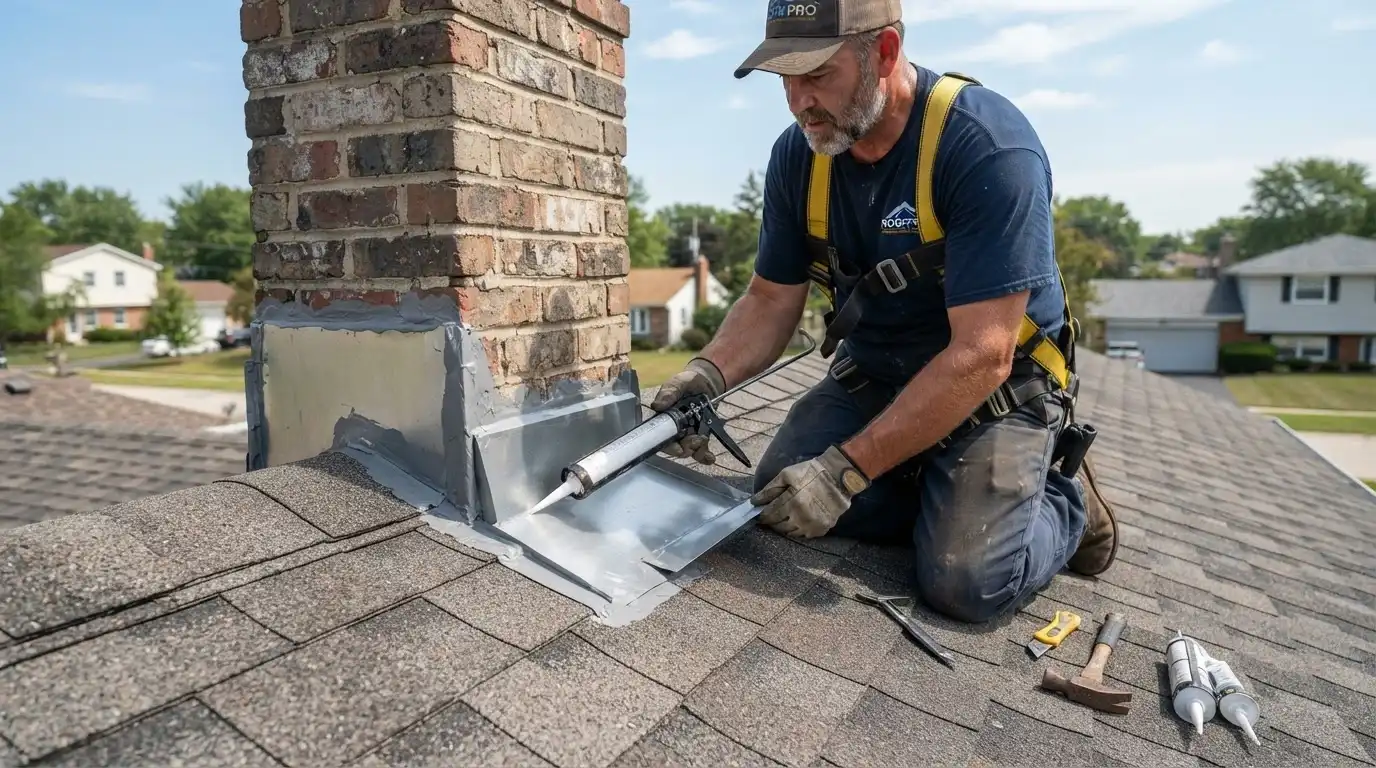
Key Editorial Takeaways
- ✓Repair when the damage is isolated and the roof is in the first half of its expected lifespan; replace when wear is widespread or the roof is in its last third of life.
- ✓The widely used 30% rule: if repair costs approach roughly 30% of replacement cost, replacement is usually the better long-term investment.
- ✓Flashing and pipe boot failures (neoprene boots fail every 7–10 years) are common, cost-effective repairs on otherwise healthy roofs.
- ✓Heavy granule loss into gutters, soft decking, and repeated repairs all point toward replacement rather than another patch.
- ✓A professional inspection should pinpoint the leak, assess whether damage is isolated or widespread, and give a repair cost with an expected lifespan — so you can decide with real numbers.
Answer First: Repair or Replace?
A roof repair fixes a specific, isolated problem — a few missing shingles, a flashing leak, a failed pipe boot. A roof replacement removes the entire existing roof system down to the deck and installs a new one. The right choice depends on three questions:
- How old is the roof relative to its expected lifespan?
- How widespread is the damage — one spot or many?
- Does the repair cost approach a meaningful fraction of replacement cost?
A widely used industry guideline is the 30% rule: if repair costs approach roughly 30% of the cost of a full replacement, replacement is usually the better long-term investment. Below that threshold, on a roof with remaining life, a targeted repair is typically the sensible choice.
This guide walks through the factors that determine which path is right for your home. For how a full replacement is priced, see our roof replacement cost guide.
When a Roof Repair Makes Sense
A targeted repair is usually the right call when the overall roofing system is still healthy and the problem is isolated. The clearest cases:
- The roof is in the first half of its expected lifespan.** Asphalt shingles are typically rated for 20–30 years depending on type. If the shingles still have good flexibility and granule coverage, a localized repair is economical and the rest of the system has life left.
- The damage is isolated to one area.** A single tree branch cracking two or three shingles, wind lifting a ridge cap, or a leak traced to one flashing point are all repairable without touching the rest of the roof.
- The leak is from a flashing or pipe boot failure.** Neoprene rubber pipe boots deteriorate from UV exposure, typically every 7 to 10 years, and are a frequent cause of localized leaks. Replacing a pipe boot or resealing chimney flashing is a standard, cost-effective repair.
- The repair cost is well under 30% of replacement cost.** If a fix costs a few hundred dollars and the roof has a decade of life left, repair is almost always the right call.
For how to spot the common leak sources that lead to repairs, see our roof inspection and maintenance guide.
When a Full Replacement Becomes the Better Investment
Replacement becomes the smarter choice when several conditions appear together. The decision is rarely about a single factor — it is about the combination:
- The roof is in the last third of its expected lifespan.** On an asphalt roof past roughly 20 years, fixing one leak often just reveals the next weak spot. The shingles are becoming brittle, and repairs do not hold as long.
- Damage or wear is widespread, not isolated.** Curling, cracking, or missing shingles across multiple roof sections — not just one — signal that the system is failing broadly, not in one spot.
- Shingles have lost significant granules.** Granules protect the asphalt from UV. Once they are shedding heavily into the gutters across the roof, the shingles are aging past the point where repairs are durable. For how granule loss happens, see our storm and hail damage guide.
- The roof deck is soft or water-stained.** Spongy or rotted decking found during an inspection points to chronic moisture that a surface repair will not solve.
- Repairs have been repeated.** A roof that has been patched multiple times in a few years is telling you the system is reaching the end of its service life.
- Repair costs approach 30% of replacement.** At that point, the repair buys limited time and the money is better spent on a full system reset.
The 30% Rule Explained
The 30% rule is a practical guideline, not a building code. It says: when the cost of a repair approaches roughly 30% of the cost of a full replacement, replacement is usually the better investment.
The reasoning is straightforward. A repair on an aging roof may only buy one to three years before the next problem appears. If that repair costs a third of what a new roof would cost, the homeowner is paying a large fraction of the replacement price for a short-term fix — and will likely pay it again soon.
Two caveats keep this rule useful rather than rigid:
- Age matters as much as cost.** Even a repair under 30% of replacement cost may not be worth it on a 25-year-old roof with widespread wear. Conversely, a repair slightly over 30% can make sense on a 10-year-old roof that otherwise has a decade of life left.
- Insurance changes the math.** If storm damage is covered by insurance, the question shifts from repair-vs-replace economics to what the policy and adjuster will support. See our roof insurance claim guide for that process.
How Roof Age and Material Affect the Decision
Expected lifespan sets the baseline for whether a roof is "young" or "aging." These are typical ranges for common residential materials:
| Material | Typical Lifespan | Repair Window |
|---|---|---|
| 3-tab asphalt shingles | 15–25 years | Repairs worthwhile in the first 12–15 years |
| Architectural (dimensional) asphalt | 25–30+ years | Repairs worthwhile through roughly 18–20 years |
| Standing seam metal | 40–70 years | Long repair window; isolated panel/flashwork common |
| Clay / concrete tile | 50–100+ years | Individual tile replacement; underlayment may need renewal |
These ranges assume reasonable maintenance. A neglected roof may fail well before its rated lifespan, while a maintained one can reach the upper end. For a full material comparison, see our roofing materials guide.
What a Professional Inspection Should Tell You
A reputable contractor's inspection should give you clear answers to these questions before you commit to either path:
- Where exactly is the leak or damage? A specific location, not a vague "the roof is failing."
- Is the damage isolated or widespread? One slope or many?
- What is the roof's age and remaining life? An honest estimate, not a sales pitch.
- What is the deck condition? Soft or rotted decking changes the calculus toward replacement.
- What would the repair cost, and how long is it likely to last? A number and a timeframe, so you can apply the 30% rule yourself.
If a contractor pushes for immediate full replacement on a young roof with isolated damage — or tries to patch a clearly failing 25-year-old system — a second opinion is warranted. The goal is a recommendation that matches the roof's actual condition.
A Note on Sources
This guide draws on National Roofing Contractors Association consumer guidance and widely used industry decision-making guidelines. Lifespan ranges reflect manufacturer and industry association data and assume proper installation and reasonable maintenance. Actual condition varies by roof — a licensed roofing contractor should confirm whether a specific roof is a candidate for repair or replacement.
Frequently Asked Questions
How do I know if I need a roof repair or a full replacement?
It comes down to three factors: the roof's age relative to its expected lifespan, whether the damage is isolated or widespread, and how the repair cost compares to replacement. If the roof is in the first half of its life and the damage is in one spot, a repair usually makes sense. If wear is widespread or the roof is in its last third of life, replacement is typically the better investment.
What is the 30% rule for roof repair vs. replacement?
The 30% rule is a widely used industry guideline: if the cost of a repair approaches roughly 30% of the cost of a full replacement, replacement is usually the better long-term investment. The rule is a starting point — roof age matters too, since even a cheap repair may not be worth it on a roof near the end of its lifespan.
Can I just repair a leak instead of replacing the whole roof?
Often, yes — if the leak is isolated (such as a failed pipe boot or flashing) and the rest of the roof is in good condition with years of life left. But if the shingles are brittle, granule loss is widespread, or the deck is soft, a repair will only buy short-term time and a replacement is usually more cost-effective.
How long does a roof repair last compared to a replacement?
A quality repair on a structurally sound roof can last 5 to 10 years or longer. Repairs on a roof already near the end of its lifespan typically last only 1 to 3 years before new issues appear. This difference is a key reason the 30% rule exists — short-lived repairs on aging roofs are rarely a good value.
Cited Research Sources & References
- National Roofing Contractors Association (NRCA) — Consumer ResourcesView Source
- Asphalt Roofing Manufacturers Association (ARMA)View Source
Related Guides in This Series
- How Much Does a Roof Leak Repair Cost? (2026 Price Guide)A comprehensive pricing guide to roof leak repairs — breaking down national cost ranges for pipe boot replacement, chimney flashing repairs, valley leaks, emergency tarping, and labor minimums, alongside a repair-versus-replace decision matrix.
- Where Do Roofs Leak? Common Roof Leak Sources ExplainedA researched guide to the most common residential roof leak sources — pipe boots, chimney flashing, roof valleys, skylights, ice dams, and damaged shingles — explaining how to trace a leak to its entry point and when to call a professional.
- Emergency Roofing: What to Do When Your Roof Leaks SuddenlyA practical guide for homeowners facing a sudden roof leak or storm damage — what to do in the first hour, how to safely mitigate damage, what to document for insurance, and when emergency roofing service is warranted.
- Roof Inspection & Maintenance Guide for HomeownersA homeowner guide to roof inspections and seasonal maintenance — when to inspect, what to look for inside and out, and how routine care extends roof lifespan, based on NRCA and ARMA guidance.
- Signs You Need a New Roof: A Homeowner's Visual Warning-Signs ChecklistA researched homeowner checklist of the visual and hidden warning signs that a roof may need replacement — curling and missing shingles, granule loss, daylight through the decking, sagging, water stains, age by material, and when to stop inspecting and call a professional.