
Roofing Materials Guide: Asphalt, Metal, Tile & Flat Roofs Compared
A homeowner comparison of lifespan, cost, wind and hail resistance, and energy performance across the most common residential roofing materials.
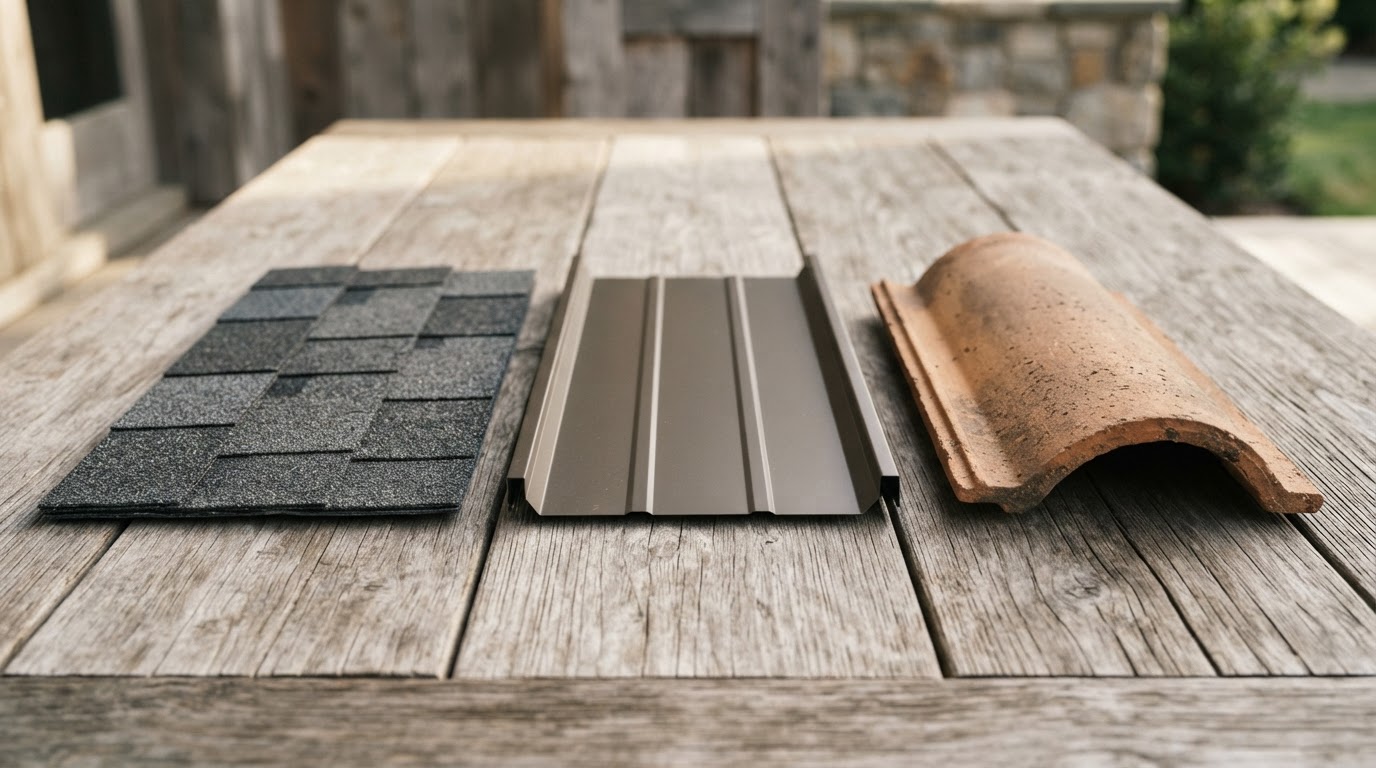
Key Editorial Takeaways
- ✓Asphalt shingles offer the lowest installed cost and are the most common residential material, but have a shorter lifespan.
- ✓Standing seam metal lasts 40–70 years and resists wind and hail well; it can also reduce cooling demand through solar reflectance.
- ✓Clay and concrete tile can last 50–100 years and withstand winds over 125 mph, but require structural support.
- ✓Flat roofs depend on membrane systems and proper drainage — ponding water is the primary failure mode.
- ✓Material choice should match your climate, storm exposure, budget horizon, and structural capacity.
This article is part of our comprehensive guide: The Complete Roof Replacement Guide for Homeowners
Choosing a Roofing Material Starts With Your Situation
There is no single best roofing material — only the best fit for a given home, climate, budget, and aesthetic. A material that performs well in a dry, mild climate may be a poor choice in a hail-prone region, and the cheapest option over 20 years is rarely the cheapest over 50.
This guide compares the most common residential roofing materials using lifespan, installed cost, storm resistance, and energy performance. For how material choice affects the total price of a project, see our roof replacement cost guide.
Asphalt Shingles
Asphalt shingles remain the most widely used residential roofing material in the United States. The Asphalt Roofing Manufacturers Association (ARMA) notes that asphalt shingles offer low initial and life-cycle costs and are the most cost-effective residential roofing option for most homeowners.
Types of asphalt shingles
- 3-tab shingles:** A single-layer, flat-profile shingle. Lowest cost, shortest lifespan (typically 20–25 years), and lower wind resistance (around 60 mph).
- Architectural (dimensional) shingles:** A multi-layered shingle with a thicker, textured profile. Higher cost but longer lifespan (30 years to limited lifetime warranties) and wind ratings up to 130 mph when properly installed.
Where asphalt shines
- Lowest installed cost of the common materials.
- Widely available and easy to find experienced installers.
- A broad range of colors and styles.
Where asphalt is weaker
- Shorter lifespan than metal or tile.
- Hail can dislodge protective granules, exposing the asphalt mat to UV degradation. For more on this mechanism, see our storm and hail damage guide.
Standing Seam Metal Roofing
Standing seam metal roofs feature continuous vertical panels with raised seams that conceal fasteners. They are increasingly popular in storm-prone regions.
Lifespan and durability
Metal roofs commonly last 40 to 70 years — significantly longer than asphalt shingles, which typically last 15 to 30 years. The longer lifespan is why metal is often described as a long-term investment despite a higher upfront cost.
Storm and hail resistance
Metal roofing performs well against high wind and hail. Concealed fasteners and interlocking panels resist wind uplift, and metal does not suffer the granule loss that hail inflicts on asphalt shingles.
Energy performance
Metal roofs can qualify as cool roofs. The U.S. Environmental Protection Agency explains that a cool roof has high solar reflectance and thermal emittance, reflecting heat away from the building. The EPA reports that in air-conditioned residential buildings, solar reflectance from a cool roof can reduce peak cooling demand by 11–27%. The U.S. Department of Energy has identified energy savings of up to roughly 15% for homes with cool roofs.
Where metal shines
- Long lifespan (40–70 years).
- Strong wind and hail performance.
- Potential energy savings through solar reflectance.
Where metal is weaker
- Higher installed cost — commonly two to three times that of asphalt shingles.
- Expansion and contraction can stress fasteners if the system is not designed and installed correctly.
- Without proper insulation, metal can be noisier during rain.
Clay and Concrete Tile
Tile roofing is associated with warm, dry climates and distinctive architectural styles, but it also offers exceptional durability.
Lifespan
The Tile Roofing Industry Alliance reports that clay and concrete tile have been tested in harsh weather including heavy rain, hurricane-force winds, damaging hail, and freeze-thaw cycles. Well-installed tile roofs commonly last 50 to 100 years.
Wind resistance
Manufacturers report that clay and concrete roof tiles can sustain winds in excess of 125 mph when properly installed and fastened, making them a strong choice in high-wind regions.
Where tile shines
- Exceptional lifespan (50–100 years).
- High wind resistance.
- Fire resistance and natural insulation from thermal mass.
Where tile is weaker
- Heavy — a home's structure may require reinforcement to support the weight.
- High installed cost.
- Individual tiles can crack from impact (a fallen branch or foot traffic), though the overall system remains durable.
Flat and Low-Slope Roofing Systems
Flat and low-slope roofs are common on modern homes with low-pitch sections, additions, and commercial-style architecture. These systems use membrane materials rather than shingles or tiles.
Common membrane types
- TPO (Thermoplastic Polyolefin):** A single-ply membrane that is heat-welded at the seams. Common and cost-effective for low-slope residential applications.
- EPDM (Rubber):** A durable synthetic rubber membrane, often used in colder climates.
- Modified Bitumen:** A multi-ply asphalt-based system offering layered protection.
Key consideration: drainage
Flat roofs depend on proper drainage and slope to prevent ponding water. Even a well-installed membrane will fail prematurely if water is allowed to pool. Regular inspection of drains, scuppers, and flashing is essential — see our roof inspection and maintenance guide for a seasonal checklist.
How to Compare Materials for Your Home
When evaluating materials, weigh these factors against your situation:
- Climate and storm exposure:** In hail-prone regions like parts of Tennessee and Alabama, metal and tile resist impact damage better than asphalt.
- Budget horizon:** Asphalt offers the lowest upfront cost; metal and tile cost more upfront but last longer.
- Structural capacity:** Tile requires a structure that can support the additional weight.
- Energy goals:** Cool-roof metal and light-colored materials can reduce cooling loads.
- Local building codes:** Some regions have wind or fire ratings that restrict material choices.
Material Comparison Summary
| Material | Typical Lifespan | Storm Resistance | Relative Cost |
|---|---|---|---|
| 3-tab asphalt | 20–25 years | Lower (wind ~60 mph) | Lowest |
| Architectural asphalt | 30 years–lifetime | Moderate–high (up to 130 mph) | Low–moderate |
| Standing seam metal | 40–70 years | High (wind and hail) | High |
| Clay / concrete tile | 50–100 years | High (wind 125+ mph) | High |
| Flat membrane (TPO/EPDM) | 15–25 years | Depends on drainage | Moderate |
Costs are relative and vary by region, roof complexity, and installer. For a detailed breakdown of how installed pricing is calculated, see our roof replacement cost guide.
A Note on Sources and Local Fit
This comparison draws on manufacturer and industry associations, federal energy and environmental agencies, and recognized material lifespan data. Specific product warranties, wind ratings, and hail impact ratings vary by manufacturer and product line — always verify the specifications of the exact product being quoted.
Material performance is also regional. For roofing information tailored to specific markets, explore our regional coverage hubs.
Frequently Asked Questions
Which roofing material lasts the longest?
Clay and concrete tile commonly last 50 to 100 years, and standing seam metal can last 40 to 70 years. Asphalt shingles typically last 20 to 30 years depending on the type and climate.
Is a metal roof worth the higher cost?
Metal roofing costs more upfront than asphalt but lasts significantly longer and performs better against wind and hail. In hail-prone regions, the longer lifespan and storm resistance can make the higher initial cost worthwhile over time.
What is the best roofing material for hail-prone areas?
Standing seam metal and tile generally resist hail impact better than asphalt shingles, which can lose protective granules when struck by hail. However, the best choice also depends on budget, structural capacity, and local building codes.
Do metal roofs really save energy?
Metal roofs with high solar reflectance can qualify as cool roofs. The EPA reports that cool roofs can reduce peak cooling demand by 11–27% in air-conditioned residential buildings, and the Department of Energy has identified energy savings of up to roughly 15%.
Cited Research Sources & References
- Asphalt Roofing Manufacturers Association (ARMA)View Source
- Tile Roofing Industry Alliance — Durability & LongevityView Source
- U.S. EPA — Using Cool Roofs to Reduce Heat IslandsView Source
- U.S. Department of Energy — Cool Roof ProductsView Source
Related Guides in This Series
- Class 4 Impact-Resistant Shingles: UL 2218 Testing & Insurance DiscountsA homeowner guide to UL 2218 Class 4 impact-resistant roofing shingles — explaining laboratory testing standards, polymer-modified asphalt composition, wind resistance, cost premiums, and insurance premium discounts ranging from 10% to 35%.
- How Long Does a Roof Last? Roof Lifespan by MaterialA researched guide to residential roof lifespan by material — covering asphalt shingles, standing seam metal, clay and concrete tile, and flat membrane systems — and the maintenance, climate, ventilation, and installation factors that determine actual service life.
- How Much Does a Roof Replacement Cost? A Homeowner GuideA comprehensive, source-supported homeowner guide to roof replacement costs — explaining how contractors calculate square footage, pitch multipliers, tear-off fees, underlayment, flashing, ventilation, and how to compare written estimates.