
The Complete Roof Replacement Guide for Homeowners
Everything a homeowner needs to know about replacing a residential roof — from recognizing when replacement is necessary, through material selection, cost factors, the installation process, warranties, and choosing a contractor.
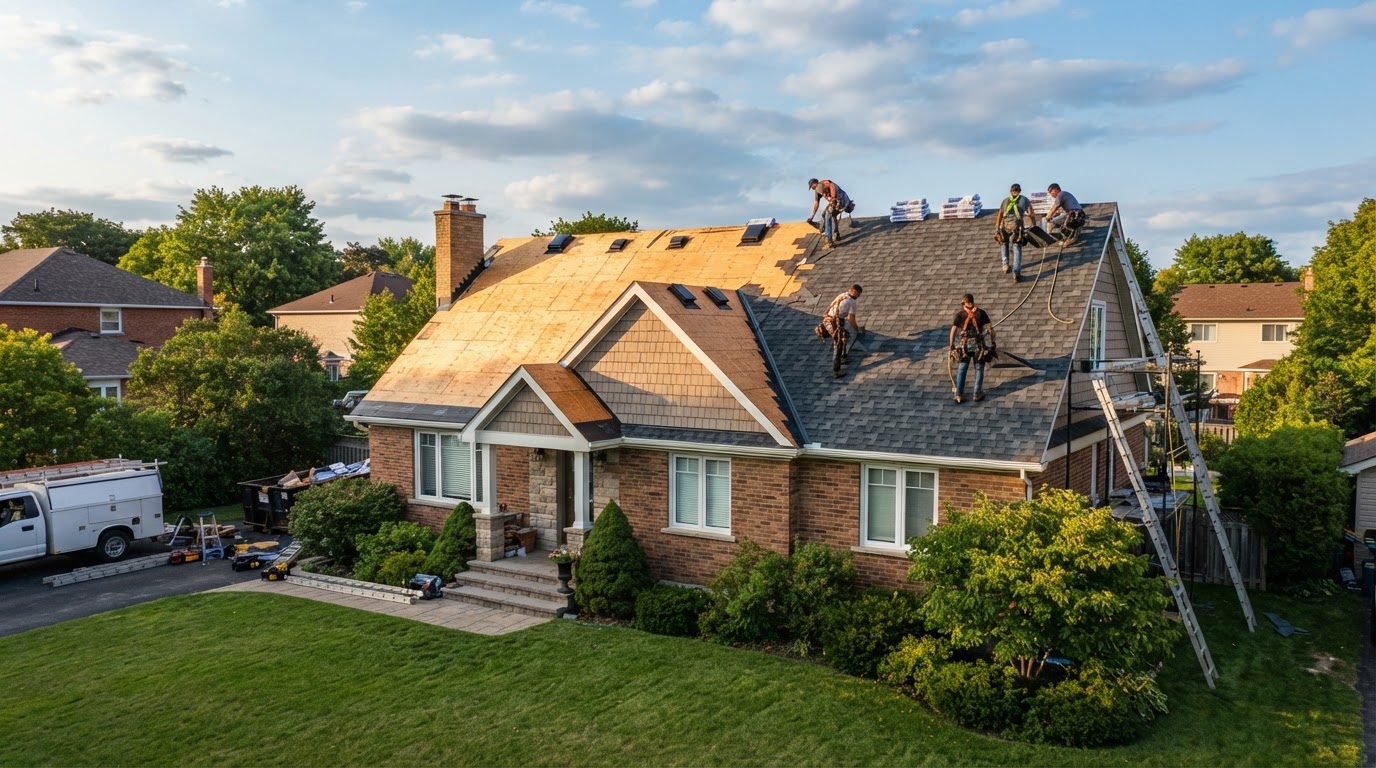
Key Editorial Takeaways
- ✓A roof replacement removes the existing roof system down to the structural deck and installs a complete new assembly — underlayment, ice barrier, flashing, shingles, and ventilation — per NRCA and IRC standards.
- ✓Roofing contractors price by roofing squares (100 sq ft of roof surface), not living square footage. Pitch and complexity increase the actual roof area and labor cost above the home's footprint.
- ✓No single roofing material is best for every home. Architectural asphalt is the most common choice; metal offers superior longevity and storm performance at higher upfront cost.
- ✓Installed prices vary by geography, size, pitch, complexity, material, labor market, tear-off, decking, code, and scope — there is no single national price.
- ✓Two estimates with different prices may not include the same scope of work. Compare product, tear-off, underlayment, flashing, ventilation, decking rate, permits, and warranty terms line by line.
- ✓The IRC requires a complete tear-off down to a solid deck for full replacements (R908.3), drip edge at eaves and rakes, and ice barriers in regions subject to ice damming (R905.1.2).
- ✓Manufacturer warranties cover material defects; workmanship warranties cover installation. Neither typically covers storm damage or lack of maintenance.
- ✓Verify contractor licensing through the state board, confirm insurance, request an itemized written estimate, and avoid high-pressure or door-to-door sales tactics.
Answer First: What Does Replacing a Roof Mean for a Homeowner?
A roof replacement is the removal of an existing residential roof system down to the structural wood deck, followed by the installation of a complete new roof assembly — underlayment, ice-and-water protection, drip edge, flashing, shingles or other roofing material, and ventilation. The National Roofing Contractors Association (NRCA) describes a steep-slope roof as an assembly of interacting components that must be installed in the correct order and to manufacturer specifications for the system to perform as designed.
There is no single national price, timeline, or material that applies to every home. A replacement is shaped by roof size, pitch, complexity, material choice, local labor markets, tear-off requirements, decking condition, building-code requirements, and the contractor selected. This guide walks through every stage of the decision so homeowners can understand what they are paying for, what to verify, and how to compare proposals.
For the specific cost breakdown, see our roof replacement cost guide. For the step-by-step installation process, see our roof replacement process guide.
When Does a Roof Need Replacement?
Not every leak or aging roof requires full replacement. The decision depends on the roof's age, the extent and distribution of damage, and whether repairs can reliably restore water-shedding performance. The NRCA advises that a professional roof evaluation should identify the roof's age, the condition of all system components, and whether repair or replacement is the appropriate recommendation.
Replacement is typically warranted when:
- The roof has reached the end of its service life.** Asphalt shingles generally last 15–30 years depending on product quality, climate, ventilation, and maintenance. A roof approaching or past its expected lifespan is a poor candidate for repeated repairs.
- Damage is widespread rather than isolated.** A few wind-lifted shingles or a single failed pipe boot is a repair. Granule loss, mat bruising, or cracking across multiple slopes suggests systemic failure.
- The deck is soft or rotting.** Spongy areas underfoot during an inspection indicate water has penetrated to the structural sheathing — a problem that replacement and deck repair addresses.
- Repeated leaks in multiple locations.** Multiple leaks appearing in different areas suggest the roof system has failed broadly rather than at a single penetration.
- Storm damage that exceeds repair scope.** After a severe hail or wind event, an insurance adjuster or contractor may determine that the extent of damage warrants replacement.
For the full decision framework, see our roof repair vs. replacement guide. For the warning signs that precede replacement, see our signs you need a new roof guide.
Understanding Roof Size: Squares, Pitch, and Complexity
What is a roofing "square"?
Roofing contractors do not price by the home's living square footage. They price by roofing squares — a unit equal to 100 square feet of roof surface area. A 2,000-square-foot house does not have a 2,000-square-foot roof; the actual roof area is larger because of pitch, overhangs, and roof complexity.
Why pitch matters
Roof pitch (slope) is expressed as a ratio of vertical rise to horizontal run, such as 4/12 (4 inches of rise per 12 inches of run). Pitch affects replacement in three ways:
- Surface area. A steeper pitch increases the actual surface area of the roof above the footprint. A 6/12 pitch adds roughly 12% more surface area than a flat plane; a 12/12 pitch adds roughly 41%.
- Labor difficulty. Steeper roofs require additional safety equipment, toe boards, and slower crew movement, increasing labor cost.
- Material requirements. Some manufacturers specify different fastening patterns or sealant applications for high-slope installations.
Roof complexity
A simple gable roof with few penetrations costs less per square than a roof with multiple valleys, dormers, skylights, chimneys, and changes in pitch. Each penetration and valley adds labor, flashing, and potential leak points. Contractors factor complexity into both material waste calculations and labor estimates.
For an interactive tool that estimates roof area and squares from your home's footprint and pitch, see the calculator in our roof replacement cost guide.
Choosing a Roofing Material
Material selection is one of the most consequential decisions in a replacement because it drives cost, lifespan, storm performance, energy efficiency, and warranty eligibility. No single material is best for every home — the right choice depends on budget, climate, storm exposure, aesthetic preference, and how long the homeowner plans to stay.
Asphalt shingles
Asphalt shingles are the most common residential roofing material in the United States. The Asphalt Roofing Manufacturers Association (ARMA) documents two primary types:
- 3-tab shingles:** A lighter, flatter, economy product with a shorter lifespan (typically 15–20 years). Increasingly phased out in favor of architectural shingles.
- Architectural (dimensional) shingles:** A thicker, laminated product with a textured appearance and longer lifespan (typically 25–30 years or more). The dominant choice for residential replacement today.
Impact-resistant (IR) shingles rated under UL 2218 Class 4 offer better resistance to hail impact and may qualify for insurance premium discounts in hail-prone regions. See our impact-resistant shingles guide for details.
Metal roofing
Standing seam and exposed-fastener metal roofing resists hail, reflects solar heat, and lasts 40–70 years. It costs more upfront than asphalt but offers superior longevity and storm performance. See our metal roofing guide for the full tradeoff analysis.
Tile and flat roof systems
Concrete and clay tile offer exceptional lifespan (50+ years) but require structural reinforcement due to weight. Low-slope and flat roofs use modified bitumen, TPO, or EPDM membrane systems. See our roofing materials guide for a complete comparison.
| Material | Typical Lifespan | Relative Cost | Storm Performance |
|---|---|---|---|
| 3-tab asphalt | 15–20 years | Lowest | Moderate |
| Architectural asphalt | 25–30+ years | Moderate | Good |
| Impact-resistant asphalt | 25–30+ years | Moderate+ | Better (hail) |
| Standing seam metal | 40–70 years | High | Excellent |
| Concrete/clay tile | 50+ years | Highest | Good (heavy) |
Lifespan ranges are general and depend on climate, ventilation, installation quality, and maintenance. Specific product warranties should be verified with the manufacturer.
What Determines the Cost of a Roof Replacement
Installed prices vary by geography, roof size, pitch, complexity, material, labor market, tear-off requirements, decking condition, code requirements, accessibility, and scope of work. There is no single national price.
The major cost components are:
- Materials:** Shingles or roofing material, underlayment, ice and water shield, drip edge, flashing, pipe boots, ridge vent, fasteners, and sealants.
- Labor:** Crew size, project duration, and roof difficulty.
- Tear-off and disposal:** Removing existing layers and hauling debris. Multiple existing layers increase this cost.
- Decking repair:** Rotted or damaged plywood discovered during tear-off. Reputable estimates include a per-sheet replacement rate.
- Permits and fees:** Local building permit costs, which vary by jurisdiction.
- Warranty registration:** Some manufacturer enhanced warranties require certified installation and a registration fee.
For a detailed cost breakdown with illustrative examples and the variables that move a price up or down, see our roof replacement cost guide. For financing options, see our roof financing guide.
The Roof Replacement Process: What Happens on Installation Day
A residential replacement is a multi-day construction project that follows a predictable sequence. Understanding the phases helps homeowners verify that the work is being done correctly.
- Site preparation. Protection of landscaping, AC units, windows, and the property perimeter with tarps and plywood.
- Tear-off. Removal of existing roofing down to the wood deck, with debris conveyed to a dump trailer.
- Deck inspection and repair. The exposed deck is inspected for rot, softness, and gaps. Damaged plywood is replaced. The International Residential Code (IRC R908.3) requires a complete tear-off down to a solid deck for re-roofing.
- Underlayment and ice barrier. Synthetic or felt underlayment is installed across the deck. Ice and water shield is applied at eaves, valleys, and penetrations where required by code (IRC R905.1.2 requires ice barriers in regions subject to ice damming, extending at least 24 inches inside the exterior wall line).
- Drip edge and flashing. Metal drip edge is installed at eaves and rakes. Step flashing, counterflashing, and valley flashing are installed or replaced at chimneys, walls, valleys, and penetrations.
- Material installation. Shingles or roofing material are installed to the manufacturer's published installation instructions, including fastening patterns, nail placement, and sealant application.
- Ventilation. Ridge vents, box vents, or other exhaust ventilation are installed to balance with intake (soffit) ventilation. Proper ventilation is critical to shingle lifespan and warranty validity.
- Cleanup and magnet sweep. Debris is hauled, and the site is magnetically swept for stray nails.
For the full phase-by-phase walkthrough, see our roof replacement process guide.
Warranties: What They Cover and What They Don't
A roof replacement typically involves two separate warranties, and homeowners should understand the distinction:
- Manufacturer (material) warranty:** Covers defects in the roofing material itself. Basic manufacturer warranties are limited and may prorate over time. Enhanced or "non-prorated" warranties often require certified installation, specific accessory products, and a registration fee.
- Workmanship warranty:** Offered by the contractor and covering installation defects. Terms vary widely — from one year to lifetime — and are only as reliable as the contractor's longevity and commitment.
Neither warranty typically covers damage from storms, improper maintenance, or pre-existing conditions. For the complete warranty analysis, see our roof warranties guide.
Permits and Building Code
Most jurisdictions require a building permit for a full roof replacement. The contractor typically pulls the permit and schedules inspections. The International Residential Code governs residential roofing requirements, including:
- Complete tear-off** on full replacements (IRC R908.3)
- Drip edge** at eaves and rakes
- Ice barriers** in regions subject to ice damming (IRC R905.1.2)
- Underlayment** requirements based on pitch
- Fastening patterns** per manufacturer specifications
Homeowners should verify that permits are pulled and that a final inspection is conducted and passed. For details, see our roofing permits guide.
Choosing and Comparing Contractors
The contractor selected is as important as the material chosen. A premium product installed poorly will underperform a standard product installed correctly. The NRCA and consumer protection guidance emphasize several evaluation factors:
- Licensing.** Verify the contractor's license through the state licensing board. Tennessee and Alabama both require state licensing for roofing contractors.
- Insurance.** Confirm the contractor carries liability insurance and workers' compensation.
- Local presence and longevity.** A contractor with a documented local history is more likely to honor a workmanship warranty years later.
- Written, itemized estimates.** A reputable estimate identifies the product, scope, underlayment, flashing, ventilation, tear-off, decking rate, permits, and warranty terms.
- References and reviews.** Look for documented homeowner reviews and ask for recent project references.
- No high-pressure tactics.** Avoid same-day closing discounts, door-to-door storm chasers, and contractors who discourage getting a second estimate.
For the full contractor vetting framework — including questions to ask, red flags, and how to compare two estimates with different prices — see our how to choose a roofing contractor guide. For storm-specific fraud prevention, see our roofing scams and storm chasers guide.
Comparing two estimates
Two estimates with different prices may not include the same scope of work. Compare these line items specifically:
- The specific manufacturer product and shingle line
- Whether a complete tear-off is included
- Underlayment type (synthetic vs. felt)
- Ice and water shield scope
- Flashing and drip edge replacement
- Ventilation assessment and work
- Decking replacement rate
- Permit inclusion
- Workmanship warranty term
- Manufacturer warranty registration
- Exclusions and change-order conditions
Regional Considerations
Roofing conditions vary by climate, storm frequency, and local building practices. Homeowners in Tennessee and Alabama face specific factors:
- Severe weather frequency.** Both states experience high frequencies of severe thunderstorms producing hail and damaging winds, particularly in spring. See our storm and hail damage guide.
- Insurance claim patterns.** Many insurers in Alabama apply separate percentage-based wind/hail deductibles. See our insurance claim guide.
- Heat and UV.** Sustained summer heat accelerates asphalt shingle aging. Proper ventilation and algae-resistant shingles are regionally relevant.
- Local licensing.** Tennessee and Alabama both require state contractor licensing. Verify license numbers through the respective state boards.
For region-specific roofing information, see our Middle Tennessee roofing guide and Central Alabama roofing guide.
A Note on Sources
This guide draws on National Roofing Contractors Association (NRCA) consumer guidance on roof system components and replacement, Asphalt Roofing Manufacturers Association (ARMA) material documentation, International Residential Code (IRC) requirements for re-roofing and ice barriers, and manufacturer installation documentation. Specific product warranties, lifespans, and wind ratings should be verified with the manufacturer for the product being installed. Local building-code requirements and permit processes vary by jurisdiction — confirm current requirements with your local building department.
Frequently Asked Questions
How long does a roof replacement take?
A typical residential asphalt shingle replacement takes 1 to 3 days depending on roof size, complexity, weather, and crew size. Larger or more complex roofs, metal installations, or projects that encounter significant decking repair may take longer. Your contractor should provide an estimated timeline in the written estimate.
Should I tear off my old roof or install over it?
The International Residential Code (IRC R908.3) requires a complete tear-off down to a solid deck for full roof replacements. Installing new shingles over existing layers (an overlay) is generally not recommended because it hides deck damage, adds weight, shortens the new roof's lifespan, and may void manufacturer warranties. A tear-off allows the deck to be inspected and repaired, which is critical for a durable installation.
What is the best time of year to replace a roof?
Late spring through early fall is the most common replacement season because dry weather and moderate temperatures allow safe crew work and proper shingle sealing. However, reputable contractors replace roofs year-round in Tennessee and Alabama. Cold-weather installation is possible but requires attention to shingle seal-strip activation. Schedule during the off-season (late fall or winter) for potentially better availability and pricing.
Do I need to be home during the roof replacement?
You do not need to be home for the physical work, but you should be reachable for any decisions that arise during tear-off — such as unexpected decking damage that requires replacement. The crew will need access to the exterior and power for tools. Expect significant noise, vibration, and debris during tear-off, so consider relocating pets and working from a different location if possible.
Will my homeowner's insurance pay for a roof replacement?
Insurance typically covers roof replacement when the damage is caused by a covered peril such as a storm, hail, or falling tree. It generally does not cover replacement due to age, wear, or maintenance neglect. If you believe your roof has storm damage, document it with photos and storm dates, and file a claim promptly. See our roof insurance claim guide for the full process.
How do I know if a contractor's estimate is fair?
A fair estimate is itemized, identifies the specific product and scope, includes tear-off, underlayment, ice and water shield, flashing, drip edge, ventilation, a decking replacement rate, permits, and warranty terms. Compare two or three estimates line by line rather than by total price alone — the cheapest estimate may omit necessary scope. Verify licensing, insurance, and references before deciding.
Cited Research Sources & References
- National Roofing Contractors Association (NRCA) — Consumer ResourcesView Source
- Asphalt Roofing Manufacturers Association (ARMA)View Source
- International Code Council (ICC) — 2021 IRC Chapter 9: Roof AssembliesView Source
- International Code Council (ICC) — 2021 IRC Section R908: ReroofingView Source
Related Guides in This Series
- How Much Does a Roof Replacement Cost? A Homeowner GuideA comprehensive, source-supported homeowner guide to roof replacement costs — explaining how contractors calculate square footage, pitch multipliers, tear-off fees, underlayment, flashing, ventilation, and how to compare written estimates.
- The Roof Replacement Process: What Homeowners Should ExpectA detailed homeowner guide to the full roof replacement process — inspection, tear-off, deck inspection, underlayment, ice and water shield, drip edge, flashing, shingle installation, ventilation, and cleanup — based on NRCA and IRC building code standards.
- Roofing Materials Guide: Asphalt, Metal, Tile & Flat Roofs ComparedA researched comparison of asphalt shingles, standing seam metal, clay and concrete tile, and flat roof systems — covering lifespan, cost, storm resistance, and energy performance for homeowners.
- Roof Financing Guide: How to Pay for a Roof Replacement Without OverpayingA researched homeowner guide to paying for a roof replacement — when insurance applies and when it does not, how deductibles work, financing options from contractor programs to personal loans and home equity, what a fair payment schedule looks like, and how to avoid payment-structure red flags.
- Roof Warranties Explained: Manufacturer vs WorkmanshipA homeowner's guide to roof warranties — the difference between manufacturer material warranties and contractor workmanship warranties, what each covers, what voids them, and the questions to ask before signing.
- How to Choose a Roofing Contractor: A Homeowner's Guide to Vetting, Questions, and Red FlagsA researched homeowner guide to choosing a roofing contractor — verifying licensing and insurance, comparing written estimates, understanding warranties, evaluating local reputation, and recognizing high-pressure sales tactics and red flags before you sign a contract.
- Roofing Permits Explained: What Homeowners Need to KnowA homeowner's guide to roofing permits — when a permit is required, who pulls it, what the inspection covers, and why unpermitted roofing work creates problems with insurance, resale, and code compliance.
- Signs You Need a New Roof: A Homeowner's Visual Warning-Signs ChecklistA researched homeowner checklist of the visual and hidden warning signs that a roof may need replacement — curling and missing shingles, granule loss, daylight through the decking, sagging, water stains, age by material, and when to stop inspecting and call a professional.