
How Long Does a Roof Last? Roof Lifespan by Material
A homeowner guide to the expected lifespan of asphalt, metal, tile, and flat roof systems — and the maintenance, climate, and installation factors that determine whether a roof reaches its rated lifespan or fails early.
Key Editorial Takeaways
- ✓Roof lifespan depends on material, installation quality, climate, and maintenance — manufacturer ratings assume proper installation and reasonable care.
- ✓Architectural asphalt shingles typically last 25–30+ years; 3-tab asphalt 15–25 years; standing seam metal 40–70 years; clay and concrete tile 50–100+ years.
- ✓Tile roofs may require underlayment renewal at 20–40 years even though the tiles themselves last a century — the underlayment, not the tile, is the limiting component.
- ✓Attic ventilation is a critical lifespan factor in hot climates like Tennessee and Alabama — inadequate ventilation can reduce asphalt shingle lifespan by years.
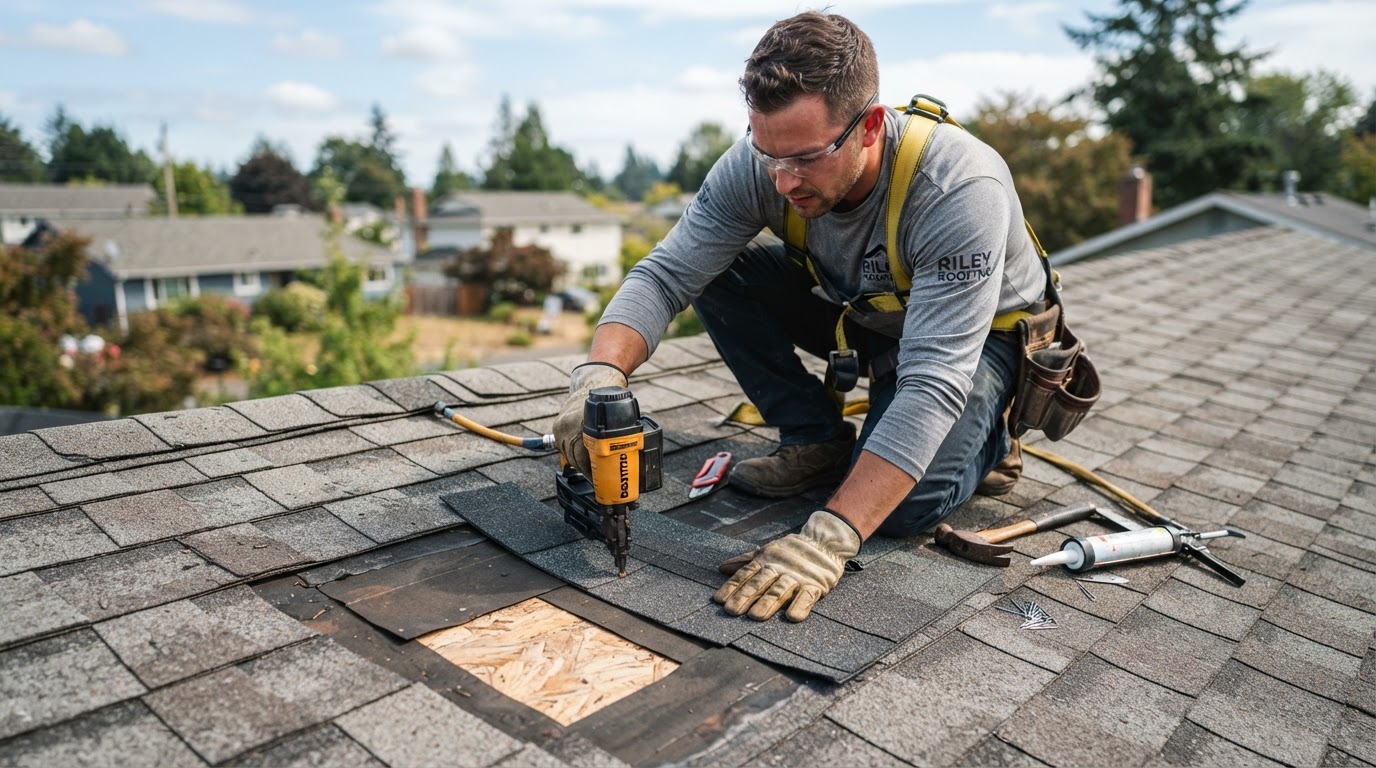
- ✓The NRCA recommends biannual inspections (spring and fall) and post-storm inspections to maximize roof life — neglected roofs fail well before their rated lifespan.
- ✓Signs of end-of-life include widespread granule loss, curling or brittle shingles, repeated leaks in multiple locations, and soft decking — these warrant professional assessment.
This article is part of our comprehensive guide: The Complete Roofing Materials & Selection Guide for Homeowners
Answer First: How Long Does a Roof Last?
There is no single answer to how long a roof lasts — it depends on the material, the quality of installation, the climate, and the maintenance it receives. Manufacturer lifespan ratings provide a baseline, but they assume proper installation and reasonable maintenance. A neglected roof may fail well before its rated lifespan, while a well-maintained one can reach the upper end of the range.
Typical lifespan ranges for common residential roofing materials:
| Material | Typical Lifespan | Key Lifespan Factors |
|---|---|---|
| 3-tab asphalt shingles | 15–25 years | Granule loss, UV, storm damage |
| Architectural (dimensional) asphalt | 25–30+ years | Ventilation, storm frequency, installation |
| Standing seam metal | 40–70 years | Fastener integrity, coating, installation |
| Clay / concrete tile | 50–100+ years | Underlayment renewal, impact, structural support |
| Flat membrane (TPO/EPDM) | 15–25 years | Drainage, membrane integrity, foot traffic |
The National Roofing Contractors Association (NRCA) advises that all roofs require periodic inspection and maintenance to achieve maximum roof life. This guide explains what determines whether a roof reaches its rated lifespan or falls short. For a full material comparison including cost and storm resistance, see our roofing materials guide.
Asphalt Shingle Lifespan
Asphalt shingles are the most common residential roofing material in the United States. The Asphalt Roofing Manufacturers Association (ARMA) notes that asphalt shingles offer low initial and life-cycle costs and are the most cost-effective option for most homeowners.
3-tab vs. architectural
- 3-tab shingles: A single-layer, flat-profile shingle with a typical lifespan of 15–25 years**. Lower wind resistance (around 60 mph) and shorter warranty.
- Architectural (dimensional) shingles: A multi-layered, thicker shingle with a typical lifespan of 25–30+ years** and limited lifetime warranties. Higher wind ratings (up to 130 mph with enhanced fastening).
What shortens asphalt shingle lifespan
- UV degradation:** Ultraviolet radiation dries out the asphalt, causing brittleness and cracking. Granules are the primary UV shield — once lost, degradation accelerates.
- Poor ventilation:** Attic heat buildup bakes shingles from below. ARMA emphasizes that proper attic ventilation is essential to shingle longevity.
- Hail damage:** Hail displaces granules and bruises the mat, permanently shortening the shingle's service life. For how hail damages shingles, see our storm and hail damage guide.
- Poor installation:** Deviation from manufacturer fastening instructions can void the warranty and reduce wind resistance.
- Algae and moss:** Retain moisture against the shingle surface, accelerating deterioration.
How to maximize asphalt shingle lifespan
- Maintain proper attic ventilation (balanced soffit-to-ridge)
- Inspect twice per year and after storms (NRCA recommendation)
- Keep gutters and valleys clear of debris
- Replace failing pipe boots before they cause deck damage
- Address hail damage promptly through insurance if applicable
For a complete maintenance checklist, see our roof inspection and maintenance guide.
Standing Seam Metal Roof Lifespan
Standing seam metal roofs feature continuous vertical panels with concealed fasteners. They are increasingly popular in storm-prone regions for their longevity and durability.
Typical lifespan: 40–70 years
Metal roofs commonly last 40 to 70 years — significantly longer than asphalt shingles. The longer lifespan is why metal is often described as a long-term investment despite a higher upfront cost.
What affects metal roof lifespan
- Fastener integrity:** Concealed fasteners reduce exposure, but expansion and contraction can stress fasteners over decades if the system is not properly designed
- Coating quality:** High-quality paint or coating systems (such as Kynar 500 / PVDF) resist fading and chalking for decades
- Installation:** Proper panel alignment, fastening, and flashing are critical to long-term performance
- Foot traffic:** Walking on metal roofs can dent panels, especially thinner-gauge metal
Why metal lasts longer
- Metal does not suffer granule loss from hail or UV
- Metal does not become brittle from UV exposure
- Metal's interlocking panels resist wind uplift
For a cost comparison with asphalt, see our roof replacement cost guide.
Clay and Concrete Tile Lifespan
Tile roofing is associated with warm, dry climates and distinctive architectural styles, but it also offers exceptional durability.
Typical lifespan: 50–100+ years
The Tile Roofing Industry Alliance reports that clay and concrete tile have been tested in harsh weather including heavy rain, hurricane-force winds, damaging hail, and freeze-thaw cycles. Well-installed tile roofs commonly last 50 to 100 years.
The underlayment caveat
While the tile itself may last a century, the underlayment beneath the tiles typically lasts 20–40 years. This means a tile roof may require underlayment renewal at some point — the tiles are removed, the underlayment is replaced, and the tiles are reinstalled. This is a significant project but far less expensive than a full replacement, since the tiles themselves are reused.
What affects tile lifespan
- Impact:** Individual tiles can crack from a fallen branch or foot traffic, though the overall system remains durable
- Structural support:** Tile is heavy — a home's structure must be engineered to support the weight
- Freeze-thaw:** In regions with freeze-thaw cycles, lower-quality concrete tile can spall over time
- Underlayment condition:** Even with intact tiles, failed underlayment causes leaks
Flat and Low-Slope Membrane Lifespan
Flat and low-slope roofs use membrane materials rather than shingles or tiles. Common on modern homes with low-pitch sections and commercial buildings.
Typical lifespan: 15–25 years
- TPO (Thermoplastic Polyolefin):** A single-ply heat-welded membrane, typically 15–25 years
- EPDM (Rubber):** A durable synthetic rubber membrane, typically 15–25 years, often longer in cooler climates
- Modified Bitumen:** A multi-ply asphalt-based system, typically 10–20 years
The drainage factor
Flat roofs depend on proper drainage and slope to prevent ponding water. Even a well-installed membrane will fail prematurely if water is allowed to pool. Regular inspection of drains, scuppers, and flashing is essential — ponding water is the primary failure mode for flat roofs.
Factors That Affect ALL Roof Lifespans
Regardless of material, these factors determine whether a roof reaches its rated lifespan:
1. Installation quality
The NRCA and ARMA both emphasize that proper installation is the single most important factor in roof performance. A poorly installed roof of any material will fail prematurely. Manufacturer warranties are tied to installation following their exact specifications.
2. Attic ventilation
Proper ventilation affects both asphalt and metal roofs. In hot climates like Tennessee and Alabama, inadequate ventilation can reduce asphalt shingle lifespan by years. The IRC requires balanced intake and exhaust ventilation.
3. Climate and storm exposure
Roofs in storm-prone regions accumulate damage faster. A roof in Central Alabama's hail zone will typically have a shorter effective lifespan than the same roof in a milder climate. For regional considerations, see our Middle Tennessee and Central Alabama roofing guides.
4. Maintenance
The NRCA recommends biannual inspections (spring and fall) and post-storm inspections. Neglected roofs fail well before their rated lifespan; maintained roofs reach the upper end.
5. Roof pitch
Low-slope roofs shed water more slowly and are more vulnerable to water intrusion. Steeper roofs shed water and debris more effectively but are harder to maintain safely.
Signs Your Roof Is Nearing End of Life
Regardless of the rated lifespan, watch for these signs that a roof is approaching replacement:
- Widespread granule loss:** Heavy granule accumulation in gutters across the roof (not just one slope)
- Curling, cracking, or brittle shingles:** Shingles that are losing flexibility
- Repeated leaks in multiple locations:** A sign of systemic failure, not isolated issues
- Soft or water-stained decking:** Found during inspection, indicating chronic moisture
- Missing shingles after routine wind events:** A sign that seal strips are failing
- Age past the midpoint of rated lifespan with visible wear:** Even without active leaks, an aging roof with visible wear is approaching failure
For help deciding whether these signs warrant repair or replacement, see our roof repair vs. replacement guide.
A Note on Sources
This guide draws on manufacturer and industry association lifespan data, National Roofing Contractors Association maintenance guidance, Asphalt Roofing Manufacturers Association material documentation, and Tile Roofing Industry Alliance durability testing. Lifespan ranges assume proper installation and reasonable maintenance — actual service life varies by roof, climate, and maintenance history. A licensed roofing contractor should assess the actual condition of a specific roof.
Frequently Asked Questions
How long does an asphalt shingle roof last?
Architectural (dimensional) asphalt shingles typically last 25 to 30+ years, while 3-tab shingles last 15 to 25 years. The actual lifespan depends on installation quality, attic ventilation, climate, storm exposure, and maintenance. In storm-prone regions like Tennessee and Alabama, effective lifespan may be shorter due to accumulated hail and wind damage.
What roofing material lasts the longest?
Clay and concrete tile can last 50 to 100+ years, and standing seam metal can last 40 to 70 years. However, tile roofs may require underlayment renewal at 20–40 years, since the underlayment beneath the tiles has a shorter lifespan than the tiles themselves. Metal and tile cost more upfront but offer significantly longer service life than asphalt.
Can a roof last longer than its rated lifespan?
Yes, with proper maintenance. Manufacturer lifespan ratings assume proper installation and reasonable care. The NRCA recommends biannual inspections and post-storm inspections to maximize roof life. A well-maintained roof in a mild climate can reach the upper end of its rated range, while a neglected roof in a storm-prone region may fail well before the rating.
What are the signs a roof needs replacement?
Signs include widespread granule loss in gutters, curling or brittle shingles, repeated leaks in multiple locations, soft or water-stained decking, missing shingles after routine wind events, and age past the midpoint of the rated lifespan with visible wear. These signs warrant a professional inspection to determine whether repair or full replacement is appropriate.
Cited Research Sources & References
- Asphalt Roofing Manufacturers Association (ARMA)View Source
- Tile Roofing Industry Alliance — Durability & LongevityView Source
- National Roofing Contractors Association (NRCA) — Consumer ResourcesView Source
- International Code Council (ICC) — 2021 IRC Chapter 9: Roof AssembliesView Source