
The Complete Roofing Materials & Selection Guide for Homeowners
A comprehensive, source-supported resource comparing asphalt shingles, metal, tile, and flat roofing — covering cost, lifespan, wind and impact ratings, climate suitability, warranty structure, and how to choose the right material for your home, roof slope, and budget.
Key Editorial Takeaways
- ✓There is no single best roofing material — the right choice depends on roof slope, climate and storm exposure, budget, ownership timeline, and local code and HOA requirements.
- ✓Asphalt shingles are the most common residential roofing material because they offer the lowest installed cost per square and the widest contractor network, but they have the shortest lifespan and the greatest hail vulnerability.
- ✓Standing seam metal roofing offers the longest service life (40–70 years), the best wind resistance, and strong energy performance, but at a higher upfront cost than asphalt.
- ✓Clay and concrete tile can last 50+ years but require structural support for their weight and are best suited to hot, dry climates and homes engineered for the load.
- ✓Wind ratings and impact ratings are properties of specific products and installations — two roofs with the same material can perform very differently based on installation method.
- ✓A higher-cost material that lasts twice as long may have a lower lifetime cost, but only for an owner who will own the home long enough to realize the savings.
- ✓Roof slope is the first hard constraint in material selection — it eliminates materials that cannot be installed on your roof geometry before any other consideration.
Answer First: How Do You Choose a Roofing Material?
There is no single best roofing material. The right choice depends on five factors that interact with each other: your roof's slope and shape, your climate and storm exposure, your budget and financing, how long you plan to own the home, and local building-code and HOA requirements. A material that is excellent on a steep-slope suburban home in a hail-prone region may be unsuitable — or even prohibited — on a low-slope roof in a different market.
The Asphalt Roofing Manufacturers Association (ARMA) and the National Roofing Contractors Association (NRCA) both publish consumer guidance emphasizing that material selection should follow an honest assessment of the roof's geometry, the local climate, and the homeowner's performance expectations — not a search for a single "best" product. The International Residential Code (IRC) reinforces this by specifying different minimum requirements for different roof slopes and materials.
This guide compares the major residential roofing material categories on the factors that actually determine performance and value, and explains how to match a material to your specific situation. Each section links to a dedicated deep-dive article for homeowners who want to go further on a specific material or topic.
The Major Residential Roofing Material Categories
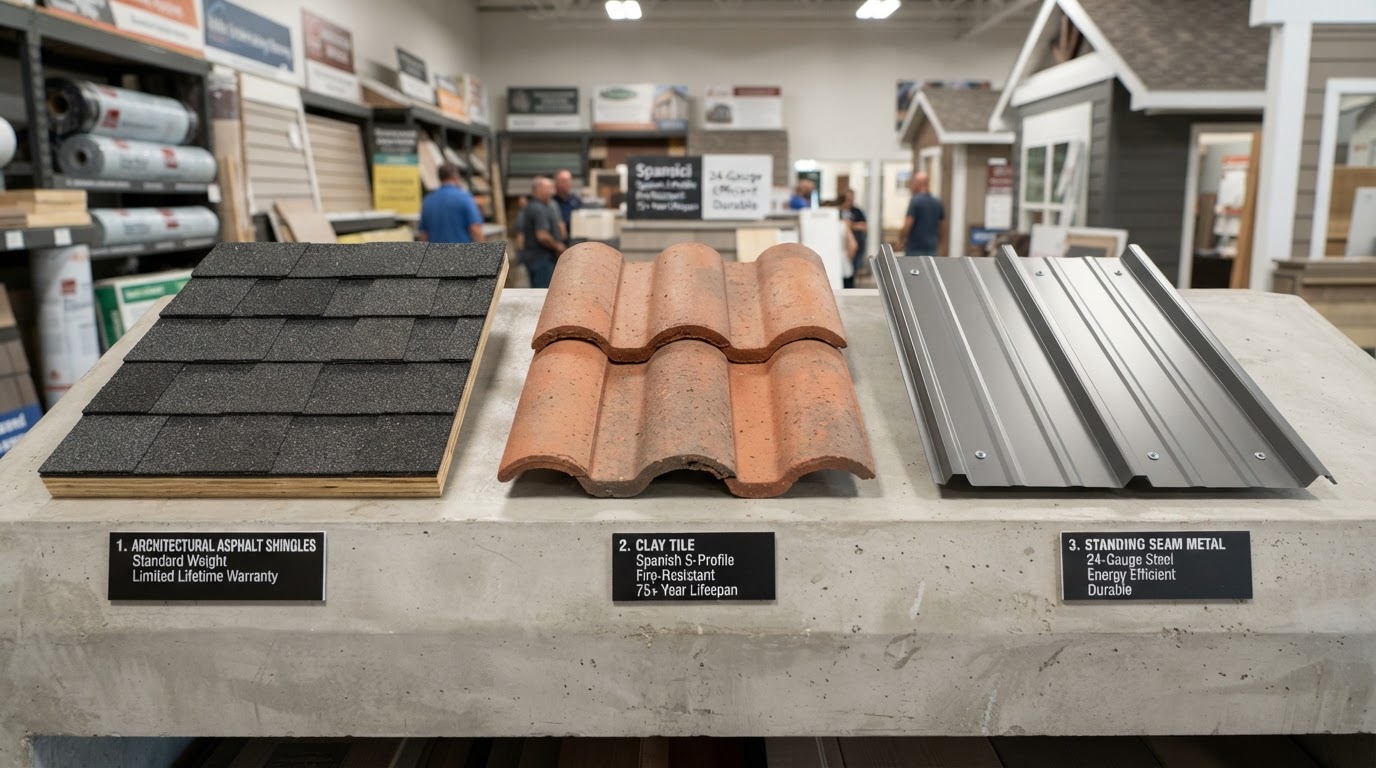
Most residential roofs in the United States use one of five broad material categories. Each has distinct cost, lifespan, wind, and climate characteristics.
| Material | Typical Lifespan | Relative Cost | Best Roof Slope | Climate Notes |
|---|---|---|---|---|
| 3-tab asphalt shingles | 15–20 years | Lowest | Steep (4:12+) | Budget option; less impact resistance |
| Architectural asphalt shingles | 25–30 years | Low–Moderate | Steep (4:12+) | Most common; better wind & appearance |
| Standing seam metal | 40–70 years | Moderate–High | Steep or low-slope | Excellent wind & impact; hail considerations |
| Clay / concrete tile | 50+ years | High | Steep (4:12+) | Heavy; requires structural support |
| Flat roof systems (TPO/EPDM/mod-bit) | 15–25 years | Moderate | Low-slope (under 2:12) | Required where shingles cannot be used |
These ranges come from manufacturer warranty documentation, NRCA service-life guidance, and U.S. Department of Energy roofing material data. Actual performance depends heavily on installation quality, ventilation, maintenance, and local climate — a well-installed, well-maintained material routinely outlasts its minimum warranty, while a poorly installed or neglected one may fail well before it.
For a side-by-side deep comparison, see our roofing materials comparison guide. For the complete lifespan data by material, see our roof lifespan by material guide.
Asphalt Shingles: The Default for Most Homes
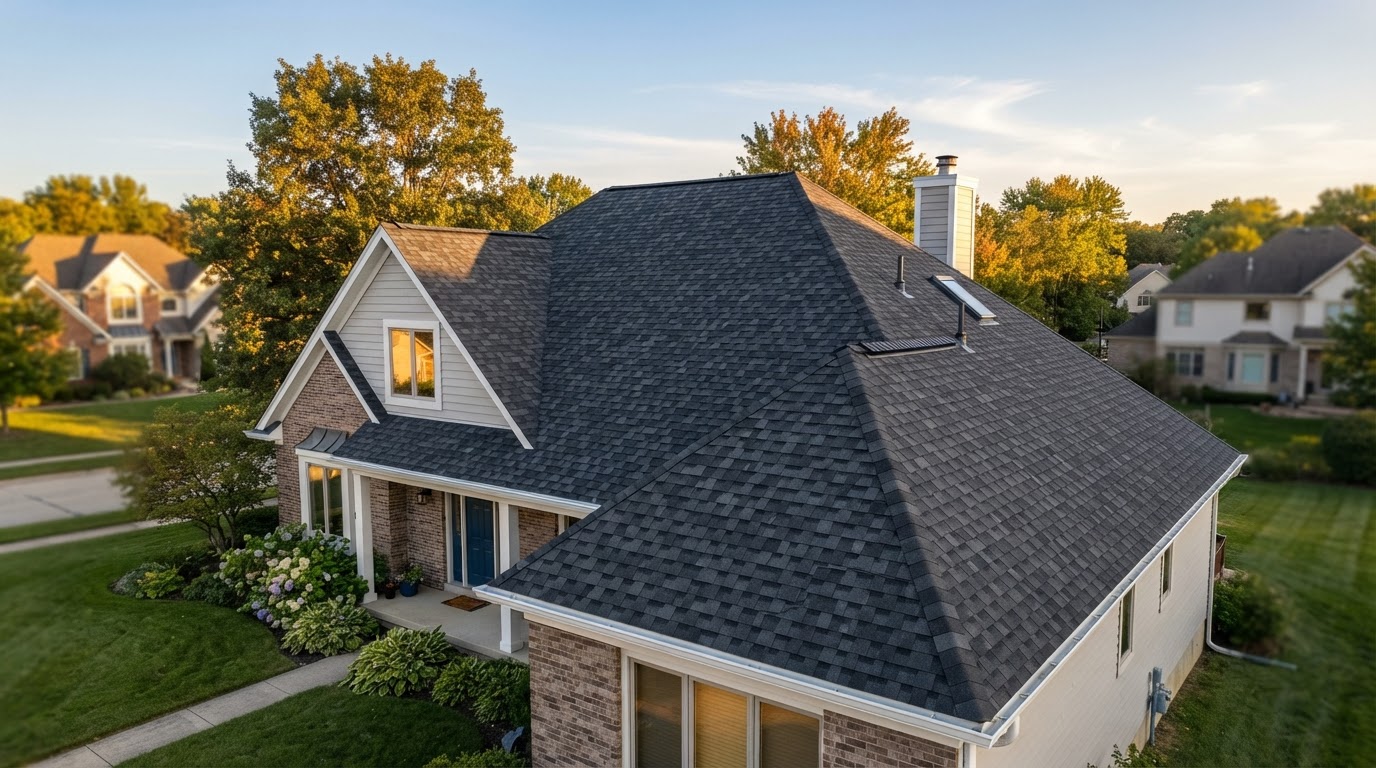
Asphalt shingles cover the majority of residential roofs in the United States for a simple set of reasons: they are affordable, widely available, compatible with most residential roof slopes, and backed by established manufacturer warranty networks. ARMA represents the manufacturers that produce the majority of asphalt shingles sold in the U.S.
3-tab vs. architectural shingles
There are two primary types of asphalt shingle:
- 3-tab shingles** are the traditional flat shingle with cutouts that create a uniform, tabbed appearance. They are the least expensive asphalt option and carry the shortest warranties — typically 20–25 years. They are increasingly being phased out in favor of architectural shingles.
- Architectural (dimensional) shingles** are built with a laminated construction that creates a layered, textured appearance. They are thicker, heavier, and carry longer warranties — typically 30 years to lifetime, depending on the product tier. Their multi-layer construction also improves wind resistance.
Wind ratings
Wind resistance is not a property of the material category — it is a property of the specific product and its installation method. ARMA and shingle manufacturers publish wind resistance ratings that depend on the number of fasteners, the type of sealant strip, and whether the installation meets the manufacturer's enhanced-warranty requirements.
A standard architectural shingle installed with four nails per shingle may be rated for 110–130 mph, while the same shingle installed with six nails and a starter strip that meets the manufacturer's specification may be rated for 130–150 mph. This is why two roofs with the same shingle can perform very differently in the same storm — the installation method matters as much as the material.
When asphalt is the right choice
- Budget is a primary constraint.** Asphalt offers the lowest installed cost per square among the durable steep-slope options.
- The roof slope is 4:12 or steeper.** Asphalt shingles require a minimum slope to shed water effectively; the IRC sets minimum slope requirements for shingle installation.
- The home is in a moderate climate.** Asphalt performs well in most U.S. climates but is more vulnerable to hail impact than metal or tile.
- You want the widest contractor and warranty network.** Asphalt shingles are installed by nearly every residential roofer and carry manufacturer warranties backed by large companies.
When asphalt may not be ideal
- In high-hail regions.** Standard asphalt shingles can suffer granule loss and mat bruising from hail. Impact-resistant shingles (Class 4) address this — see our impact-resistant shingles guide.
- On very long-life expectations.** If you want a roof that lasts 40+ years, metal or tile may be a better long-term investment despite higher upfront cost.
Metal Roofing: Durability and Longevity
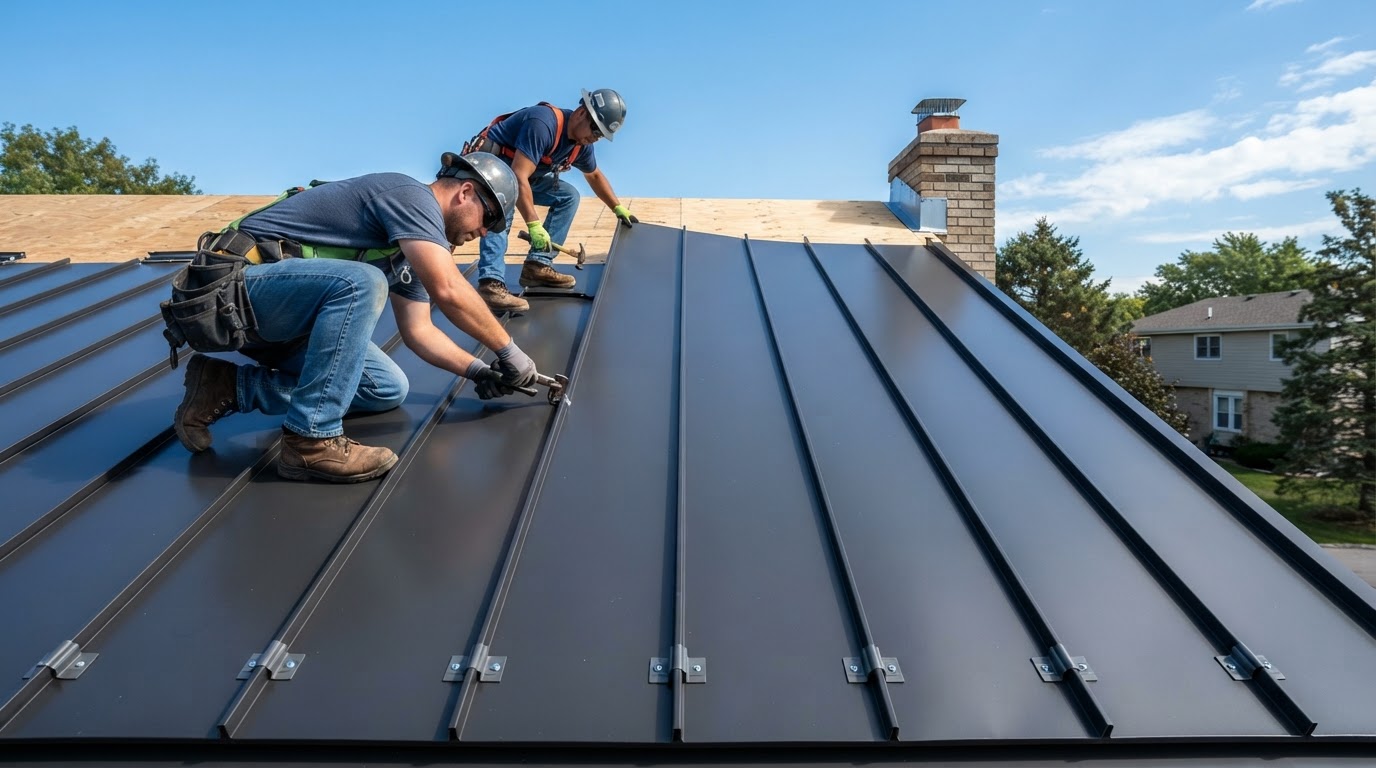
Standing seam metal roofing has grown in residential popularity as homeowners weigh lifespan, wind resistance, and energy performance. The Metal Construction Association (MCA) and manufacturer documentation consistently cite metal as the longest-lasting common residential steep-slope material, with service lives of 40–70 years when properly installed.
Types of residential metal roofing
- Standing seam** — continuous metal panels with raised, interlocking seams that conceal the fasteners. The most durable and weather-tight residential metal system.
- Screw-down (exposed-fastener) panels** — lower cost, but the exposed fasteners require maintenance and have a shorter service life than standing seam.
- Metal shingles** — manufactured to mimic the appearance of asphalt or tile shingles while providing metal's durability and fire resistance.
Wind and impact performance
Metal roofing generally offers the highest wind resistance among common residential materials, with many standing seam systems rated for 140 mph or higher. This makes metal a strong choice in wind-exposed and hurricane-prone regions.
On impact, the picture is more nuanced. Metal will dent from large hail, but unlike asphalt, it does not lose its water-shedding capability from impact. A dented metal roof still sheds water; a bruised asphalt shingle has lost granule protection and is on a shortened service life. This distinction matters for homeowners in hail-prone regions like Tennessee and Alabama.
Energy and climate advantages
The U.S. Department of Energy documents that reflective metal roofing can reduce cooling costs by reducing the roof surface temperature. "Cool" metal roofs with reflective pigments or coatings can lower attic temperatures and reduce summer cooling loads. For the full energy-efficiency picture, see our cool roofs guide.
When metal is the right choice
- You plan to own the home long-term.** Metal's higher upfront cost is offset by a service life that can be double or triple that of asphalt.
- Wind and storm exposure is a primary concern.** Metal's wind ratings exceed most asphalt products.
- Energy performance matters.** Reflective metal roofs reduce cooling loads in hot climates.
- The roof slope is low or moderate.** Standing seam metal can be installed on lower slopes than shingles, making it suitable for some low-slope residential applications.
When metal may not be ideal
- Upfront budget is the primary constraint.** Metal's installed cost is meaningfully higher than asphalt.
- Aesthetics or HOA restrictions.** Some neighborhoods restrict metal roofing; confirm before selecting.
For a detailed pros-and-cons analysis, see our metal roofing pros and cons guide.
Tile Roofing: Longevity and Weight
Clay and concrete tile roofs are among the longest-lasting residential roofing systems, with manufacturer service lives of 50 years or more. Tile is common in the Sun Belt and in regions with Spanish, Mediterranean, or Southwestern architectural styles.
Clay vs. concrete tile
- Clay tile** is fired from natural clay and carries the longest service life — often 50–100+ years. It is more expensive and more fragile during installation and foot traffic.
- Concrete tile** is manufactured from cement and aggregates, is less expensive than clay, and carries a typical service life of 50 years. It is heavier and slightly less dimensionally stable than clay.
The weight factor
Tile is heavy. A clay or concrete tile roof can weigh 800–1,200 pounds per square (per 100 sq ft), compared to roughly 250–350 pounds for asphalt shingles. This means the roof structure must be engineered to carry the load. Installing tile on a roof not designed for it can cause structural stress — a critical consideration for any replacement project on a home not originally built with tile.
When tile is the right choice
- You want a multi-generational roof.** Tile outlasts every other common residential material.
- The home's structure supports the weight.** Tile requires a structurally rated roof deck.
- The climate is hot and dry.** Tile excels in high-sun, low-moisture climates and resists UV degradation better than asphalt.
- Fire resistance is a priority.** Tile is non-combustible and carries the highest fire ratings.
When tile may not be ideal
- The roof structure was not designed for the weight.** Retrofitting structural support adds significant cost.
- The home is in a frequent hail region.** While tile is impact-resistant, individual tiles can crack from large hail or falling branches, and replacement matching can be difficult over time.
Flat and Low-Slope Roofing Systems
Homes with flat or very low-slope roofs (typically under 2:12 pitch) cannot use shingles or tile. These roofs require continuous membrane systems designed for low-slope application. The IRC sets slope minimums that determine which materials can be used on which roofs.
Common low-slope materials
- TPO (Thermoplastic Polyolefin)** — a single-ply white membrane that is heat-welded at the seams. Energy-efficient due to reflectivity and common on modern residential flat roofs.
- EPDM (Ethylene Propylene Diene Monomer)** — a black rubber membrane, typically available in 45-mil or 60-mil thickness. Durable and widely used on residential low-slope roofs.
- Modified bitumen** — an asphalt-based multi-ply system that provides redundant waterproofing layers. Common on older flat roofs and in commercial applications.
When low-slope systems apply
- The roof pitch is under 2:12.** Shingles and tile require minimum slopes to shed water; low-slope roofs require membrane systems.
- The home has parapet walls, roof decks, or attached garages** with flat sections.
- Drainage is properly designed.** Low-slope roofs require careful slope-to-drain design; ponding water is the primary failure mode.
For the complete guide to how roof slope and shape affect material selection, see our types of roofs guide.
Roof Slope and Shape: The First Constraint
Before selecting a material, understand your roof's slope and shape — these are fixed constraints that eliminate some options immediately.
Understanding roof slope
Roof slope is expressed as a ratio of vertical rise to horizontal run, such as 4:12 (4 inches of rise per 12 inches of run). The IRC and manufacturer specifications set minimum slopes for each material:
- Asphalt shingles:** minimum 2:12 with special underlayment; 4:12 standard
- Standing seam metal:** minimum 1:12 (some products down to 0:12)
- Clay/concrete tile:** minimum 2.5:12 (depends on profile)
- Low-slope membranes:** 0:12 to 2:12
A roof that is too low-slope for shingles but too steep for a flat membrane requires careful material selection — often standing seam metal is the best bridge material.
How roof shape affects cost
Complex roof shapes — multiple valleys, dormers, skylights, and chimneys — increase labor and waste factor for any material. A simple gable roof has minimal waste and straightforward installation. A roof with six valleys, a chimney, two dormers, and four skylights has a higher waste factor and more flashing detail per square of roof area. This affects cost regardless of material — for the full cost framework, see our roof replacement cost guide.
Climate and Regional Factors
Roofing material performance is heavily influenced by local climate. The same material can perform very differently in different regions.
Hail exposure
Hail is the single most consequential climate factor for roofing material selection in the central and southeastern United States, including Tennessee and Alabama. Standard asphalt shingles suffer granule loss and mat bruising from hail. Metal dents but continues to shed water. Tile resists impact but can crack from very large hail.
The National Weather Service defines a severe thunderstorm as one producing hail of 1 inch or larger. Homeowners in hail-prone regions should consider impact-resistant products — see our Class 4 impact-resistant shingles guide for the UL 2218 standard and what the rating means.
Wind exposure
Wind exposure varies by region and by micro-location. Coastal regions, open plains, and homes on ridge lines face higher wind exposure. Metal roofing and properly installed architectural shingles offer the best wind performance.
Heat and UV
Ultraviolet radiation degrades asphalt over time, causing drying, cracking, and granule loss. The U.S. Department of Energy documents that reflective and "cool" roofing materials can reduce roof surface temperatures by 30–50°F in hot climates, reducing both cooling costs and the thermal stress that accelerates material aging.
Moisture and biological growth
Humid climates, like much of the Southeast, promote algae and moss growth on asphalt shingles. Algae causes the black streaks common on southern roofs. For the complete treatment guide, see our roof moss and algae guide.
Cost and Budget Considerations
Material cost is typically the largest single factor in a replacement project, but it must be evaluated against lifespan — not just upfront price. A higher-cost material that lasts twice as long may have a lower annual cost of ownership.
Installed cost framework
Installed roofing costs are driven by material, labor, tear-off, decking, flashing, ventilation, permits, and waste disposal. Material is one component of a larger estimate. For the complete cost breakdown including how contractors calculate squares, pitch, and complexity, see our roof replacement cost guide.
The lifespan-to-cost calculation
| Material | Relative Installed Cost | Typical Lifespan | Relative Annual Cost |
|---|---|---|---|
| 3-tab asphalt | Lowest | 15–20 years | Moderate (shorter life) |
| Architectural asphalt | Low–Moderate | 25–30 years | Low |
| Standing seam metal | Moderate–High | 40–70 years | Lowest (long life) |
| Clay/concrete tile | High | 50+ years | Low (long life) |
A metal roof that costs 1.5–2x an asphalt roof but lasts 2–3x as long can have a lower lifetime cost — though that calculation only benefits an owner who will own the home long enough to realize it. For homeowners planning to sell within 10–15 years, asphalt often remains the most economical choice; for those planning long-term ownership, metal or tile may offer better value.
For how to pay for a replacement, including insurance, financing, and payment schedules, see our roof financing guide.
Warranty Structure by Material
Each material category has a different warranty structure, and understanding these differences prevents surprises after the installation.
Manufacturer material warranty
The manufacturer warranty covers defects in the material itself — manufacturing flaws that cause premature failure. Asphalt shingle warranties range from 20-year limited coverage to lifetime non-prorated coverage, depending on the product tier and whether the contractor is a certified installer of that manufacturer's system. Metal roofing warranties are often transferable and range from 20 years to lifetime.
Contractor workmanship warranty
The workmanship warranty — provided by the roofing contractor — covers the installation labor. This is separate from the manufacturer warranty and is only as reliable as the contractor's longevity and willingness to honor it. A 50-year material warranty means little if the contractor who installed the roof is no longer in business to honor the workmanship coverage.
For the complete warranty breakdown, see our roof warranties guide.
A Material Selection Framework for Homeowners
Use this framework to narrow the options for your specific situation.
Step 1: Determine your roof slope and shape
Confirm the roof's slope. This is the first hard constraint — it eliminates materials that cannot be installed on your roof geometry. If you are unsure, a roofing contractor can measure slope during an inspection.
Step 2: Assess your climate and storm exposure
If you live in a hail-prone region like Tennessee or Alabama, weigh impact resistance heavily. If you live in a high-wind region, weigh wind ratings. If you live in a hot, sunny climate, weigh UV and heat performance. For region-specific roofing conditions, see our Middle Tennessee roofing guide and our Central Alabama roofing guide.
Step 3: Establish your budget and ownership timeline
Determine your upfront budget and how long you plan to own the home. A short ownership horizon favors the lowest upfront cost; a long horizon favors the longest-lasting material.
Step 4: Check code and HOA requirements
Some municipalities and HOAs restrict certain materials or colors. Verify before you select — particularly for metal roofing and non-traditional colors. For the permitting framework, see our roofing permits guide.
Step 5: Get written estimates for your shortlisted materials
Obtain written estimates for the materials that fit your slope, climate, budget, and code requirements. Compare scope — not just price — because two estimates for the "same" material may include different underlayment, flashing, ventilation, and warranty levels. For how to evaluate the contractor behind the estimate, see our choosing a roofing contractor guide.
When a Local Roofing Professional Is Relevant
This guide is general homeowner education that applies anywhere. But roofing material selection is regional — climate, code, and common practice vary by market, and a material that performs well in one region may be suboptimal in another.
In markets where The Roofing Press has a Featured Contractor, we may introduce that contractor when the geographic relationship is relevant. Featured Contractor status reflects participation in our program for a defined market; it is not a ranking, award, or certification of superiority over other licensed contractors. For the full program details and transparency disclosures, see our Featured Contractors program page.
A Note on Sources
This guide draws on Asphalt Roofing Manufacturers Association (ARMA) material and performance documentation, National Roofing Contractors Association (NRCA) consumer and technical guidance, International Residential Code (IRC) slope and installation requirements, Metal Construction Association (MCA) metal roofing guidance, and U.S. Department of Energy cool-roof and roofing material energy-performance data. Specific warranty terms, wind ratings, and building-code requirements vary by product, manufacturer, and jurisdiction — verify current requirements with your local building department, your roofing manufacturer, and a licensed roofing contractor familiar with your market.
Frequently Asked Questions
What is the best roofing material for a residential home?
There is no single best material. The right choice depends on your roof slope, climate and storm exposure, budget, how long you plan to own the home, and local code or HOA requirements. Asphalt shingles offer the lowest upfront cost and widest contractor network; metal offers the longest life and best wind resistance; tile offers maximum longevity but requires structural support. Match the material to your specific situation rather than searching for a universal 'best.'
How long does each roofing material last?
Typical service lives are: 3-tab asphalt shingles 15–20 years, architectural asphalt shingles 25–30 years, standing seam metal 40–70 years, and clay or concrete tile 50+ years. These are manufacturer and industry ranges; actual lifespan depends heavily on installation quality, ventilation, maintenance, and local climate. A well-maintained roof routinely outlasts its minimum warranty, while a neglected one may fail well before it.
Is a metal roof worth the extra cost over asphalt shingles?
A metal roof typically costs 1.5–2x more than asphalt upfront but can last 2–3x as long, which can mean a lower lifetime cost of ownership — but only if you plan to own the home long enough to realize the savings. Metal also offers the best wind resistance and strong energy performance in hot climates. If you plan to sell within 10–15 years, asphalt often remains the more economical choice.
Can I install asphalt shingles or tile on a low-slope or flat roof?
No. The International Residential Code and manufacturer specifications set minimum slope requirements for each material. Asphalt shingles require a minimum slope (2:12 with special underlayment, 4:12 standard); tile requires a higher minimum. Roofs below these thresholds require low-slope membrane systems like TPO, EPDM, or modified bitumen, or in some cases standing seam metal, which can be installed on lower slopes than shingles.
What roofing material should I choose if I live in a hail-prone area?
In hail-prone regions like Tennessee and Alabama, weigh impact resistance heavily. Standard asphalt shingles suffer granule loss and mat bruising from hail. Impact-resistant (Class 4) shingles offer better hail performance per the UL 2218 standard. Metal roofing dents from large hail but continues to shed water, and tile resists most impacts but can crack from very large hail. A local roofing contractor familiar with your market can recommend the best option for your specific exposure.
How do roofing material warranties work and what do they cover?
Roofing warranties have two layers: the manufacturer's material warranty covers defects in the material itself (ranging from 20-year limited to lifetime non-prorated coverage depending on product tier), and the contractor's workmanship warranty covers the installation labor. The workmanship warranty is only as reliable as the contractor's longevity and willingness to honor it. Always distinguish the two when comparing materials and contractors.
Cited Research Sources & References
- Asphalt Roofing Manufacturers Association (ARMA) — Residential RoofingView Source
- National Roofing Contractors Association (NRCA) — Consumer ResourcesView Source
- International Code Council (ICC) — 2021 IRC Roofing RequirementsView Source
- U.S. Department of Energy — Cool Roofs and Roofing Energy PerformanceView Source
- Metal Construction Association (MCA) — Residential Metal RoofingView Source
Related Guides in This Series
- Roofing Materials Guide: Asphalt, Metal, Tile & Flat Roofs ComparedA researched comparison of asphalt shingles, standing seam metal, clay and concrete tile, and flat roof systems — covering lifespan, cost, storm resistance, and energy performance for homeowners.
- Metal Roofing Pros and Cons: Is Metal Right for Your Home?A homeowner's guide to metal roofing — standing seam vs corrugated, lifespan, hail and wind resistance, energy efficiency, cost, noise, and the tradeoffs to weigh before choosing metal.
- Class 4 Impact-Resistant Shingles: UL 2218 Testing & Insurance DiscountsA homeowner guide to UL 2218 Class 4 impact-resistant roofing shingles — explaining laboratory testing standards, polymer-modified asphalt composition, wind resistance, cost premiums, and insurance premium discounts ranging from 10% to 35%.
- Cool Roofs: Energy-Efficient Roofing & Reflective ShinglesA homeowner's guide to cool roofs and energy-efficient roofing — how solar-reflective shingles and metal reduce attic heat and cooling costs, ENERGY STAR and CRRC ratings, and when a cool roof makes sense.
- Types of Roofs Explained: Gable, Hip, Flat, Shed, Mansard & More for HomeownersA researched homeowner guide to the most common residential roof types — gable, hip, flat, shed, mansard, gambrel, and saltbox — explaining how each roof shape affects cost, wind resistance, attic space, drainage, maintenance, and material choice.
- How Long Does a Roof Last? Roof Lifespan by MaterialA researched guide to residential roof lifespan by material — covering asphalt shingles, standing seam metal, clay and concrete tile, and flat membrane systems — and the maintenance, climate, ventilation, and installation factors that determine actual service life.
- How Much Does a Roof Replacement Cost? A Homeowner GuideA comprehensive, source-supported homeowner guide to roof replacement costs — explaining how contractors calculate square footage, pitch multipliers, tear-off fees, underlayment, flashing, ventilation, and how to compare written estimates.