
Roof Moss, Algae & Black Streaks: How to Remove and Prevent Them Safely
A homeowner's guide to identifying roof moss, algae, and lichen — why they grow, the damage they cause, safe removal methods, and how to prevent regrowth without voiding your shingle warranty.
Key Editorial Takeaways
- ✓Black streaks on asphalt shingles are caused by gloeocapsa magma algae feeding on the limestone filler in the shingles — they are primarily cosmetic but signal damp, shaded conditions.
- ✓Moss and lichen cause actual damage by holding moisture against shingles, lifting shingle edges, accelerating granule loss, and creating potential leak paths.
- ✓Never pressure wash an asphalt shingle roof — it blasts off protective granules, shortens roof life, and can void the manufacturer's warranty. ARMA recommends low-pressure chemical treatment instead.
- ✓Prevention is more effective than repeated cleaning: trim overhanging trees, keep the roof clear of debris, install zinc or copper strips, and consider algae-resistant shingles in humid climates.
- ✓Heavy or widespread moss growth should be evaluated by a professional — it may indicate drainage, ventilation, or aging issues that go beyond surface cleaning.
This article is part of our comprehensive guide: Roof Inspection & Maintenance Guide for Homeowners
Answer First: What Are Those Black Streaks and Green Patches on My Roof?
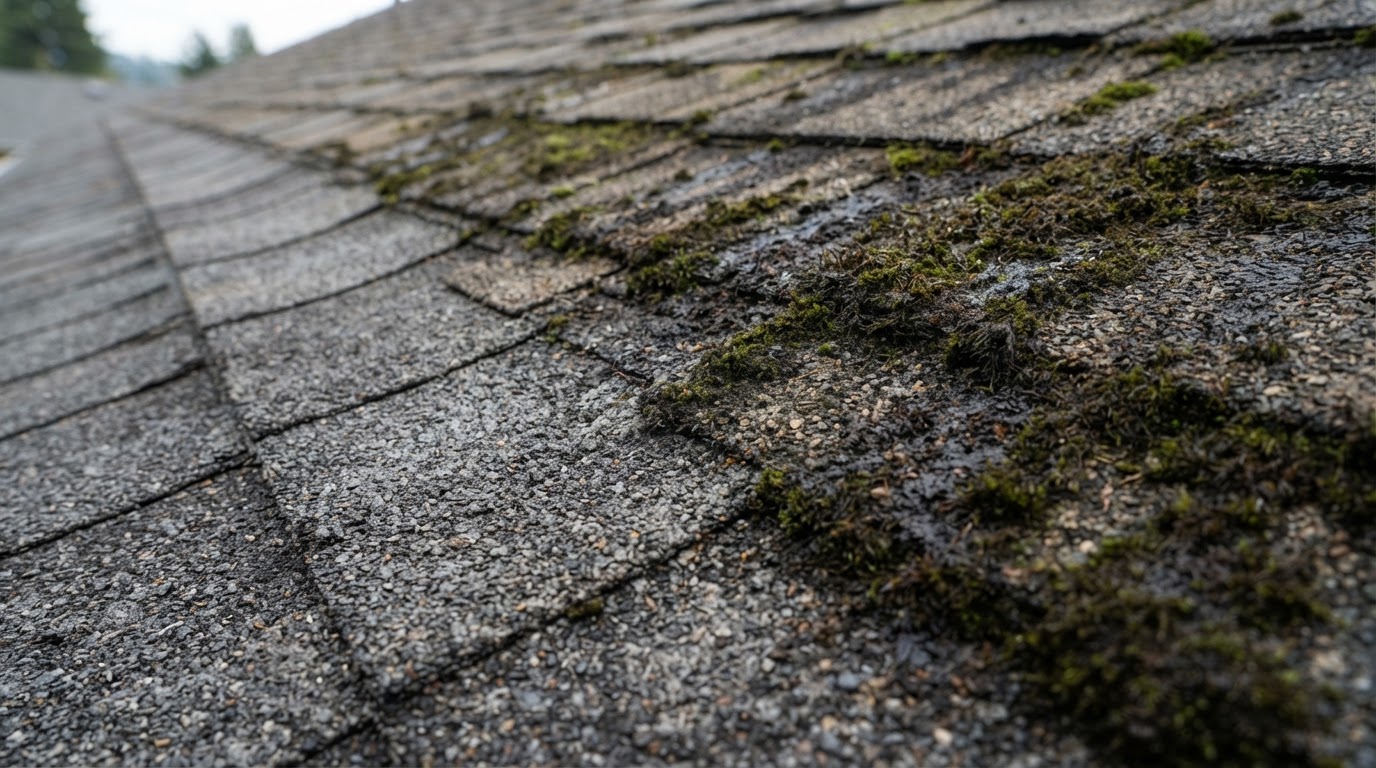
The black streaks running down asphalt shingle roofs are almost always caused by gloeocapsa magma — a type of blue-green algae that feeds on the limestone filler used in modern asphalt shingles. It is not mold, and it is not dirt. The green, fuzzy, mossy patches are true moss or lichen, which thrive in damp, shaded areas of the roof. Both are common in humid climates like Tennessee and Alabama, and both are signs that moisture is lingering on the roof surface longer than it should.
While algae streaks are primarily a cosmetic issue, moss and lichen cause actual damage — they hold moisture against the shingles, which accelerates granule loss, lifts shingle edges, and degrades the asphalt mat beneath. Left untreated, moss can shorten roof lifespan and create leak paths.
The Asphalt Roofing Manufacturers Association (ARMA) publishes specific guidance on how to safely clean algae and moss from asphalt shingle roofs — and critically, what not to do, because aggressive cleaning can void the manufacturer's warranty.
What Causes Moss, Algae, and Lichen to Grow on Roofs?
Several conditions combine to create the environment these organisms need:
- Moisture** — roofs that stay damp because of poor drainage, debris accumulation, or high humidity provide the water these organisms require.
- Shade** — north-facing roof slopes and areas under overhanging trees receive less direct sunlight and dry more slowly. Algae, moss, and lichen all prefer shaded, damp surfaces.
- Limestone filler in shingles** — modern asphalt shingles contain limestone granules and filler, which gloeocapsa algae specifically feed on. This is why algae streaks are so common on asphalt shingle roofs.
- Organic debris** — leaves, pine needles, and twigs that collect in roof valleys and on shingles trap moisture and provide a growing medium for moss and lichen.
- Humid climate** — regions with high annual rainfall and humidity, including much of the Southeast, see far more roof algae and moss than dry climates.
For how climate affects roofing in our coverage areas, see our Middle Tennessee roofing guide and Central Alabama roofing guide.
Algae (Black Streaks): Cosmetic but Contagious
Gloeocapsa magma algae appear as dark brown or black streaks running down the roof slope. Key facts:
- Primarily cosmetic** — algae do not directly damage the shingle structure the way moss does, but they do darken the roof surface, which can increase heat absorption.
- Spreads by airborne spores** — algae spread from roof to roof via wind and wildlife, which is why entire neighborhoods often develop streaks around the same time.
- Feeds on the shingle's limestone content** — it is literally consuming part of the shingle, though slowly.
Algae streaks are a signal that the roof is staying damp and shaded enough to support biological growth — conditions that also favor moss, which is more damaging.
Moss and Lichen: Actively Damaging
Moss and lichen are more than cosmetic. They cause measurable damage:
- Moisture retention** — moss acts like a sponge, holding water against the shingle surface for extended periods. This keeps the shingle wet, which degrades the asphalt and accelerates granule loss.
- Shingle lifting** — as moss grows, it can lift the edges of shingles, breaking the adhesive seal strip and creating a path for wind-driven rain to penetrate beneath the shingle.
- Freeze-thaw damage** — in regions with winter freezing, moss that holds moisture can cause ice to form under and around shingles, worsening freeze-thaw damage to the asphalt mat.
- Lichen etching** — lichen can secrete acids that etch and pit the shingle surface over time, causing permanent marking and degradation.
Granule loss exposes the asphalt to UV radiation, which dries and cracks the shingle. For how granule loss fits into the broader picture of roof aging, see our signs you need a new roof guide.
How to Safely Remove Moss and Algae
ARMA publishes a specific recommended cleaning method for asphalt shingle roofs. The critical rule: never pressure wash an asphalt shingle roof. High-pressure washing blasts the protective ceramic granules off the shingles, immediately shortening roof life and potentially voiding the manufacturer's warranty.
The ARMA-Recommended Method
ARMA recommends a chemical treatment using a solution of chlorine bleach (sodium hypochlorite), trisodium phosphate (TSP), and water, applied at low pressure — no more than garden-hose pressure — and then rinsed gently.
Typical mixture (per ARMA guidance):
| Component | Amount |
|---|---|
| Chlorine bleach (sodium hypochlorite) | 1 part |
| Water | 3 parts |
| Trisodium phosphate (TSP) | 1/4 cup per gallon |
Application guidelines:
- Wet the ground vegetation first — soak grass and plants around the foundation with plain water before and after application to dilute any runoff, as bleach solution can damage landscaping.
- Apply from the bottom up, rinse from the top down — this prevents streaking and ensures even coverage.
- Use low pressure only — a pump sprayer or garden-hose applicator, never a pressure washer.
- Let the solution work — allow it to sit on the surface to kill the organisms, then rinse gently.
- Do not scrub or brush aggressively — mechanical scrubbing can dislodge granules just as pressure washing does.
What NOT to Do
- Never pressure wash asphalt shingles** — this is the single most important rule. Pressure washing removes granules and voids warranties.
- Do not use harsh abrasive brushes or tools** to scrape moss off — this also damages granules.
- Do not ignore the manufacturer's warranty terms** — some shingle warranties specify approved cleaning methods. Check your warranty documentation before cleaning.
For warranty details, see our roof warranties guide.
When to Call a Professional
Roof cleaning is a task where DIY carries real risk — both to the roof and to personal safety. Consider hiring a professional if:
- The roof is steep or high** — fall risk is significant, and the NRCA recommends homeowners avoid walking on roofs. See our signs you need a new roof guide for why walking aged roofs is dangerous.
- The moss growth is heavy or widespread** — extensive moss may indicate underlying moisture or drainage problems that need professional evaluation.
- You are unsure about the cleaning solution or pressure** — a professional roof-cleaning service uses calibrated low-pressure equipment and is familiar with ARMA guidelines.
- The roof is near the end of its service life** — cleaning a failing roof may cause more harm than good; replacement may be the better decision. See our roof repair vs. replacement guide.
How to Prevent Moss and Algae from Returning
Removal is temporary without prevention. Several strategies reduce regrowth:
1. Trim Overhanging Trees
The single most effective prevention step is increasing sunlight and airflow to the roof surface. Trim back branches that shade the roof or drop debris onto it. This dries the roof faster and removes the organic material moss and lichen grow on.
2. Keep the Roof Clear of Debris
Regularly remove leaves, pine needles, and twigs — especially from valleys and behind chimneys. Debris traps moisture and provides a growing medium. See our seasonal roof maintenance guide for a year-round maintenance schedule.
3. Install Zinc or Copper Strips
When zinc or copper metal is exposed to rainwater, trace amounts of metal ions wash down the roof and inhibit algae and moss growth. A strip of zinc or copper installed near the roof ridge can significantly reduce biological growth on the slopes below it.
- Zinc strips** are the more affordable option and are widely used.
- Copper strips** are more effective but more expensive.
- Both are long-lasting and low-maintenance prevention methods.
This is why you may notice that roofs with copper flashing or metal roofs in copper tones often have fewer algae streaks beneath those metal elements.
4. Consider Algae-Resistant Shingles
Many manufacturers now offer algae-resistant shingles that incorporate copper granules into the shingle surface. These release copper ions over time to inhibit algae growth and are backed by specific algae-resistance warranties (typically 10–25 years). If you are replacing your roof in a humid climate, algae-resistant shingles are worth considering. See our roofing materials guide for material options.
5. Improve Roof Ventilation
A well-ventilated attic keeps the roof deck cooler and drier, which reduces the surface moisture that supports biological growth. See our roof ventilation guide for how ventilation affects roof health.
Does Moss Mean I Need a New Roof?
Not necessarily — but it is a warning sign that should be evaluated. Moss growth does not automatically mean replacement, but it does mean:
- The roof is staying damp longer than it should (shade, debris, drainage, or ventilation issues).
- Granule loss may be accelerating beneath the moss.
- Shingle edges may be lifting, creating potential leak paths.
If moss is localized and the roof is otherwise within its service life, professional cleaning plus prevention (tree trimming, zinc strips, debris removal) may be sufficient. If moss is widespread, the shingles are aging, and granule loss is visible, the roof may be approaching replacement. See our roof inspection and maintenance guide for how a professional inspection fits in.
A Note on Sources
This guide draws on Asphalt Roofing Manufacturers Association (ARMA) technical bulletins on algae and moss cleaning, National Roofing Contractors Association (NRCA) guidance on roof maintenance and homeowner safety, and established building-science principles regarding roof moisture and ventilation. Always check your specific shingle manufacturer's warranty for approved cleaning methods before treating your roof, as improper cleaning can void warranty coverage.
Frequently Asked Questions
What causes black streaks on my roof?
The black streaks on asphalt shingle roofs are caused by gloeocapsa magma, a type of blue-green algae that feeds on the limestone filler used in modern asphalt shingles. It is not mold or dirt. The algae spread by airborne spores and thrive in humid, shaded conditions, which is why they are common in the Southeast and often appear across entire neighborhoods at once.
Can I pressure wash my roof to remove moss and algae?
No. The Asphalt Roofing Manufacturers Association (ARMA) explicitly advises against pressure washing asphalt shingle roofs. High-pressure washing blasts the protective ceramic granules off the shingles, immediately shortening roof life and potentially voiding the manufacturer's warranty. ARMA instead recommends a low-pressure chemical treatment using a bleach and water solution applied with a pump sprayer or garden-hose applicator.
Does moss damage my roof?
Yes. Unlike algae streaks, which are primarily cosmetic, moss and lichen cause actual damage. Moss acts like a sponge, holding moisture against the shingle surface, which accelerates granule loss and degrades the asphalt. As moss grows, it can lift shingle edges, breaking the seal strip and creating paths for wind-driven rain. Lichen can also secrete acids that etch and pit the shingle surface.
How do I prevent moss and algae from coming back?
The most effective prevention is trimming overhanging trees to increase sunlight and airflow, keeping the roof clear of debris, and installing zinc or copper strips near the ridge — rainwater washing over these metals releases ions that inhibit biological growth. You can also choose algae-resistant shingles that contain copper granules when replacing a roof in a humid climate.
What is the ARMA-recommended roof cleaning method?
ARMA recommends a solution of one part chlorine bleach, three parts water, and a small amount of trisodium phosphate (TSP), applied at low pressure (no more than garden-hose pressure) using a pump sprayer. Soak surrounding vegetation with plain water before and after to protect it from runoff, apply from the bottom up, let the solution work, and rinse gently from the top down. Never use a pressure washer.
Does moss on my roof mean I need a replacement?
Not necessarily. Localized moss on a roof that is otherwise within its service life can often be addressed with professional cleaning and prevention measures like tree trimming and zinc strips. However, widespread moss growth combined with visible granule loss, curling shingles, or a roof at or past its expected service life may indicate that replacement is the better option. A professional inspection can determine which is appropriate.
Cited Research Sources & References
- Asphalt Roofing Manufacturers Association (ARMA) — Algae and Moss Cleaning Technical BulletinsView Source
- National Roofing Contractors Association (NRCA) — Consumer ResourcesView Source
- U.S. Department of Energy — Roofing and Moisture ManagementView Source