
Seasonal Roof Maintenance Calendar: A Year-Round Guide
A month-by-month roof maintenance schedule — what to inspect, clean, and prepare each season to extend roof lifespan and prevent weather-related damage.
Key Editorial Takeaways
- ✓The NRCA recommends twice-yearly professional inspections — spring (post-winter) and fall (pre-winter) — as the foundation of a roof maintenance program.
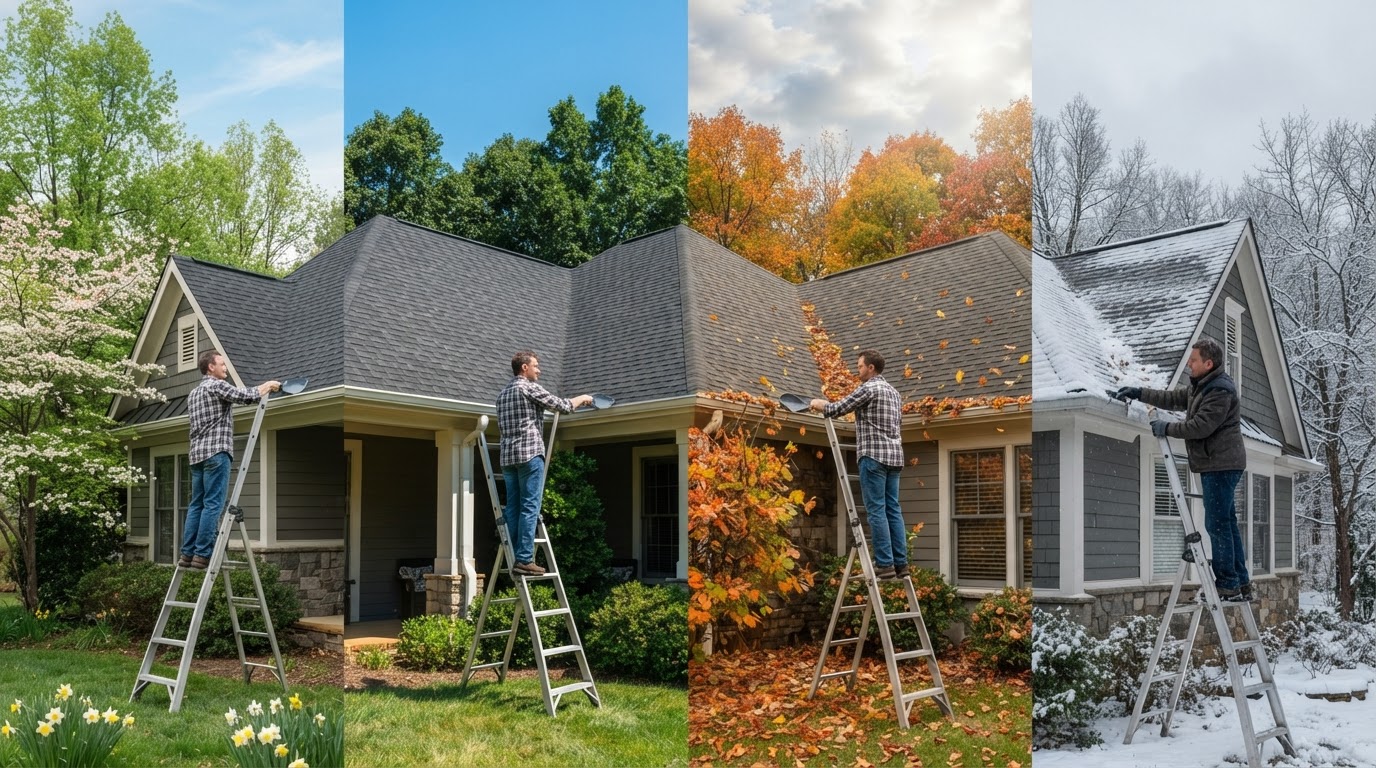
- ✓Spring focuses on post-winter damage assessment and storm preparation; summer on heat/UV/ventilation; fall on debris clearing and winter preparation; winter on monitoring and emergency response.
- ✓Gutter cleaning twice a year (spring and fall, after leaf fall) is the most impactful homeowner task — clogged gutters cause eave damage and contribute to ice dams.
- ✓Ice dam prevention in cold climates depends on adequate attic insulation and ventilation that keeps the roof deck cold — not on roof-top ice removal.
- ✓Regional climate dictates adjustments — Southeastern spring severe-weather season is the highest-priority inspection window for hail and wind damage.
This article is part of our comprehensive guide: Roof Inspection & Maintenance Guide for Homeowners
Answer First: Roof Maintenance Is Seasonal
Roofing materials and roof systems respond to seasonal weather — spring storms, summer heat, fall debris, and winter ice each create different stresses. A seasonal maintenance calendar addresses the right tasks at the right time, catching problems before they become leaks and preparing the roof for the conditions ahead.
The National Roofing Contractors Association (NRCA) recommends twice-yearly professional inspections — typically in spring (after winter) and fall (before winter) — as the foundation of a roof maintenance program. Homeowner-level tasks fill in between professional inspections.
This guide provides a month-by-month framework. For the safety rules governing DIY maintenance, see our DIY roof maintenance guide.
Spring (March–May): Post-Winter Assessment and Storm Preparation
Spring is the most critical inspection window. The roof has just endured winter's freeze-thaw cycling, and spring severe-weather season is approaching in many regions.
Homeowner Tasks
- Ground-level visual inspection** — look for shingles damaged by winter ice, wind, or freeze-thaw cycling. See our signs you need a new roof guide.
- Clean gutters and downspouts** — remove winter debris. See our gutter and downspout guide.
- Check downspout extensions** — confirm they discharge at least 3–4 feet from the foundation.
- Attic inspection** — check for water stains, mold, or daylight through the roof deck that developed over winter.
- Check for ice dam damage** — if you live in a cold-climate region, look for damage at the eaves from ice dams over the winter.
- Trim overhanging branches** — before spring storms and before trees leaf out fully. From ground level only; hire an arborist for high branches.
Professional Tasks
- Spring professional inspection** — the NRCA-recommended biennial inspection. A professional can identify winter damage that is invisible from the ground, including hail bruising, lifted shingles, and flashing damage.
- Storm damage assessment** — if your area experienced severe winter storms or early spring severe weather, schedule a professional assessment. See our how to identify hail damage guide.
Summer (June–August): Heat, UV, and Ventilation
Summer heat and UV are the primary roof stressors in most regions. Asphalt shingles degrade fastest under intense sun, and attic heat buildup accelerates shingle aging if ventilation is inadequate.
Homeowner Tasks
- Check attic ventilation** — on a hot day, check the attic temperature. An inadequately ventilated attic can reach 150°F+, accelerating shingle degradation and increasing cooling costs. See our roof ventilation guide.
- Check for algae or moss** — humid summer conditions promote growth. Do not pressure wash — see our DIY maintenance guide for safe approaches.
- Monitor shingle condition** — look for curling, blistering, or granule loss that heat accelerates.
- Check gutters after summer storms** — clear any storm debris.
Professional Tasks
- Ventilation assessment** — if your attic is excessively hot, a professional can assess whether additional intake or exhaust ventilation is needed.
- Algae/moss treatment** — using manufacturer-approved methods.
Fall (September–November): Debris Clearing and Winter Preparation
Fall is the second NRCA-recommended inspection window. The goal is to prepare the roof for winter by clearing debris and addressing any damage before freeze-thaw cycling begins.
Homeowner Tasks
- Clean gutters and downspouts** — the most important fall task. After leaves have fallen, clear gutters completely. Clogged gutters in winter contribute to ice dams in cold climates. See our gutter and downspout guide.
- Clear roof debris** — leaves, pine needles, and branches that accumulate in valleys and on the roof. Do not climb onto the roof; use a roof rake from the ground or hire a professional.
- Check flashing and seals** — look for deteriorated caulk or flashing around chimneys, vents, and skylights. See our roof flashing and chimney leaks guide.
- Attic inspection** — verify insulation is adequate and not blocking soffit vents. Check for any moisture or leaks.
- Verify downspout extensions** — before winter freeze, confirm extensions are in place and discharging away from the foundation.
Professional Tasks
- Fall professional inspection** — the second biennial NRCA-recommended inspection. A professional can identify flashing failures, shingle damage, and ventilation issues before winter.
- Flashing repair** — deteriorated flashing should be repaired before winter, when ice and freeze-thaw cycling exploit any weakness.
- Ice and water shield assessment** — in cold-climate regions, verify that ice and water membrane is present at the eaves and in valleys per IRC requirements.
Winter (December–February): Monitoring and Emergency Response
Winter is not a time for proactive roof work in most regions — conditions are hazardous. The focus shifts to monitoring and emergency response.
Homeowner Tasks
- Monitor for ice dams** — in cold-climate regions, watch for ice buildup at the eaves. Ice dams force water under the shingles. The key prevention is adequate attic insulation and ventilation (which keeps the roof deck cold so snow does not melt and refreeze at the eaves).
- Watch for icicles** — while icicles can be normal, excessive icicle formation can indicate ice dam activity or heat loss through the roof.
- Monitor for leaks** — check ceilings and the attic after heavy snow or ice events.
- Use a roof rake carefully** — to pull snow off the eaves from the ground (not from the roof) in regions prone to ice dams. Do not use a roof rake near power lines.
Professional Tasks
- Ice dam removal** — if ice dams form and cause leaks, a professional can safely remove them. Do not attempt to chip ice off the roof yourself — this damages the shingles.
- Emergency leak repair** — if a winter leak develops, a professional can assess and repair it safely.
- Emergency tarping** — after storm or ice damage, a professional can install emergency tarps to prevent further water intrusion. See our emergency roofing guide.
Regional Variations
This calendar is a general framework. Regional climate dictates adjustments:
- Southeast (Tennessee, Alabama):** Spring severe-weather season (March–May) is the highest-priority inspection window for hail and wind damage. Summer heat and humidity drive algae growth and ventilation concerns. Fall focuses on debris clearing and the secondary November severe-weather season. Winter ice dams are less common but possible. See our Central Alabama roofing guide and Middle Tennessee roofing guide.
- Cold-climate regions:** Winter ice dam prevention (insulation and ventilation) is a primary focus. Fall gutter cleaning and ice and water shield verification are critical.
- Hurricane regions:** Pre-hurricane-season (late spring) inspections focus on wind readiness, flashing, and loose shingles. Post-storm assessment is essential after any hurricane or tropical storm.
Annual Maintenance Summary
| Season | Key Tasks | Priority |
|---|---|---|
| Spring | Professional inspection, gutter cleaning, storm damage check, branch trimming | Highest |
| Summer | Ventilation check, algae/moss monitoring, post-storm gutter clearing | Moderate |
| Fall | Professional inspection, gutter cleaning (after leaf fall), debris clearing, flashing check | Highest |
| Winter | Ice dam monitoring, leak monitoring, emergency response only | Monitoring |
A Note on Sources
This guide draws on National Roofing Contractors Association (NRCA) inspection and maintenance recommendations, Asphalt Roofing Manufacturers Association (ARMA) seasonal maintenance guidance, and International Residential Code (IRC) requirements for ice and water protection and ventilation. Regional climate data is based on National Weather Service climatology. Always follow the specific maintenance guidance in your roofing manufacturer's warranty documentation.
Frequently Asked Questions
How often should I have my roof professionally inspected?
The National Roofing Contractors Association recommends twice-yearly professional inspections — typically in spring (after winter) and fall (before winter). These two windows catch winter damage and prepare the roof for the next season. Homeowner-level ground and gutter inspections should happen more frequently — at least twice a year, plus after any major storm.
When should I clean my gutters?
Twice a year — spring and fall. The fall cleaning should happen after most leaves have fallen, not before. In regions with heavy tree coverage, you may need to clean more frequently. Also clean after any major storm that deposits debris. Clogged gutters in winter contribute to ice dams in cold climates and cause water backup under shingles at the eaves year-round.
How do I prevent ice dams on my roof?
Ice dams form when heat escapes through the roof, melting snow that refreezes at the cold eaves. Prevention depends on adequate attic insulation (to keep heat in the house) and proper ventilation (to keep the roof deck cold so snow does not melt). Do not attempt to chip ice off the roof — this damages the shingles. If ice dams form and cause leaks, hire a professional for safe removal.
What should I check on my roof each season?
Spring: post-winter damage, storm preparation, gutter cleaning. Summer: attic ventilation, algae/moss, shingle condition in heat. Fall: gutter cleaning after leaf fall, debris clearing, flashing check, winter preparation. Winter: ice dam monitoring, leak monitoring, emergency response only. See the full seasonal calendar in this guide for details.
Is roof maintenance different in storm-prone regions?
Yes. In regions like the Southeast, spring severe-weather season (March–May) is the highest-priority inspection window for hail and wind damage. A post-storm professional assessment after any severe thunderstorm warning is important. In hurricane regions, pre-season inspections focus on wind readiness. In cold-climate regions, winter ice dam prevention through insulation and ventilation is a primary focus.
Cited Research Sources & References
- National Roofing Contractors Association (NRCA) — Roof MaintenanceView Source
- Asphalt Roofing Manufacturers Association (ARMA) — Maintenance Technical BulletinsView Source
- International Code Council — IRC Ice and Water Protection (R905.1.2)View Source
- National Weather Service — Regional ClimatologyView Source