
Roof Soffit and Fascia Explained: What Homeowners Need to Know
A homeowner's guide to soffit and fascia — what they are, how they protect your roof and attic ventilation, common damage and rot, maintenance, and how they fit into the overall roofing system.
Key Editorial Takeaways
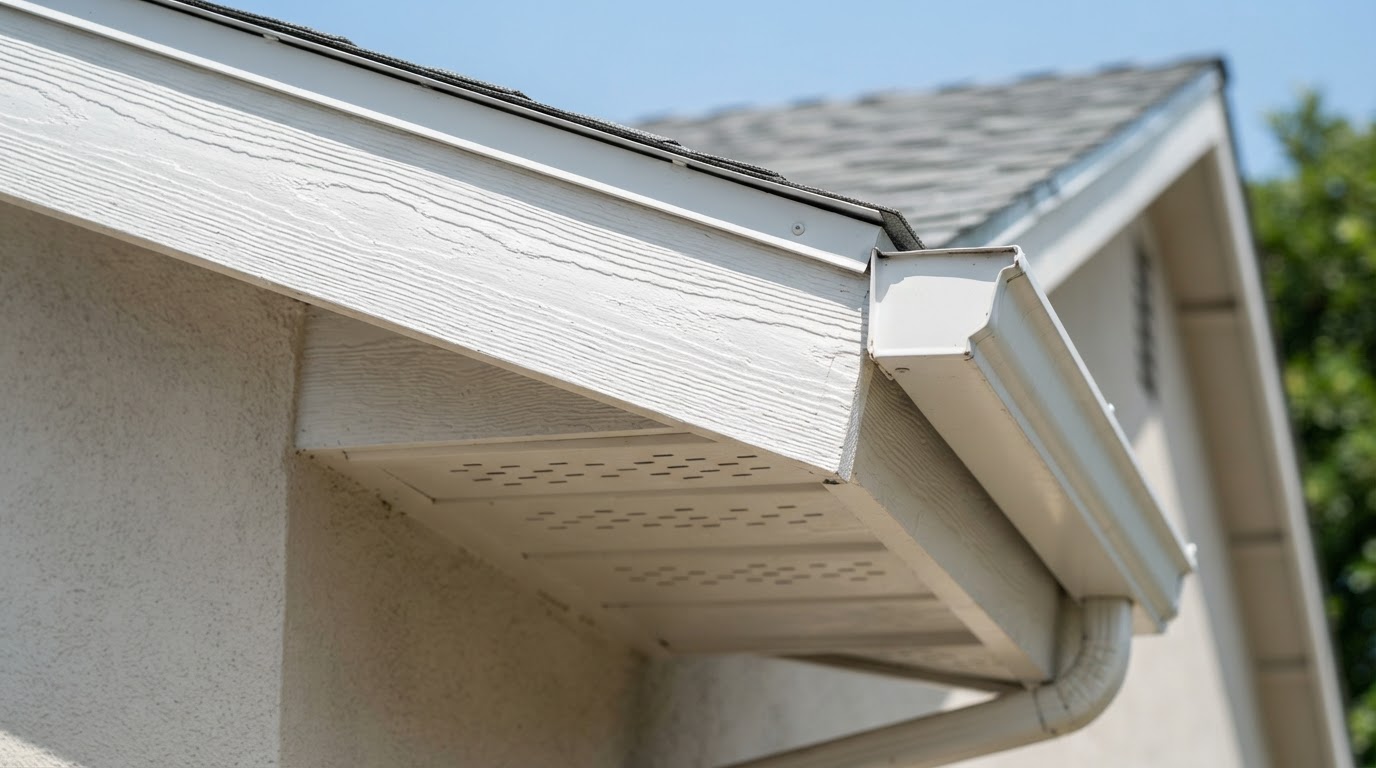
- ✓Soffit is the horizontal surface under the roof overhang that provides attic intake ventilation and pest exclusion; fascia is the vertical board behind the gutters that supports gutter attachment and protects the roof edge.
- ✓Vented soffit is the foundation of balanced attic ventilation — cool air enters through soffit vents and exits through ridge or box vents. Blocked soffit vents cause attic heat buildup and moisture condensation that rots the roof deck.
- ✓Fascia rot is most commonly caused by overflowing or leaking gutters that soak the wood — keeping gutters clean and ensuring proper drip edge are the most effective fascia maintenance steps.
- ✓Damaged soffit and fascia create pest entry points for squirrels, birds, and insects, and should be repaired promptly before rot spreads or pests establish nests in the attic.
- ✓During roof replacement, the contractor should inspect and repair rotted fascia and verify that drip edge and soffit ventilation are properly included in the scope.
This article is part of our comprehensive guide: Roof Inspection & Maintenance Guide for Homeowners
Answer First: What Are Soffit and Fascia?
Soffit is the horizontal surface that covers the underside of the roof overhang — the area beneath the eaves where the roof extends past the exterior wall. Fascia is the vertical board that runs along the lower edge of the roof, directly behind the gutters, to which the gutters are attached. Together, soffit and fascia form the finished edge of the roof and serve critical functions in ventilation, moisture protection, and pest exclusion.
Most homeowners never think about soffit and fascia until they rot, peel, or allow pests into the attic — but these components are an integral part of the roofing system. Damaged soffit or fascia can compromise attic ventilation, create moisture problems that shorten roof life, and provide entry points for squirrels, birds, and insects.
For how attic ventilation affects overall roof health, see our roof ventilation guide.
What the Soffit Does
The soffit serves two primary functions:
1. Attic Intake Ventilation
Most modern soffit panels are vented — they contain small perforations or louvers that allow outside air to enter the attic. This intake air is the foundation of a balanced attic ventilation system: cool, dry air enters through the soffit vents at the bottom of the roof, flows upward through the attic, and exits through exhaust vents (ridge vents or box vents) near the top. This continuous airflow removes heat and moisture from the attic.
The U.S. Department of Energy and the International Residential Code (IRC) emphasize that balanced attic ventilation — combining adequate intake (soffit) vents with adequate exhaust (ridge) vents — is essential for reducing attic heat, preventing moisture condensation, and protecting roof decking and shingles.
If soffit vents are blocked, painted over, or damaged, the intake side of the ventilation system fails, which can cause:
- Excessive attic heat** that bakes the underside of shingles and accelerates aging.
- Moisture condensation** on the underside of the roof deck, leading to rot and mold.
- Reduced effectiveness of exhaust vents** — without intake air, exhaust vents cannot pull air through the attic.
For the full ventilation framework, see our roof ventilation guide.
2. Pest Exclusion and Aesthetic Finish
The soffit encloses the open underside of the roof overhang, creating a finished appearance and preventing pests — squirrels, birds, bees, wasps — from entering the attic through the eaves. Damaged or missing soffit panels are a common entry point for animals that nest in attics.
What the Fascia Does
The fascia serves several functions:
1. Gutter Attachment
The fascia is the structural board to which the gutters are fastened. A solid, rot-free fascia is essential for gutters to remain securely attached and functional. If the fascia rots, gutters can pull away from the house, sag, or fail — which redirects water against the foundation and siding. See our gutter and downspout guide for how gutter function protects the home.
2. Roof Edge Protection
The fascia protects the lower edge of the roof — the point where the roof deck, underlayment, and drip edge terminate. It provides a clean, sealed edge that helps prevent water from wicking back into the roof deck.
3. Drip Edge Support
The drip edge — a piece of metal flashing installed at the roof edge — directs water away from the fascia and into the gutter. The fascia supports the drip edge and provides the surface against which it seals. For how drip edge fits into a roof replacement, see our roof replacement cost guide.
Common Soffit and Fascia Problems
Rot and Water Damage
Wood fascia and soffit boards are vulnerable to rot when they are repeatedly exposed to moisture — typically from overflowing or leaking gutters, damaged drip edge, or ice dams. Rot softens the wood, allowing it to absorb more water and deteriorate further. Signs of rot include:
- Soft, crumbling, or discolored wood** when pressed.
- Peeling or blistering paint** on the fascia or soffit.
- Gutters pulling away** from the fascia — a sign the wood behind them is no longer solid.
- Visible fungal growth** or insect activity in rotted areas.
Pest Damage
Squirrels, birds, and insects can chew or nest through damaged soffit, gaining access to the attic. Signs of pest entry include:
- Gnawed or chewed openings** in the soffit.
- Nesting material** protruding from soffit gaps.
- Sounds of animal activity** in the attic or eaves.
Blocked Soffit Vents
Soffit vents commonly become blocked by:
- Insulation** that has been pushed against the underside of the roof overhang in the attic — blocking the air path from the vent to the attic space. This is one of the most common and easily corrected ventilation problems.
- Paint** applied over vented soffit panels during exterior painting, sealing the perforations.
- Debris** such as leaves or insect nests in the vent openings.
Blocked soffit vents are a leading cause of inadequate attic ventilation. See our roof ventilation guide for how to check and correct this.
Material Deterioration
Older homes may have wood soffit and fascia, which require painting and are susceptible to rot. Newer construction commonly uses vinyl or aluminum soffit and fascia, which are more moisture-resistant and lower-maintenance but can still crack, loosen, or suffer pest damage.
How to Inspect Soffit and Fascia
You can inspect most soffit and fascia from the ground with binoculars or by walking around the exterior of the home:
- Look for peeling paint, discoloration, or soft spots on the fascia board, especially behind the gutters.
- Check that gutters are securely attached — gutters pulling away or sagging often indicate fascia rot.
- Look for gaps, holes, or chewed areas in the soffit that could allow pest entry.
- Check that soffit vents are visible and not painted over or blocked with debris.
- From inside the attic, check that insulation is not blocking the airflow from the soffit vents — there should be an air gap between the insulation and the underside of the roof deck at the eaves. Baffle vents (plastic or foam channels installed between rafters at the eaves) are used to maintain this air gap when insulation is present.
For how this fits into a broader roof inspection, see our roof inspection and maintenance guide.
Soffit and Fascia Maintenance
Keep Gutters Clean
Overflowing gutters are the most common cause of fascia rot. When gutters clog and overflow, water runs down the back of the gutter and against the fascia, soaking the wood. Regular gutter cleaning is the single most effective fascia maintenance step. See our gutter and downspout guide.
Ensure Proper Drip Edge
A correctly installed drip edge directs water from the roof edge into the gutter, preventing it from running behind the gutter and onto the fascia. If your roof lacks drip edge or has damaged drip edge, water can wet the fascia with every rain. Drip edge is a standard component of code-compliant roof installations under the International Residential Code (IRC).
Maintain Attic Ventilation Airflow
Ensure that soffit vents are not blocked by insulation, paint, or debris. If insulation is blocking the eave air path, install baffle vents to maintain the gap. Proper intake ventilation protects the roof deck from moisture condensation that can rot the decking from the inside — the same decking to which the fascia is attached.
Repair Damage Promptly
Rotting fascia, damaged soffit panels, and pest entry points should be repaired promptly. Rot spreads, and pest entry points attract more pests. Small repairs are far less expensive than replacing entire fascia runs or addressing attic damage from pests or moisture.
Paint and Seal Wood Components
If your home has wood fascia or soffit, keep the paint or protective coating intact. Bare wood absorbs moisture and rots quickly. Scrape, prime, and repaint when paint begins to fail.
Soffit, Fascia, and Roof Replacement
When a roof is replaced, the contractor should evaluate the condition of the fascia and, if necessary, replace rotted sections before installing new gutters and drip edge. A roof replacement that installs new shingles over rotted fascia is incomplete — the rot will continue to spread and the gutters may fail.
If you are planning a roof replacement, ask the contractor to:
- Inspect the fascia and soffit** for rot and damage during the estimate.
- Include fascia repair or replacement** in the scope if rot is found — this should be itemized in the written estimate. See our how to choose a roofing contractor guide.
- Verify that drip edge is included** in the replacement scope.
- Confirm that soffit vents are not blocked** by the new installation.
For what a complete roof replacement includes, see our roof replacement process guide.
A Note on Sources
This guide draws on International Residential Code (IRC) provisions for attic ventilation and drip edge requirements, U.S. Department of Energy guidance on attic ventilation and moisture management, and National Roofing Contractors Association (NRCA) consumer guidance on roof system components. Local building codes may specify additional ventilation and flashing requirements — consult your local building authority and a licensed contractor for requirements specific to your region.
Frequently Asked Questions
What is the difference between soffit and fascia?
Soffit is the horizontal surface that covers the underside of the roof overhang beneath the eaves — it typically contains vented perforations that allow air into the attic. Fascia is the vertical board that runs along the lower edge of the roof, directly behind the gutters, to which the gutters are attached. Soffit handles ventilation and pest exclusion; fascia supports the gutters and protects the roof edge.
Why is soffit ventilation important for my roof?
Vented soffit provides the intake air for balanced attic ventilation. Cool, dry air enters through soffit vents, flows up through the attic, and exits through ridge or box vents. This airflow removes heat and moisture that would otherwise bake the shingles from below and condense on the roof deck, causing rot and mold. Blocked soffit vents are a leading cause of inadequate attic ventilation and shortened roof life.
What causes fascia board rot?
Fascia rot is most commonly caused by overflowing or leaking gutters that allow water to run down the back of the gutter and soak the wood. Clogged gutters, damaged or missing drip edge, and ice dams can all direct water against the fascia. Keeping gutters clean and ensuring a proper drip edge that directs water into the gutter are the most effective ways to prevent fascia rot.
How do I know if my soffit vents are blocked?
From inside the attic, check whether insulation has been pushed against the underside of the roof overhang at the eaves — this blocks the air path from the soffit vents. You should see an air gap between the insulation and the roof deck at the eaves, or plastic baffle vents installed between the rafters to maintain that gap. From outside, check that soffit vent perforations are visible and not painted over or filled with debris.
Can animals get into my attic through damaged soffit?
Yes. Squirrels, birds, bees, and wasps commonly enter attics through damaged, loose, or missing soffit panels. Signs of pest entry include chewed or gnawed openings in the soffit, nesting material protruding from gaps, and sounds of animal activity in the attic or eaves. Damaged soffit should be repaired promptly to prevent pests from establishing nests.
Should fascia be replaced during a roof replacement?
The contractor should inspect the fascia during the estimate and replace any rotted sections before installing new gutters and drip edge. Installing a new roof over rotted fascia is incomplete — the rot will continue to spread and the gutters may fail. Ask the contractor to itemize fascia inspection and any necessary repair or replacement in the written estimate.
Cited Research Sources & References
- International Code Council — International Residential Code (IRC) Ventilation ProvisionsView Source
- U.S. Department of Energy — Attic Ventilation and Moisture ManagementView Source
- National Roofing Contractors Association (NRCA) — Consumer ResourcesView Source