
The Complete Roof Repair & Leak Diagnosis Guide for Homeowners
A comprehensive, source-supported resource covering how to find a roof leak, identify where roofs most often fail, decide between repair and replacement, understand repair costs, and handle emergency leaks — with inspection steps, comparison tables, and a homeowner decision framework.
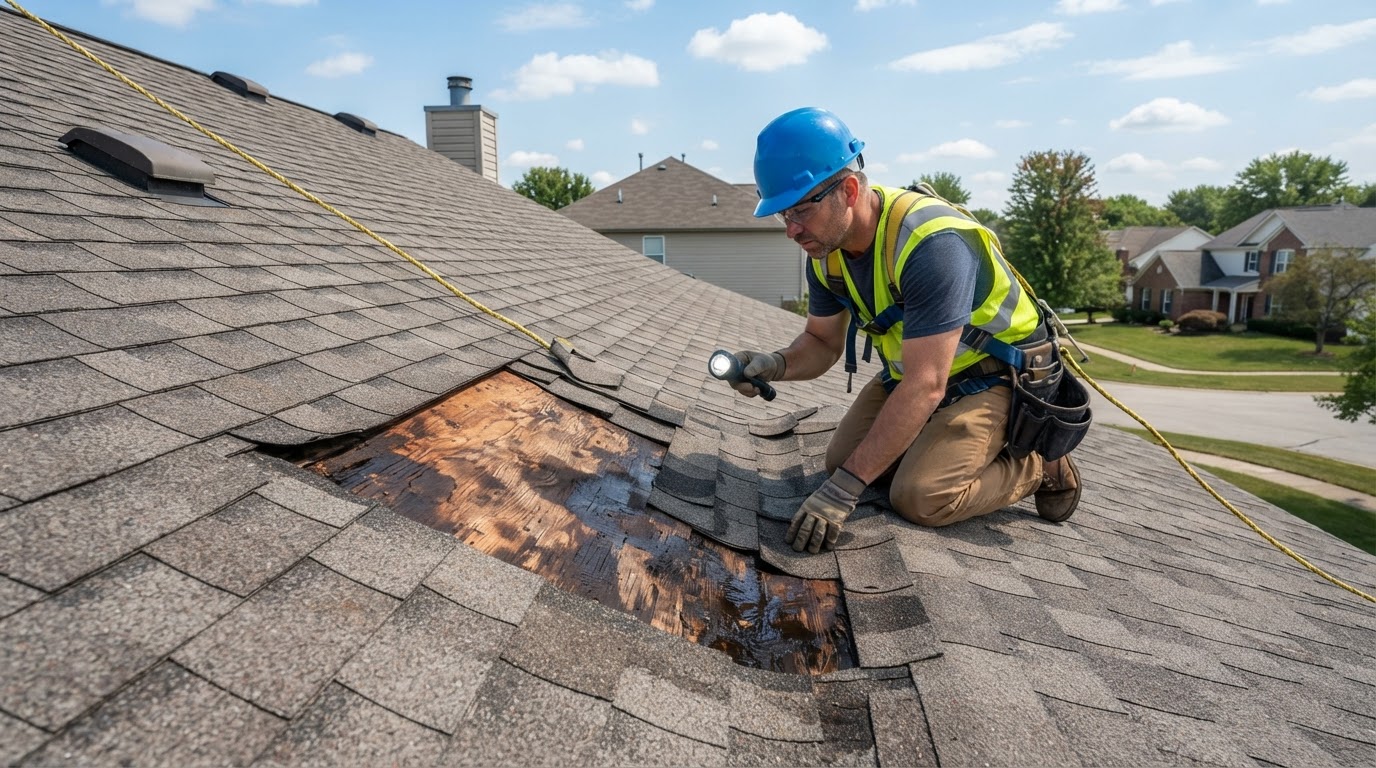
Key Editorial Takeaways
- ✓A roof leak is usually a localized failure — a broken seal, cracked pipe boot, or lifted flashing — not evidence that the entire roof needs replacement, if the roof is otherwise within its service life.
- ✓Water travels before it drips: a ceiling stain is rarely directly below the roof entry point, so tracing the leak to its source in the attic is the first step to an effective repair.
- ✓The NRCA identifies flashing failures as the most common source of residential roof leaks, exceeding failures in the shingle field — pipe boots, chimney flashing, valleys, and skylight curbs are the most frequent culprits.
- ✓Repair is appropriate when damage is isolated and the roof is within its service life; replacement becomes necessary when damage is widespread, the deck is soft, or the roof is at or past its expected lifespan.
- ✓A fair repair estimate is written, itemized, and includes a per-sheet decking replacement rate so the cost of concealed damage found at tear-off is known in advance.
- ✓In an emergency, contain the water, protect belongings, relieve ceiling pressure, document the damage, make temporary (not permanent) repairs, and call a licensed contractor for emergency tarping.
- ✓Routine maintenance — twice-yearly inspections, cleared gutters, renewed sealant, and balanced ventilation — prevents most leaks and extends roof life by years.
Answer First: What Should a Homeowner Do About a Roof Leak?
A roof leak is almost always a symptom of a localized failure — a broken seal, a cracked pipe boot, lifted flashing, or a shingle that has lost its wind resistance — not evidence that the entire roof needs replacement. The National Roofing Contractors Association (NRCA) advises that a professional roof evaluation should identify the specific location and cause of a leak, the condition of the surrounding roof system components, and whether a targeted repair will reliably restore water-shedding performance or whether the damage is widespread enough to warrant replacement.
Most leaks can be repaired rather than requiring a full replacement, if the roof is otherwise within its service life and the damage is isolated. A single failed pipe boot, one creased shingle, or a section of lifted chimney flashing is a repair. Granule loss, mat bruising, or cracked shingles spread across multiple roof slopes suggest systemic failure and point toward replacement.
The single most important principle: water travels before it drips. The stain on your ceiling is rarely directly below the entry point on the roof. A leak that appears in a living room corner can originate from a flashing failure near a chimney ten feet upslope. Tracing the leak to its actual source — not just its visible symptom — is the difference between a repair that holds and one that fails again next season.
This guide walks through every stage of the repair decision: finding the leak, understanding where roofs most often fail, deciding between repair and replacement, estimating repair costs, and handling an emergency. Each section links to a dedicated deep-dive article for homeowners who need more detail on a specific topic.
How to Find a Roof Leak: Tracing Water to Its Source
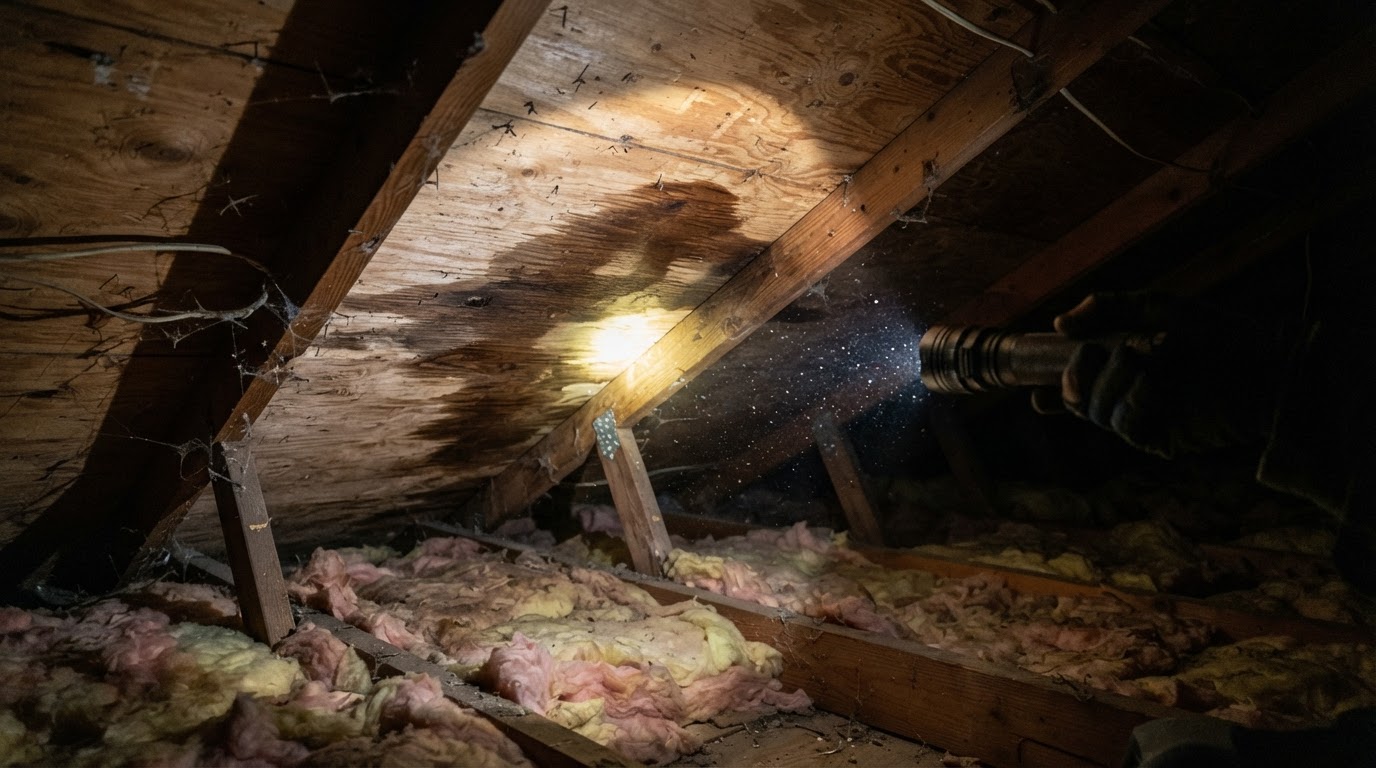
A ceiling stain is the last stop in a leak's journey, not the first. Water enters through a roof penetration or damaged shingle, runs along the underside of the underlayment or a rafter, and may travel several feet before it finally pools and drips. Finding the actual entry point requires working backward from the visible damage.
The attic inspection
On a bright, dry day, enter the attic with a flashlight and look for:
- Dark stains on the underside of the roof deck** — the path water has traveled
- Mold or mildew** on rafters or sheathing — evidence of recurring moisture
- Daylight visible through the deck** — a gap or missing shingle
- Wet or compressed insulation** — where water has pooled and been absorbed
- Rusted nail tips** — condensation from poor ventilation, which mimics a leak
Mark any stain with chalk or tape so you can correlate it to a location on the roof above. Then measure from the ridge and the nearest sidewall to estimate where the water is entering from above.
The hose test
If the attic inspection does not reveal the entry point, a controlled hose test can isolate it. With one person inside the attic and another on the ground running a gentle stream of water downslope from the marked area, work methodically from the bottom up. When the observer inside sees water appear, you have found the leak's origin.
When to stop and call a professional
The NRCA recommends that homeowners never walk on a roof due to fall-injury risk and the possibility of damaging already-weakened shingles. If the leak cannot be traced from the attic or the ground, or if the roof is steep, high, or wet, a licensed roofing contractor should perform the inspection with proper fall protection and harness equipment.
For the complete step-by-step leak-tracing procedure, see our how to find a roof leak guide.
Where Residential Roofs Most Often Leak
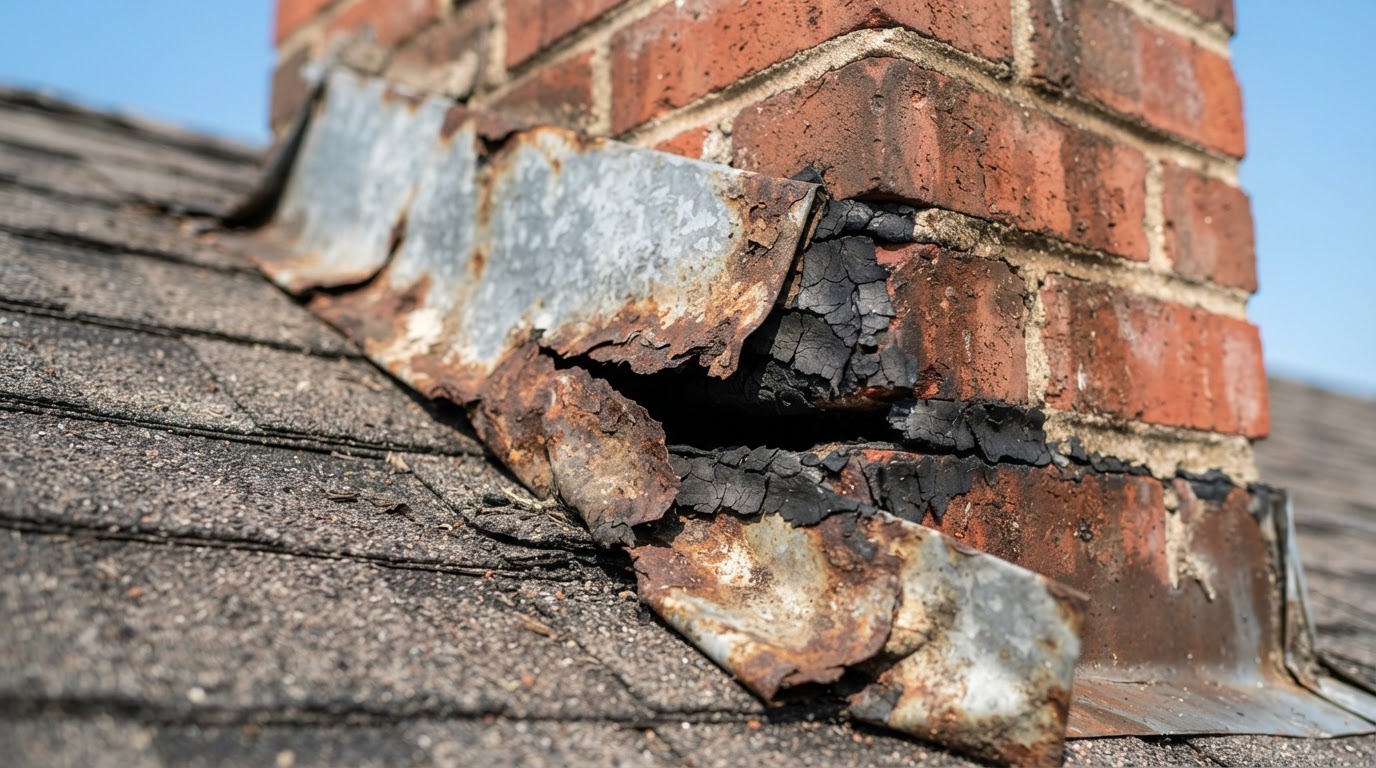
Not all parts of a roof fail at the same rate. The NRCA identifies flashing failures as the most common source of residential roof leaks — exceeding failures in the shingle field itself. Understanding where leaks originate helps homeowners understand a contractor's repair recommendation and verify that the proposed scope addresses the actual problem.
The five most common leak sources
| Leak Source | Why It Fails | Typical Repair Scope |
|---|---|---|
| Pipe boots | Neoprene rubber cracks from UV exposure (7–10 year lifespan) | Replace boot and seal stack flashing |
| Chimney flashing | Mortar joint sealant deteriorates; step flashing lifts | Re-step and counterflash; reseal joints |
| Roof valleys | Debris accumulation accelerates wear; woven valleys crack | Replace valley metal or reshingle valley |
| Skylight curbs | Curb flashing or sealant fails; water reaches drywall below | Reseal or replace curb flashing |
| Field shingles (wind/seal) | Thermal seal strip breaks; tabs lift and crease in wind | Replace creased shingles; reseal tabs |
Penetrations are the weak points
Every hole in a roof — a plumbing vent, a chimney, a skylight, a mechanical exhaust — is a potential leak. Each penetration requires flashing, sealant, and a boot or curb designed to keep water out. These components have shorter service lives than the shingles around them. A 25-year architectural shingle can be in excellent condition while a 10-year-old pipe boot has cracked and is leaking into the attic above it.
This is why a roof inspection focuses on penetrations and transitions, not just the shingle field. For the complete catalog of where roofs fail and how each failure is repaired, see our common roof leak sources guide and our roof flashing and chimney guide.
Roof Repair vs. Roof Replacement: How to Decide
The decision between repair and replacement depends on the roof's age, the extent and distribution of damage, and whether a repair can reliably restore the roof's water-shedding performance. The NRCA framework for this decision weighs several factors:
When repair is the right call
- The roof is within its service life.** An asphalt shingle roof under 15–20 years old with isolated damage is a strong repair candidate.
- Damage is localized.** A single slope, one valley, or a handful of wind-lifted shingles is a repair scope, not a replacement.
- The rest of the roof is sound.** If most slopes are free of granule loss, cracking, and mat bruising, addressing the isolated failure protects the investment in the rest of the roof.
- A specific cause is identifiable.** A storm, a fallen limb, or a single failed component points to a defined, fixable problem.
When replacement becomes necessary
- The roof is at or past its expected lifespan.** Asphalt shingles generally last 15–30 years depending on quality, climate, ventilation, and maintenance. A roof nearing end-of-life is a poor candidate for repeated repairs.
- Damage is widespread.** Granule loss, mat bruising, or cracking across multiple slopes indicates systemic failure.
- The deck is soft or rotting.** Spongy areas discovered during an inspection mean water has reached the structural sheathing — a problem replacement and deck repair addresses.
- Leaks recur in new locations.** Multiple leaks appearing in different areas suggest the roof system has failed broadly rather than at a single penetration.
For the complete decision framework and a side-by-side comparison, see our roof repair vs. replacement guide. For the warning signs that precede a replacement decision, see our signs you need a new roof guide.
What Roof Repairs Typically Cost
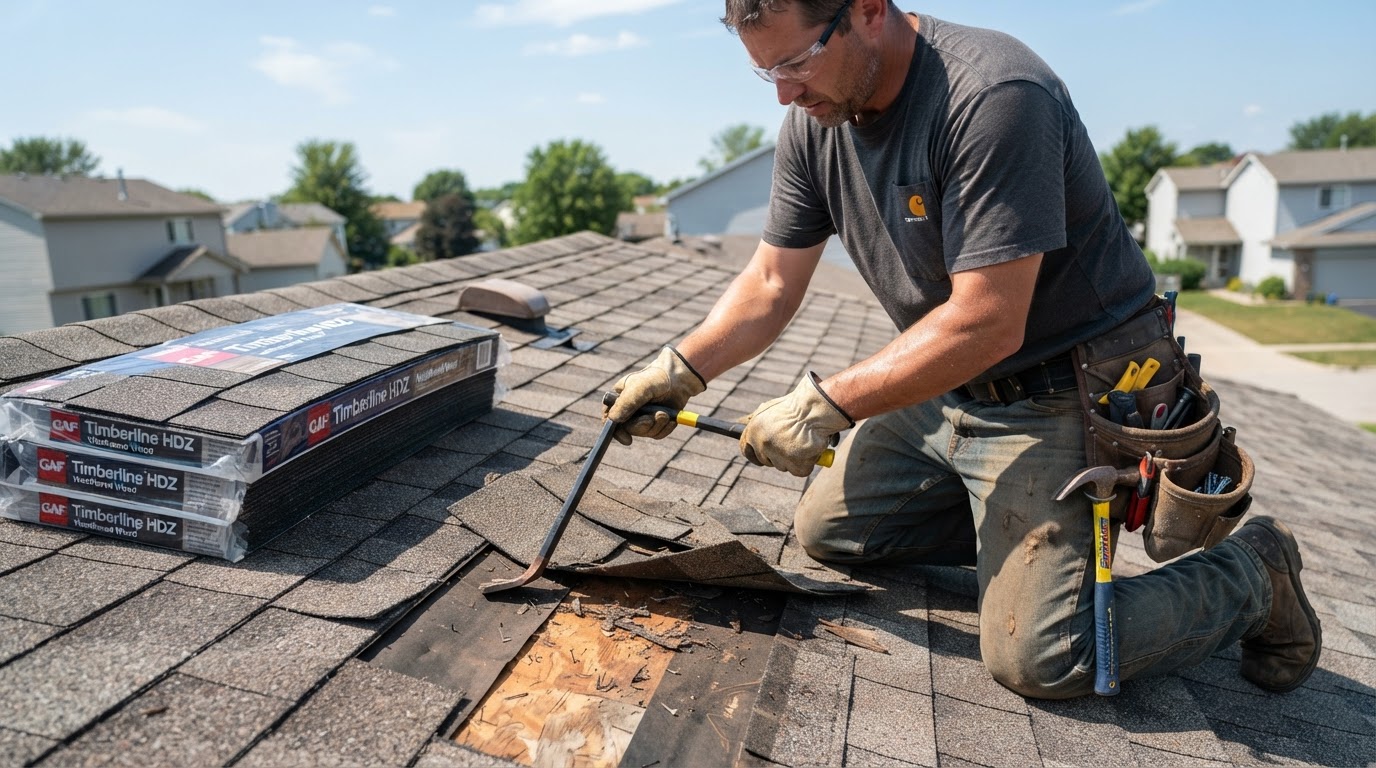
Repair costs depend on the scope of damage, the access difficulty, the materials involved, and regional labor rates. There is no single national repair price — but the components that drive a repair estimate are consistent.
Common repair scope and cost drivers
| Repair Type | Primary Cost Drivers | What Influences Price |
|---|---|---|
| Pipe boot replacement | Boot material, sealant, shingle removal/replacement count | Roof height, pitch, access |
| Chimney flashing | Linear feet of step/counterflashing, masonry condition | Chimney size, cricket requirement |
| Valley repair | Valley length, ice-and-water shield scope, shingle waste | Valley type (woven vs. metal) |
| Shingle replacement (field) | Number of shingles, matching availability, tear-off scope | Bundle quantity, color match |
| Skylight reseal | Curb flashing, drywall condition below | Skylight age, flashing replacement |
| Decking replacement | Sheets of plywood/OSB, rot extent discovered at tear-off | Accessibility, structural sistering |
Why estimates change after tear-off
A repair estimate is based on what is visible before the work begins. Once damaged shingles or flashing are removed, the condition of the wood deck beneath is revealed — and rotted, delaminated, or soft decking must be replaced to provide a solid nailing surface. A reputable estimate includes a per-sheet replacement rate (commonly $85–$130 per 4×8 sheet) so the homeowner knows the cost if concealed damage is found.
The International Residential Code (IRC R908.3) requires a solid, sound deck for any re-roofing or repair that installs new material. Decking discovered to be damaged during a repair must be addressed for the repair to meet code.
Getting a fair repair estimate
The Federal Trade Commission (FTC) recommends obtaining written estimates from multiple contractors and comparing scope, not just price. Two repair bids that differ significantly often reflect different scope — one may include new flashing and ice-and-water shield while the other simply replaces the visible shingle.
For a detailed breakdown of repair costs by leak type and repair scope, see our roof repair cost guide. For how to evaluate the contractor behind the estimate, see our how to choose a roofing contractor guide.
Emergency Roof Leaks: What to Do Right Now
An active, dripping leak inside the home is an emergency, but panic leads to bad decisions. The priority order for an emergency roof leak is:
- Contain the water. Place a bucket, trash can, or large container under the drip. Lay towels or plastic sheeting to protect flooring and finishes.
- Protect belongings. Move furniture, electronics, and valuables away from the affected area.
- Relieve ceiling pressure. If water is pooling above a ceiling, the weight can cause a collapse. If a ceiling is bulging, carefully puncture the lowest point of the bulge with a screwdriver and place a container below to drain the water — this prevents a larger, more damaging collapse.
- Document the damage. Photograph the interior damage, the ceiling stain, and any visible exterior damage. Note the date and time. This documentation supports an insurance claim if the leak stems from a covered storm event.
- Make temporary, not permanent, repairs. Tarping an active leak is reasonable and expected under the duty to mitigate. Do not attempt permanent repairs until a professional inspects the roof and, if applicable, until the insurance adjuster has seen the damage.
- Call a licensed roofing contractor for emergency tarping. Most policies expect the homeowner to take reasonable steps to prevent further damage. Keep receipts for tarps, lumber, and emergency service calls — these are typically reimbursable as part of a covered claim.
Safety boundaries
Do not climb on a wet roof, a steep roof, or a roof in the dark. Do not attempt to access a roof during an active storm. Fall injuries from roof access are a leading cause of home-maintenance injury, and a wet or wind-battered roof is genuinely dangerous. Emergency tarping is best left to a contractor with proper equipment.
For the full emergency-response procedure, see our emergency roofing guide. If the leak follows a storm, see our storm and hail damage guide and our roof insurance claim guide.
The Homeowner's Repair Decision Framework
When a leak is found, a homeowner faces a series of decisions. This framework organizes those decisions into the order most likely to produce a good outcome:
Step 1: Confirm and document
Confirm the leak is actually the roof, not a plumbing or condensation issue. A roof leak follows rain; a plumbing leak does not. Document the leak's first appearance, the weather conditions, and the interior damage with photos and a written log.
Step 2: Trace the source
Use the attic inspection and, if needed, the hose test described above to locate the actual entry point. If the source cannot be traced from inside or the roof is unsafe to access, schedule a professional inspection.
Step 3: Assess scope — repair or replace
Evaluate the roof's age, the extent of damage, and whether the problem is isolated or systemic. A roof within its service life with a single identifiable failure is a repair candidate. A roof at end-of-life with widespread damage is a replacement candidate.
Step 4: Obtain written estimates
Get at least two written, itemized estimates that specify the product, the scope, the flashing and underlayment work, the decking rate, and the warranty. Compare scope line by line, not just total price.
Step 5: Verify the contractor
Confirm licensing through your state board, request certificates of insurance for both liability and workers' compensation, and check references and recent reviews. Avoid same-day pressure and contractors who discourage a second estimate.
Step 6: Understand the warranty
Distinguish the manufacturer's material warranty (covers defects in the shingles) from the contractor's workmanship warranty (covers the installation). A repair is only as durable as the workmanship warranty behind it — and that warranty is only as reliable as the contractor's longevity and willingness to honor it.
For a complete guide to contractor vetting, see our how to choose a roofing contractor guide. For warranty details, see our roof warranties guide.
Preventing Future Leaks: Maintenance That Extends Roof Life
The best roof repair is the one a homeowner never needs. Routine maintenance catches small failures before they become leaks and extends the service life of the roof system. The NRCA and the Asphalt Roofing Manufacturers Association (ARMA) both recommend a minimum of two professional inspections per year — typically in spring and fall — supplemented by ground-level visual checks after any major storm.
Key maintenance priorities:
- Keep gutters and valleys clear.** Clogs force water under shingles and rot the fascia and deck from below.
- Inspect flashing and sealant annually.** Elastomeric sealants at penetrations have a 5–10 year service life and must be renewed before they crack.
- Verify ventilation balance.** Poor attic ventilation bakes shingles from beneath, voids warranties, and shortens roof life by years.
- Trim overhanging branches.** Branches rub shingles and drop debris that retains moisture and feeds moss and algae.
- Document every inspection and repair.** Maintenance records support warranty claims and demonstrate the roof was cared for.
For the complete maintenance program, see our roof inspection and maintenance guide and our comprehensive roof maintenance pillar guide. For seasonal guidance, see our seasonal roof maintenance calendar.
When a Local Roofing Professional Is Relevant
This guide is general homeowner education that applies anywhere. But roof repair and leak diagnosis are often regional — storm frequency, building-code requirements, and common failure modes vary by market.
In markets where The Roofing Press has a Featured Contractor, we may introduce that contractor when the geographic relationship is relevant. Featured Contractor status reflects participation in our program for a defined market; it is not a ranking, award, or certification of superiority over other licensed contractors. For the full program details and transparency disclosures, see our Featured Contractors program page.
A Note on Sources
This guide draws on National Roofing Contractors Association (NRCA) consumer guidance on roof inspection, leak diagnosis, and the repair-vs-replacement decision; Asphalt Roofing Manufacturers Association (ARMA) material and maintenance documentation; International Residential Code (IRC) requirements for decking and re-roofing (Section R908); and Federal Trade Commission (FTC) consumer guidance on hiring home improvement contractors and comparing written estimates. Specific repair costs, warranty terms, and building-code requirements vary by jurisdiction, product, and roof condition — verify current requirements with your local building department and the manufacturer of the product installed on your roof.
Frequently Asked Questions
How do I know if my roof leak can be repaired or needs a full replacement?
A leak can typically be repaired if the roof is within its service life and the damage is isolated to a specific area — a single failed pipe boot, one section of lifted flashing, or a handful of wind-damaged shingles. Replacement becomes necessary when the roof is at or past its expected lifespan, damage is widespread across multiple slopes, or the structural deck is soft or rotting. A professional inspection determines which scenario applies to your roof.
How much does a roof leak repair cost?
Repair costs depend on the scope of damage, access difficulty, materials, and regional labor rates. A pipe boot or small flashing repair is typically far less expensive than a full roof replacement. A fair estimate is written, itemized, and includes a per-sheet decking replacement rate in case rotted wood is discovered once the damaged area is opened. Obtain at least two written estimates and compare scope — not just total price — because bids that differ significantly often include different work.
Why is the ceiling stain not directly below where the roof is leaking?
Water travels along the underside of the roof deck or along rafters before it pools and drips. A leak that enters near a chimney can travel several feet before appearing as a stain in a living room corner. Tracing the leak to its actual entry point — by inspecting the attic for dark stains on the underside of the deck and working backward — is the key to a repair that holds rather than one that fails again.
What should I do immediately when my roof starts leaking?
Contain the water with a bucket, protect belongings and flooring, relieve pressure on a bulging ceiling by carefully puncturing it to drain pooled water, document the damage with photos and a written log noting the date and weather, and make only temporary repairs (such as tarping) until a professional and, if applicable, your insurance adjuster can inspect. Do not climb on a wet, steep, or storm-battered roof — emergency tarping is best left to a licensed contractor with proper equipment.
Can I find and fix a roof leak myself?
You can safely perform an attic inspection with a flashlight to look for dark stains, daylight through the deck, mold, and wet insulation, and you can perform a controlled hose test to isolate the entry point. However, the NRCA recommends that homeowners never walk on a roof due to fall-injury risk and the possibility of damaging already-weakened shingles. Roof access, flashing repair, shingle replacement, and pipe boot replacement should be performed by a licensed roofing professional with proper fall protection.
Will fixing one leak prevent other leaks from appearing?
A targeted repair addresses the specific failure that caused the current leak. If the roof is otherwise sound, that repair is often sufficient. But if the roof is aging, has multiple weakened components, or has damage across several slopes, additional leaks may appear elsewhere — which is a sign that the roof is approaching systemic failure and a replacement evaluation may be warranted. Routine maintenance (inspections, cleared gutters, and sealant renewal) helps prevent new failures from developing.
Cited Research Sources & References
- National Roofing Contractors Association (NRCA) — Consumer ResourcesView Source
- Asphalt Roofing Manufacturers Association (ARMA) — Maintenance & CareView Source
- International Code Council (ICC) — 2021 IRC Section R908: ReroofingView Source
- Federal Trade Commission (FTC) — Home Improvement: Hiring a ContractorView Source
Related Guides in This Series
- How to Find a Roof Leak: A Step-by-Step Homeowner Detection GuideA researched homeowner guide to finding a roof leak — tracing water from the interior stain to the attic, understanding why leaks appear far from the entry point, identifying common leak locations like flashing and valleys, and knowing when to call a professional.
- Where Do Roofs Leak? Common Roof Leak Sources ExplainedA researched guide to the most common residential roof leak sources — pipe boots, chimney flashing, roof valleys, skylights, ice dams, and damaged shingles — explaining how to trace a leak to its entry point and when to call a professional.
- How Much Does a Roof Leak Repair Cost? (2026 Price Guide)A comprehensive pricing guide to roof leak repairs — breaking down national cost ranges for pipe boot replacement, chimney flashing repairs, valley leaks, emergency tarping, and labor minimums, alongside a repair-versus-replace decision matrix.
- Roof Flashing & Chimney Leaks: Where Roofs FailA homeowner's guide to roof flashing and chimney leaks — how flashing works, why penetrations like chimneys and vents are the most common leak sources, and what to look for when these areas fail.
- Emergency Roofing: What to Do When Your Roof Leaks SuddenlyA practical guide for homeowners facing a sudden roof leak or storm damage — what to do in the first hour, how to safely mitigate damage, what to document for insurance, and when emergency roofing service is warranted.
- Roof Repair vs. Replacement: How to Decide What Your Home NeedsA practical homeowner guide to deciding between a targeted roof repair and a full replacement — covering roof age, leak patterns, shingle condition, decking integrity, and the widely used 30% cost threshold.
- Roof Inspection & Maintenance Guide for HomeownersA homeowner guide to roof inspections and seasonal maintenance — when to inspect, what to look for inside and out, and how routine care extends roof lifespan, based on NRCA and ARMA guidance.
- How to Choose a Roofing Contractor: A Homeowner's Guide to Vetting, Questions, and Red FlagsA researched homeowner guide to choosing a roofing contractor — verifying licensing and insurance, comparing written estimates, understanding warranties, evaluating local reputation, and recognizing high-pressure sales tactics and red flags before you sign a contract.