
The Complete Roof Inspection & Maintenance Guide for Homeowners
A comprehensive homeowner resource covering seasonal roof inspections, preventative maintenance, ventilation, gutters, flashing, moss and algae control, and how routine care extends roof lifespan — sourced to building codes, manufacturer guidance, and federal energy standards.
Key Editorial Takeaways
- ✓The NRCA and ARMA recommend a minimum of two professional roof inspections per year — spring and fall — plus post-storm visual checks.
- ✓A roof is an interconnected system: shingles, underlayment, flashing, ventilation, gutters, and soffits all affect each other. One component failure cascades to the others.
- ✓Attic ventilation is the single largest hidden driver of roof lifespan — poor ventilation can shorten any roof by 30–40% and void manufacturer warranties.
- ✓Flashing failures are the most common source of residential roof leaks, exceeding failures in the shingle field itself.
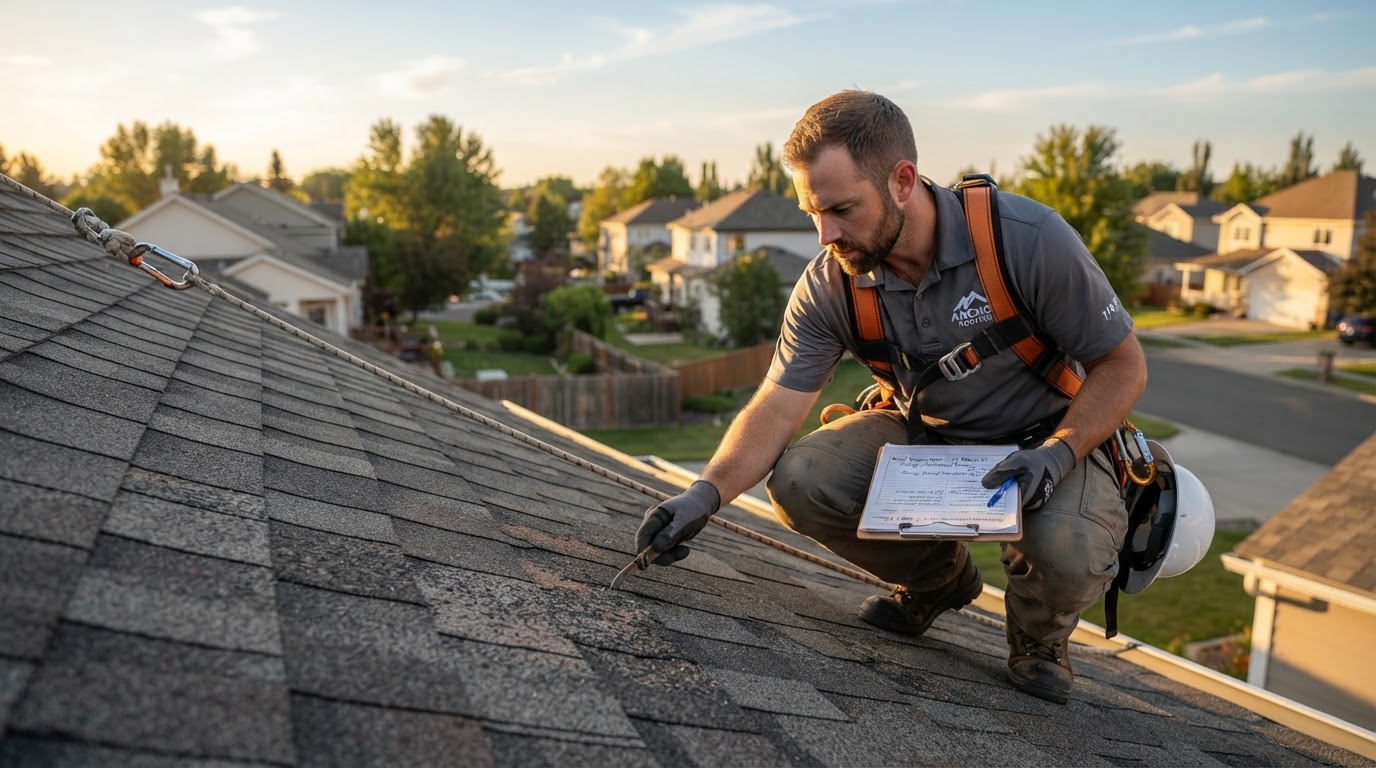
- ✓Homeowners should never climb on their roof — ground-level and attic inspections are safe and effective; roof access requires a professional with fall protection.
- ✓A well-maintained asphalt shingle roof can deliver its full 20–30 year design life, while a neglected roof in the same climate may fail in 12–15 years.
- ✓Most manufacturer warranties require documented maintenance, including adequate ventilation, as a condition of coverage.
Answer First: Why Roof Maintenance Matters
A residential roof is the single largest weatherproofing system protecting your home, yet it is also the most out-of-sight, out-of-mind component a homeowner owns. The Asphalt Roofing Manufacturers Association (ARMA) and the National Roofing Contractors Association (NRCA) both recommend twice-yearly professional roof inspections — typically in spring and fall — to identify minor issues before they become major failures.
The practical reality is straightforward: a well-maintained asphalt shingle roof can deliver its full 20–30 year design life, while a neglected roof in the same climate may fail in 12–15 years. Routine maintenance does not mean climbing on the roof yourself. It means understanding what to look for from the ground, what to have a professional inspect, and how the interconnected systems beneath your shingles — ventilation, gutters, flashing, and soffits — work together to protect the roof from premature deterioration.
This guide consolidates everything a homeowner needs to know about roof inspections and preventative maintenance into a single resource. Each section links to a dedicated deep-dive article for homeowners who want to go further on a specific topic.
The Roof as an Interconnected System
Homeowners often think of "the roof" as the visible shingles. In reality, a residential roof is an integrated system of six components, each of which affects the others:
| Component | Function | Maintenance Impact |
|---|---|---|
| Shingles / Roof Covering | Primary water-shedding surface | Inspect for cracking, granule loss, wind lift |
| Underlayment | Secondary water barrier beneath shingles | Protected by shingle condition; fails if shingles fail |
| Flashing | Seals penetrations (chimneys, vents, valleys, walls) | Most common leak source; inspect sealant and metal |
| Ventilation | Regulates attic temperature and moisture | Poor ventilation voids warranties and shortens roof life |
| Gutters & Downspouts | Channel water away from roof edge and foundation | Clogs cause water backup under shingles |
| Soffit & Fascia | Enclose eaves and feed intake ventilation to attic | Rot or blockage reduces ventilation airflow |
When one component fails, the others absorb stress they were not designed to handle. A clogged gutter forces water under shingles, which saturates underlayment, which rots the deck, which compromises flashing — a cascading failure that begins with something as simple as leaves in a valley.
“Key principle: Roof maintenance is not about fixing the roof. It is about preserving the conditions that allow every component to perform as designed.
For a detailed breakdown of each system component, see our roof inspection and maintenance guide.
How Often Should a Roof Be Inspected?
The NRCA and ARMA recommend a minimum of two professional inspections per year, supplemented by homeowner visual checks after any major storm. The recommended cadence:
- Spring inspection (March–May): Assess winter damage, check for ice-dam evidence, verify flashing integrity before storm season, and clear debris accumulated over winter.
- Fall inspection (September–November): Clear gutters and valleys before leaf fall, verify ventilation before winter condensation season, and document roof condition before freezing temperatures make repairs difficult.
- Post-storm checks: After any severe thunderstorm, hail event, or wind event exceeding 50 mph, perform a ground-level visual inspection and schedule a professional assessment if your area was under a warning.
For a month-by-month breakdown of what to do and when, see our seasonal roof maintenance calendar.
What a Professional Inspection Includes
A professional roof inspection should evaluate:
- Shingle condition:** Cracking, cupping, curling, granule loss, blistering, and wind-lifted or missing shingles
- Flashing integrity:** Step flashing, counterflashing, pipe boots, valley metal, and skylight curbs
- Sealant condition:** Deteriorated caulking at penetrations, vents, and chimney joints
- Ventilation adequacy:** Soffit intake and ridge/exhaust balance, blocked soffit vents
- Gutter function:** Secure attachment, proper slope, clogs, and downspout discharge location
- Deck condition:** Soft spots, sagging, or signs of moisture intrusion visible from the attic
- Interior attic signs:** Moisture stains, mold, daylight through deck gaps, and insulation condition
The Homeowner's Ground-Level Inspection Checklist
You do not need to climb on the roof to perform a meaningful inspection. The NRCA recommends that homeowners never climb on a roof and instead perform a ground-level and attic inspection, leaving roof access to professionals with proper fall protection.
From the Ground
Walk around your home and look for:
- Missing, cracked, or curling shingles** — visible as dark patches or lifted edges
- Granule accumulation in gutters or at downspout exits** — a sign of advanced shingle wear
- Dark streaks or green patches** — algae or moss growth feeding on shingle granules
- Sagging roof planes** — visible dips or unevenness indicating potential deck or structural issues
- Damaged or rusted flashing** visible at the chimney or roof penetrations
- Loose or missing gutters, sagging gutters, or water spilling over edges** during rain
From the Attic
On a bright day, enter the attic with a flashlight and check:
- Daylight visible through the roof deck** — indicates gaps or missing shingles
- Water stains or dark patches on rafters or sheathing** — evidence of past or active leaks
- Soft or spongy deck areas** — press gently with a tool; soft spots indicate rot
- Mold, mildew, or musty odors** — signs of moisture from poor ventilation or leaks
- Rusted nails or frost on nail tips** (in winter) — condensation from inadequate ventilation
- Insulation condition** — compressed, damp, or discolored insulation signals moisture intrusion
For safe, homeowner-performed maintenance tasks, see our DIY roof maintenance guide.
Ventilation: The Hidden Driver of Roof Lifespan
Attic ventilation is the single most underappreciated factor in roof longevity. The International Residential Code (IRC Section R806) requires net free ventilation area of at least 1/150 of the attic floor area, reducible to 1/300 when balanced intake-and-exhaust ventilation is installed.
Why Ventilation Matters
A poorly ventilated attic causes three distinct forms of roof damage:
- Heat buildup: Summer attic temperatures can exceed 150°F in an unventilated space. This bakes the shingles from beneath, accelerating asphalt drying, granule loss, and premature cracking. The U.S. Department of Energy documents that proper attic ventilation can reduce shingle surface temperatures by 20–40°F.
- Moisture condensation: Warm, moist air from the living space rises into the attic and condenses on cold roof decks in winter. The resulting moisture rots wood decking, rusts nails, and feeds mold — all invisible from outside.
- Ice dam formation: In cold climates, heat escaping through an unventilated attic melts snow on the upper roof, which refreezes at the colder eaves. The ice dam traps water behind it, forcing water under shingles.
The Balanced Ventilation Rule
Effective ventilation requires balanced intake and exhaust:
- Intake (soffit vents):** Draw cool, dry air in at the eaves
- Exhaust (ridge vents or box vents):** Expel warm, moist air at the roof peak
- Balance:** The NRCA recommends roughly equal net free area between intake and exhaust, with intake never less than exhaust
A common failure is a roof with ridge vents (exhaust) but blocked or insufficient soffit intake — this creates negative pressure that pulls conditioned air from the living space and starves the ventilation system.
For a complete explanation of attic ventilation, IRC requirements, and how ventilation affects manufacturer warranties, see our roof ventilation guide.
Gutters and Downspouts: The Roof's Drainage System
Gutters are not a separate system from the roof — they are the roof's primary drainage mechanism. When gutters fail, water backs up under the shingle edge, saturates the underlayment, and eventually reaches the roof deck.
Maintenance Priorities
- Clean gutters at least twice per year** — once after spring bloom and once after fall leaf drop. Homes surrounded by trees may require quarterly cleaning.
- Verify downspout discharge** — water should exit at least 4–6 feet from the foundation. Short discharges cause foundation damage and basement seepage.
- Check gutter slope and attachment** — gutters should slope approximately 1/4 inch per 10 feet toward downspouts. Sagging gutters pool water and accelerate corrosion.
- Install gutter guards** if leaf volume is high — but understand that guards reduce but do not eliminate cleaning needs.
The Gutter-Roof Connection
Clogged gutters cause a specific failure pattern: water overflows the gutter edge, runs behind the fascia board, and saturates the roof edge from below. This rots the fascia and soffit, compromises the drip edge, and creates a leak path that mimics a roof penetration failure — but the root cause is the gutter.
For the complete gutter and downspout maintenance guide, see our gutter and downspout guide.
Flashing: Where Roofs Actually Leak
Flashing is the metal and sealant system that seals every roof penetration — chimneys, plumbing vents, skylights, valleys, and sidewall intersections. The NRCA identifies flashing failures as the most common source of residential roof leaks, far exceeding failures in the shingle field itself.
What to Have Inspected
| Flashing Location | Common Failure | Inspection Focus |
|---|---|---|
| Pipe boots | Neoprene rubber cracks from UV (7–10 yr lifespan) | Visible cracking or splitting around pipe |
| Chimney step & counterflashing | Mortar joint sealant deteriorates | Gaps between counterflashing and masonry |
| Roof valleys | Debris accumulation, worn shingles | Leaves, granules, or visible wear in valley |
| Skylight curbs | Failed curb flashing or sealant | Water around skylight frame or drywall below |
| Drip edge | Missing or lifted at eaves/rakes | Shingles lifting at roof edge |
Flashing maintenance is primarily about sealant renewal and debris management. The elastomeric sealants used at flashing intersections have a service life of 5–10 years and must be renewed before they crack and pull away.
For a detailed guide to flashing failures and chimney leak diagnosis, see our roof flashing and chimney guide.
Soffit and Fascia Maintenance
The soffit (the underside of the roof overhang) and fascia (the vertical board where the gutter attaches) serve two functions: they enclose the eave structure and they house the intake ventilation that feeds the attic ventilation system.
Maintenance Priorities
- Inspect for rot and softness** — press gently; soft fascia indicates moisture damage, often from gutter overflow
- Verify soffit vent openings are unblocked** — insulation pushed against soffit vents is a common ventilation failure; install baffles to maintain airflow
- Check for pest entry** — holes or gaps in soffit screens allow squirrels, birds, and insects into the attic
- Repaint or reseal** exposed wood fascia every 5–7 years to prevent moisture absorption
For a complete explanation of soffit and fascia function and maintenance, see our soffit and fascia guide.
Moss, Algae, and Black Streaks
The dark black streaks common on residential roofs — particularly in humid climates like Tennessee and Alabama — are caused by Gloeocapsa magma, a blue-green algae that feeds on the limestone filler in asphalt shingles. Moss growth is a separate issue that indicates persistent moisture retention on the roof surface.
Why It Matters
- Algae** is primarily a cosmetic issue but can accelerate granule loss over time
- Moss** is structurally damaging — it lifts shingle edges, retains moisture against the surface, and creates freeze-thaw damage in cold weather
- Both thrive in shaded, humid conditions common to the Southeastern United States
Treatment and Prevention
- Do not pressure wash** asphalt shingles — the pressure dislodges granules and voids manufacturer warranties
- Use manufacturer-approved cleaning solutions** — ARMA publishes guidelines for algae and moss removal using non-pressure application methods
- Install zinc or copper strips** near the ridge — rainwater washing over these metals inhibits algae and moss growth
- Trim overhanging branches** to increase sunlight and reduce moisture retention
- Consider algae-resistant shingles** with copper granules when replacing the roof
For the complete moss and algae treatment guide, see our roof moss and algae guide.
How Maintenance Extends Roof Lifespan
Different roofing materials have different design lives, but every material's actual service life depends heavily on maintenance:
| Material | Design Life (Manufacturer) | Typical Actual Life (Maintained) | Typical Actual Life (Neglected) |
|---|---|---|---|
| 3-tab asphalt shingles | 20–25 years | 18–22 years | 12–15 years |
| Architectural shingles | 30–40 years | 25–30 years | 18–22 years |
| Standing seam metal | 40–70 years | 40–60 years | 30–45 years |
| Clay/concrete tile | 50+ years | 50+ years | 35–50 years |
The gap between design life and actual life is almost entirely a function of three maintenance factors:
- Ventilation adequacy — the single largest variable; poor ventilation can shorten any roof by 30–40%
- Flashing and sealant renewal — prevents the water intrusion that rots decking and compromises the structure
- Debris management — keeps gutters, valleys, and roof surfaces clear so water sheds as designed
For the complete material lifespan guide, see our roof lifespan by material guide.
The Seasonal Maintenance Calendar
Roof maintenance is not a one-time task — it is a year-round rhythm aligned with seasonal weather patterns. The general framework:
Spring (March–May) - Schedule professional inspection - Clear winter debris from gutters and valleys - Check for ice-dam damage at eaves - Verify flashing before storm season - Inspect attic for winter condensation damage
Summer (June–August) - Monitor for algae streaking in humid climates - Verify attic ventilation is unobstructed during peak heat - Check for UV-related cracking on south- and west-facing slopes - Trim overhanging branches
Fall (September–November) - Clean gutters after leaf drop - Clear valleys of debris before winter - Inspect flashing and pipe boots before freezing weather - Verify downspout discharge away from foundation
Winter (December–February) - Monitor attic for condensation and frost on nails - Watch for ice dam formation at eaves - Keep gutters clear to prevent ice buildup - Document any storm damage with photos
For the complete month-by-month calendar, see our seasonal roof maintenance calendar.
What Homeowners Can Safely Do vs. What Requires a Professional
The NRCA is explicit: homeowners should not climb on their roofs. Fall injuries from residential roofs are a leading cause of home-maintenance injuries. The safe division of labor:
Homeowner-Safe Tasks - Ground-level visual inspection of shingles, gutters, and flashing - Attic inspection with flashlight (from the attic floor, not the roof deck) - Gutter cleaning from a stable ladder at the eave (not on the roof) - Clearing debris from visible valleys using a roof rake from the ground - Documenting damage with photos for insurance or contractor reference
Professional-Only Tasks - Any work requiring roof access beyond the eave - Flashing repair or replacement - Shingle replacement or sealing - Ventilation assessment and modification - Pipe boot replacement - Chimney flashing and cricket installation - Ice dam removal - Any inspection following a storm that may involve an insurance claim
For the complete guide to safe homeowner maintenance, see our DIY roof maintenance guide.
Maintenance and Manufacturer Warranties
Most asphalt shingle manufacturers require documented maintenance as a condition of warranty coverage. Key requirements typically include:
- Adequate attic ventilation** meeting IRC requirements — inadequate ventilation is the most common reason warranties are denied
- No installation over existing roofing layers** without manufacturer approval
- Proper fastening** per manufacturer specifications (verified at installation)
- No pressure washing or abrasive cleaning** that removes granules
- Prompt repair of storm damage** to prevent progressive deterioration
Homeowners should retain inspection reports, repair invoices, and maintenance records as warranty documentation. A roof that has never been inspected is difficult to warranty-claim because the manufacturer can argue that neglect contributed to the failure.
When Professional Help Is Relevant
This guide is general homeowner education. When a homeowner identifies a maintenance issue that requires roof access, professional diagnosis, or storm damage assessment, The Roofing Press may introduce a Featured Contractor serving the homeowner's geographic market when that relationship is relevant.
Featured Contractor status reflects participation in our program for a defined market. It is not a ranking, award, or certification of superiority. For the full program details and transparency disclosures, see our Featured Contractors program page.
A Note on Sources
This guide draws on National Roofing Contractors Association (NRCA) consumer guidance on roof inspection and maintenance, Asphalt Roofing Manufacturers Association (ARMA) material and maintenance documentation, International Residential Code (IRC) ventilation requirements (Section R806), and U.S. Department of Energy guidance on attic ventilation and cool roofs. Specific maintenance requirements vary by roof material, climate, and local building code — verify current requirements with your local building department and roofing manufacturer.
Frequently Asked Questions
How often should I have my roof inspected?
The NRCA and ARMA recommend a minimum of two professional inspections per year — typically in spring and fall. You should also perform a ground-level visual check after any severe storm producing hail or winds above 50 mph, and schedule a professional assessment if your area was under a severe thunderstorm or tornado warning.
Can I inspect my own roof?
Yes, but only from the ground and from the attic. The NRCA recommends that homeowners never climb on a roof due to fall injury risk. A meaningful inspection can be performed from the ground (looking for missing, cracked, or curling shingles, dark streaks, and gutter issues) and from the attic (looking for daylight through the deck, water stains, soft spots, and condensation). Roof access should be left to professionals with proper fall protection.
Does attic ventilation really affect how long my roof lasts?
Yes — significantly. Poor attic ventilation is the single largest hidden driver of premature roof failure. An unventilated attic can exceed 150°F in summer, baking shingles from beneath and accelerating granule loss and cracking. In winter, trapped moisture condenses on the roof deck, causing rot and mold. The IRC requires ventilation area of at least 1/150 of attic floor area (reducible to 1/300 with balanced intake and exhaust). Poor ventilation can also void manufacturer warranties.
What is the black stuff on my roof and should I remove it?
The dark black streaks are caused by Gloeocapsa magma, a blue-green algae that feeds on the limestone filler in asphalt shingles. It is primarily cosmetic but can accelerate granule loss over time. Moss is a separate, more damaging growth that lifts shingles and retains moisture. Never pressure wash shingles — it removes granules and voids warranties. Use manufacturer-approved cleaning solutions, install zinc or copper strips near the ridge, and trim overhanging branches to increase sunlight.
Will routine maintenance actually extend my roof's life?
Yes. A well-maintained asphalt shingle roof can deliver its full 20–30 year design life, while a neglected roof in the same climate may fail in 12–15 years. The gap between design life and actual life is primarily driven by three factors: ventilation adequacy, flashing and sealant renewal, and debris management in gutters and valleys. Most manufacturer warranties also require documented maintenance as a condition of coverage.
What maintenance tasks can I safely do myself versus hiring a professional?
Homeowners can safely perform ground-level visual inspections, attic inspections with a flashlight, gutter cleaning from a stable ladder at the eave, clearing visible valley debris with a roof rake from the ground, and documenting damage with photos. Any work requiring roof access — flashing repair, shingle replacement, pipe boot replacement, ventilation modification, or ice dam removal — should be performed by a licensed roofing professional with proper fall protection equipment.
Cited Research Sources & References
- National Roofing Contractors Association (NRCA) — Consumer ResourcesView Source
- Asphalt Roofing Manufacturers Association (ARMA) — Maintenance & CareView Source
- International Code Council (ICC) — 2021 IRC Section R806: Roof VentilationView Source
- U.S. Department of Energy — Attic Ventilation and Cool RoofsView Source
Related Guides in This Series
- Roof Inspection & Maintenance Guide for HomeownersA homeowner guide to roof inspections and seasonal maintenance — when to inspect, what to look for inside and out, and how routine care extends roof lifespan, based on NRCA and ARMA guidance.
- Seasonal Roof Maintenance Calendar: A Year-Round GuideA year-round seasonal roof maintenance calendar — what to inspect, clean, and prepare each season to extend roof lifespan, prevent storm damage, and protect your home.
- DIY Roof Maintenance: What Homeowners Can Safely DoA homeowner's guide to safe DIY roof maintenance — what you can do from the ground or a ladder, what requires a professional, and the safety rules that prevent falls and injuries.
- Roof Ventilation Guide: How Attic Airflow Protects Your Roof, Warranty, and Energy CostsA researched homeowner guide to roof and attic ventilation — covering ridge vents, soffit intake vents, balanced airflow, International Residential Code requirements, how ventilation affects shingle lifespan and manufacturer warranties, and the warning signs of a poorly ventilated roof.
- Gutter & Downspout Guide: Protecting Your Roof and FoundationA homeowner's guide to gutters and downspouts — how they protect the roof edge from water backup and the foundation from water damage, plus sizing, slope, extension, and maintenance best practices.
- Roof Flashing & Chimney Leaks: Where Roofs FailA homeowner's guide to roof flashing and chimney leaks — how flashing works, why penetrations like chimneys and vents are the most common leak sources, and what to look for when these areas fail.
- Roof Moss, Algae & Black Streaks: How to Remove and Prevent Them SafelyA researched homeowner guide to roof moss, algae, and lichen — what causes the black streaks on shingles, how moss damages roofing materials, safe removal methods that will not void your warranty, zinc and copper prevention strips, and when to call a professional.
- Roof Soffit and Fascia Explained: What Homeowners Need to KnowA researched homeowner guide to roof soffit and fascia — what these components are, how soffit ventilation protects attic airflow and roof health, common damage like rot and pest entry, maintenance steps, and how soffit and fascia fit into the complete roofing system.
- How Long Does a Roof Last? Roof Lifespan by MaterialA researched guide to residential roof lifespan by material — covering asphalt shingles, standing seam metal, clay and concrete tile, and flat membrane systems — and the maintenance, climate, ventilation, and installation factors that determine actual service life.