
Fall Roof Preparation Checklist: Protect Your Roof Before Winter
A seasonal homeowner guide to the inspection, cleaning, and maintenance tasks that prevent winter leaks, ice dams, and storm damage — and what to leave to a professional.
Key Editorial Takeaways
- ✓Fall is the most important maintenance season — the NRCA recommends biannual inspections (spring and fall) because this is when seasonal damage is caught before winter worsens it.
- ✓Cleaning gutters and downspouts is the single highest-value fall task — clogged gutters trap water that freezes at the eaves and forces meltwater under the shingles, the mechanism behind many winter leaks.
- ✓From the ground, homeowners can inspect for missing or lifted shingles, check valleys for debris, confirm flashing is intact, trim overhanging branches, and check attic ventilation — but should not climb onto the roof.
- ✓Flashing repair, shingle replacement, steep-roof work, and ventilation modifications should be left to a licensed, insured contractor — a homeowner walking a roof can cause the very damage they were trying to prevent.
- ✓Proper attic ventilation is critical in winter — ARMA emphasizes balanced intake and exhaust ventilation to prevent ice dams and protect shingle lifespan.
This article is part of our comprehensive guide: The Complete Roof Inspection & Maintenance Guide for Homeowners
Answer First: Why Fall Roof Preparation Matters
Fall is the single most important season for roof maintenance. The combination of falling leaves and debris, approaching freezing temperatures, and the storm season that precedes winter creates a window in which small, fixable problems become expensive winter leaks. The National Roofing Contractors Association (NRCA) recommends biannual inspections — spring and fall — because these are the moments when seasonal damage is most likely to be caught before it worsens.
A roof that enters winter with clogged gutters, damaged flashing, or a debris-filled valley is far more likely to leak during the first freeze, ice storm, or heavy winter rain. Fall preparation is not about adding new work — it is about preventing the conditions that turn a $200 gutter cleaning into a $5,000 interior repair.
This guide covers what a homeowner can safely do from the ground, what requires a professional, and what to check before the first freeze. For the year-round maintenance framework, see our seasonal roof maintenance calendar and our complete roof inspection and maintenance guide.
The Fall Roof Preparation Checklist
1. Clean the Gutters and Downspouts
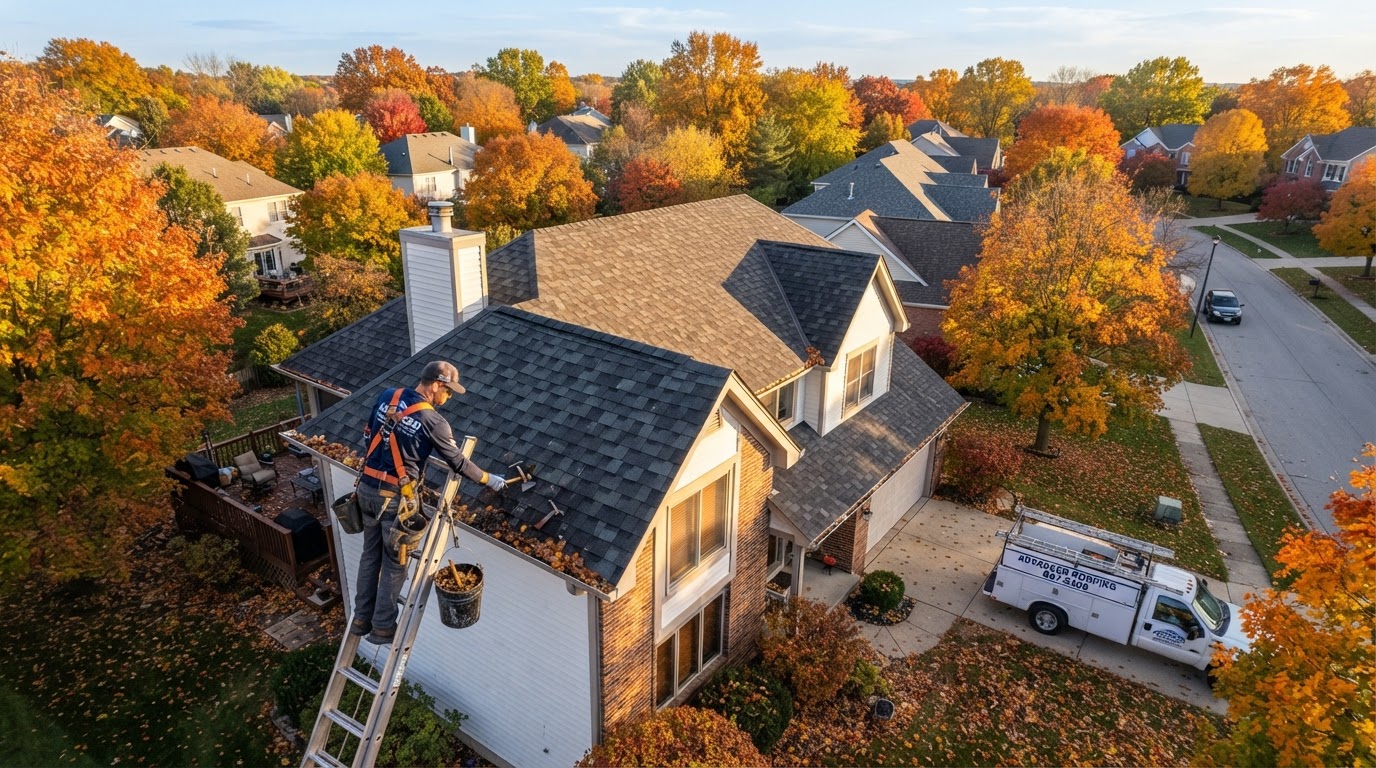
This is the single highest-value fall task. Gutters clogged with leaves, pine needles, and shingle granules cannot drain. When the first freeze arrives, trapped water freezes and expands — both lifting the gutter and forcing meltwater under the shingles at the eaves. This is the mechanism behind many winter leaks that homeowners mistake for "roof failure" when the actual cause was a clogged gutter.
What to do:
- Clear all leaves, needles, and debris from gutters and downspout outlets.
- Flush downspouts with a hose to confirm water flows freely to the ground.
- Check that downspouts extend at least 4–6 feet from the foundation to direct water away from the home.
- Inspect gutter seams and brackets for sagging or separation.
For the full gutter and drainage system guide, see our gutter and downspout guide.
2. Clear Roof Valleys and Debris
Roof valleys — where two roof planes meet — are natural collection points for leaves and debris. A debris-filled valley traps moisture against the shingles and the valley flashing, accelerating deterioration and creating a leak path. Fall is when valleys fill fastest.
What a homeowner can do from the ground:
- Use binoculars to inspect valleys for accumulated leaves and debris.
- If debris is visible and the roof is low and safely accessible, use a leaf blower from a ladder at the eave — never climb onto the roof itself to clear a valley.
If the roof is steep, high, or you are not comfortable on a ladder, this is a professional task. For what is safe to do yourself, see our DIY roof maintenance guide.
3. Inspect for Missing, Lifted, or Damaged Shingles
After the summer storm season, shingles may be missing, lifted, or cracked. A single missing shingle can allow water into the underlayment, and the first winter storm will find that weakness.
What to look for from the ground:
- Missing shingles or visible bare patches.
- Shingles that appear lifted, curled, or cupped at the edges.
- Cracked or broken shingles.
- Excessive granule accumulation in gutters (a sign of advanced shingle wear).
Granule loss is normal in small amounts, but heavy accumulation across the roof — not just one slope — is a sign the shingles are nearing end of life. For how to read these signs, see our signs you need a new roof guide and our roof lifespan guide.
4. Check Flashing, Chimneys, and Penetrations
Flashing — the metal strips that seal the joints around chimneys, skylights, vents, and valleys — is the most common leak source on an otherwise sound roof. Fall is the time to confirm flashing is intact before winter storms test it.
What to look for:
- Lifted, corroded, or missing flashing around the chimney.
- Cracked or dried-out caulking at vent pipes and skylights.
- Damaged or missing step flashing where a roof meets a wall.
- Rusted or displaced drip edge at the eaves.
Flashing problems are a professional repair — do not attempt to re-seal chimney flashing from a ladder yourself. For how flashing fails and why it matters, see our roof flashing and chimney leak guide.
5. Trim Overhanging Branches
Tree branches that overhang the roof drop leaves and needles year-round, scrape and damage shingles in wind, and provide a bridge for squirrels and rodents. Fall is the right time to trim them back before winter storms bring them down onto the roof.
What to do:
- Trim branches back at least 6–10 feet from the roof surface.
- Remove any dead or weakened limbs that could fall under snow or ice load.
- Hire an arborist for large branches or any work near power lines.
6. Check Attic Ventilation and Insulation
Proper attic ventilation is critical in winter. The Asphalt Roofing Manufacturers Association (ARMA) emphasizes that balanced intake (soffit) and exhaust (ridge) ventilation is essential to shingle longevity and to preventing ice dams — the ridges of ice that form at the eaves when warm attic air melts snow on the roof and it refreezes at the cold eave.
What to check:
- Confirm soffit vents are not blocked by insulation (a common problem).
- Confirm ridge or exhaust vents are unobstructed.
- Look for signs of moisture or frost on the underside of the roof deck — a sign of poor ventilation.
- Confirm attic insulation is adequate and evenly distributed.
For the full ventilation framework, see our roof ventilation guide.
7. Schedule a Professional Inspection If Due
The NRCA recommends professional inspections twice per year. If your roof has not been inspected in the last 12 months, or if your region experienced a severe storm season, fall is the time to schedule one. A professional inspection catches what binoculars cannot — soft decking, hidden flashing failures, and underlayment condition.
For how to choose a qualified inspector, see our how to choose a roofing contractor guide.
What to Leave to a Professional
Not every fall task is a DIY task. The following should be performed by a licensed, insured roofing contractor:
- Any work that requires climbing onto the roof surface.
- Flashing repair or replacement around chimneys, skylights, and valleys.
- Shingle replacement beyond a single, ground-level, easily reached shingle.
- Attic ventilation modifications.
- Any inspection of a steep (above 7/12) or high roof.
The risk is not only a fall — it is also causing damage that costs more to repair than the original problem. A homeowner walking a roof can crack shingles, dislodge flashing, and compress granules, creating the very leak they were trying to prevent. For what is genuinely safe to do yourself, see our DIY roof maintenance guide.
Regional Fall Considerations
Middle Tennessee
Middle Tennessee's fall brings heavy leaf drop from deciduous canopy, frequent thunderstorms through October, and the first freezes in November. Gutter cleaning is especially important in wooded neighborhoods, and the storm season means a post-storm shingle check is worthwhile. For regional context, see our Middle Tennessee roofing guide.
Central Alabama
Central Alabama's fall extends the severe-weather season — tornadoes and severe thunderstorms are possible into November — while leaf drop and pine needle accumulation clog gutters and valleys. Ice dams are less common than in northern states, but heavy winter rain tests flashing and drainage. For regional context, see our Central Alabama roofing guide.
The Cost of Skipping Fall Preparation
Fall maintenance is inexpensive relative to the damage it prevents:
| Skipped Task | Potential Winter Consequence |
|---|---|
| Clogged gutters | Ice at eaves, water backup under shingles, interior leaks |
| Debris-filled valleys | Trapped moisture, premature valley flashing failure |
| Missing shingles | Water into underlayment and decking during first storm |
| Damaged flashing | Leaks around chimney, skylights, and vents |
| Poor attic ventilation | Ice dams, shingle damage, higher heating and cooling costs |
| Overhanging branches | Branch fall under snow/ice load, shingle abrasion |
For what these repairs cost when they become necessary, see our roof repair cost breakdown and our roof replacement cost guide.
A Note on Sources
This guide draws on National Roofing Contractors Association (NRCA) biannual inspection and maintenance guidance, Asphalt Roofing Manufacturers Association (ARMA) ventilation and shingle longevity guidance, and the International Residential Code (IRC) ventilation requirements. Seasonal timing and regional storm patterns are based on general U.S. climate patterns — confirm the specific freeze dates and storm season for your area through your local National Weather Service forecast office.
Frequently Asked Questions
Why is fall the most important time for roof maintenance?
Fall is when falling leaves and debris clog gutters and valleys, and it precedes the freezing temperatures that turn trapped water into ice. The NRCA recommends biannual inspections (spring and fall) because this is when seasonal damage is most likely to be caught before winter worsens it. A roof that enters winter with clogged gutters or damaged flashing is far more likely to leak during the first freeze or winter storm.
What roof maintenance can I do myself in the fall?
From the ground and a ladder at the eave, you can clean gutters and downspouts, inspect for missing or lifted shingles with binoculars, check that downspouts extend away from the foundation, trim overhanging branches, and check attic ventilation from inside the attic. You should not climb onto the roof surface — that risks both a fall and damage to the shingles.
When should I hire a professional for fall roof maintenance?
Hire a licensed, insured contractor for any work that requires climbing onto the roof, flashing repair or replacement around chimneys and skylights, shingle replacement, attic ventilation modifications, and any inspection of a steep (above 7/12) or high roof. A professional inspection is also due if your roof has not been inspected in the last 12 months or if your region had a severe storm season.
How do clogged gutters cause winter roof leaks?
Clogged gutters trap water that cannot drain. When the first freeze arrives, that trapped water freezes and expands, lifting the gutter and forcing meltwater under the shingles at the eaves. Many leaks homeowners attribute to 'roof failure' are actually caused by clogged gutters. Clearing gutters in fall is the single highest-value maintenance task.
What are ice dams and how does fall preparation prevent them?
Ice dams are ridges of ice that form at the eaves when warm attic air melts snow on the roof and the meltwater refreezes at the cold eave. The dam forces water under the shingles and into the home. Fall preparation prevents them by ensuring gutters are clear and attic ventilation is balanced — ARMA emphasizes that proper intake and exhaust ventilation keeps the roof deck cold so snow melts evenly rather than refreezing at the eaves.
How often should gutters be cleaned in the fall?
In heavily wooded areas, gutters may need cleaning twice in fall — once after the main leaf drop and again after the late-dropping species. In areas with fewer trees, one thorough cleaning after the majority of leaves have fallen is usually sufficient. The key is to complete the final cleaning before the first hard freeze so no water is trapped when temperatures drop.
Cited Research Sources & References
- National Roofing Contractors Association (NRCA) — Consumer ResourcesView Source
- Asphalt Roofing Manufacturers Association (ARMA) — VentilationView Source
- International Code Council (ICC) — 2021 IRC Chapter 8: Roof-Ceiling VentilationView Source